

How Books and Literature Work and Why Stories Matter
Books have existed in one form or another for thousands of years, but their importance has never been limited to putting words on a page. Literature can preserve history, explore human emotions, communicate ideas, entertain audiences, challenge assumptions, and help people understand experiences far removed from their own.
From ancient epics and religious texts to modern novels, memoirs, poetry, plays, and digital books, literature gives people a way to organize human experience into stories, arguments, images, and ideas.
But how do books actually work? Why can a fictional character feel real? Why do certain stories remain meaningful for generations while others are quickly forgotten? And what makes literature such a powerful form of entertainment?
Understanding these questions means looking beyond the physical book. Literature is a system of language, storytelling, character, structure, ideas, emotion, and interpretation that allows writers and readers to create meaning together.
For readers interested in the publishing side of the industry, the Complete Guide to Books and Publishing provides a broader look at how books move from creation to publication and distribution.
What Is Literature?
Literature is written or spoken creative work that uses language to communicate ideas, experiences, emotions, or stories.
The term is often associated with novels and poetry, but literature can take many forms, including:
- Novels
- Short stories
- Poetry
- Plays
- Essays
- Memoirs
- Biographies
- Literary nonfiction
- Folklore
- Epics
- Speeches
- Dramatic works
Literature can be fictional or nonfictional. A novel may invent characters and events, while a memoir may describe the author’s experiences. Both can explore themes such as identity, family, conflict, love, loss, ambition, or belonging.
What makes literature distinctive is not simply the information it contains. It is also how language is used.
Word choice, rhythm, imagery, symbolism, dialogue, perspective, and structure can transform a basic idea into an emotionally powerful experience.
How Books Work as a Form of Entertainment
At its simplest, a book works by giving the reader information to imagine, interpret, and respond to.
Unlike film or television, a traditional book does not normally show the reader exactly what a character looks like, how a location moves, or what a soundtrack sounds like.
Instead, written language creates an imaginative framework.
A sentence describing a storm can cause readers to picture dark clouds, hear imagined thunder, and anticipate what might happen next. The writer supplies the words, while the reader’s mind helps construct the experience.
This makes reading a particularly participatory form of entertainment.
The audience is not simply watching a story unfold. The audience is helping bring it to life.
Why Stories Matter
Humans use stories to make sense of complicated experiences.
A list of facts can explain what happened, but a story can help communicate what an experience felt like.
Stories can put information into a sequence involving:
- A situation
- Characters or people
- A problem or desire
- Conflict
- Choices
- Consequences
- Change or resolution
This structure gives events context.
A story about someone losing a job, for example, can explore financial pressure, identity, family relationships, fear, resilience, and personal ambition in ways that a simple statistic about unemployment cannot.
This is one reason storytelling appears throughout entertainment, journalism, education, history, and culture.
For a broader look at how stories create emotional and cultural meaning, Storytelling Explained: How Entertainment Creates Meaning explores the underlying principles of storytelling across different forms of entertainment.
The Basic Building Blocks of a Story
Although stories can be extraordinarily complex, many are constructed from a relatively small collection of fundamental elements.
Characters
Characters provide a human or relatable center for many stories.
They may have:
- Goals
- Fears
- Values
- Strengths
- Weaknesses
- Relationships
- Conflicts
- Contradictions
Strong characters do not necessarily have to be likable. They need to be understandable enough for readers to become interested in what happens to them.
Setting
Setting establishes where and when a story takes place.
It can be as ordinary as a modern city apartment or as imaginative as another planet.
Setting can also influence the story itself. A character living in a dangerous environment may make different decisions from someone living in a peaceful one.
Conflict
Conflict creates tension.
It can occur between:
- Two characters
- A character and society
- A character and nature
- A character and technology
- A character and circumstances
- A character and themselves
Without some form of tension, a narrative can struggle to maintain momentum.
Plot
Plot describes the sequence of events that make up a story.
A basic plot may move from an initial situation through a disruption, escalating conflict, a turning point, and an outcome.
More experimental literature may deliberately abandon conventional structures, but readers still tend to look for relationships between events and ideas.
Theme
Theme refers to the larger ideas explored by a work.
Common themes include:
- Love
- Freedom
- Justice
- Power
- Identity
- Friendship
- Mortality
- Family
- Ambition
- Isolation
- Courage
- Social inequality
A story does not necessarily need to state its theme directly. Readers often discover it through characters, events, symbols, and consequences.
How Characters Make Stories Feel Real
One of literature’s greatest strengths is its ability to create a sense of connection between readers and fictional characters.
A character does not have to be realistic in every detail. What matters is that the character’s motivations, emotions, conflicts, or choices feel meaningful.
Readers may recognize themselves in a character’s uncertainty, frustration, ambition, grief, humor, or desire for acceptance.
This creates emotional identification.
A reader can care about someone who does not exist because the emotions represented by that character are recognizable.
That is one of the remarkable features of fiction: an invented person can communicate genuine human experiences.
How Point of View Changes a Story
The same event can feel completely different depending on who tells it.
Point of view determines how much information the reader receives and whose perspective shapes the narrative.
First Person
A first-person narrator uses language such as “I” and presents events through their own perspective.
This can create intimacy because readers experience events closely through the narrator’s thoughts and perceptions.
Third Person
A third-person narrator describes characters using terms such as “he,” “she,” or “they.”
Third-person storytelling can remain closely connected to one character or move between several perspectives.
Multiple Perspectives
Some books tell the story through several characters.
This can reveal conflicting interpretations of the same event and demonstrate that people can experience the same situation differently.
Why Language Matters in Literature
Two writers can describe the same event using completely different language.
One might use short, direct sentences to create urgency. Another might use long descriptions filled with imagery.
Literary language can use:
- Metaphor
- Simile
- Symbolism
- Irony
- Repetition
- Alliteration
- Imagery
- Foreshadowing
- Wordplay
- Rhythm
These techniques influence how readers interpret and emotionally experience a text.
A simple statement can communicate information, while carefully crafted language can create atmosphere and emotional depth.
The Role of Imagination
Reading requires mental participation.
When a novel describes a fictional city, readers construct their own version of that city in their minds.
The same happens with characters.
Different readers may imagine the same character differently because the text provides information without completely controlling the visual experience.
This is one of the differences between reading a novel and watching a film adaptation.
A movie provides images, actors, costumes, locations, sound, music, and editing. A book primarily provides language.
Neither approach is automatically better. They simply involve different forms of storytelling.
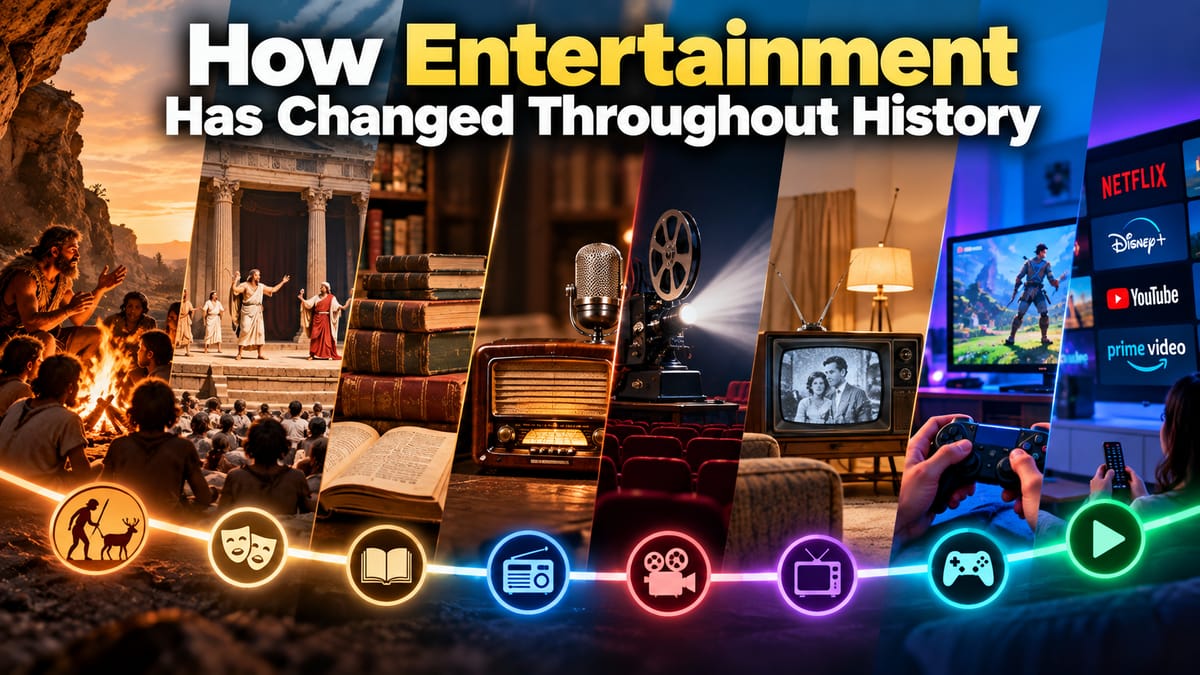
The transition from written stories to visual entertainment can be seen clearly in animation as well. The Complete Guide to Animation and Anime explores how visual storytelling uses movement, design, sound, and performance to communicate ideas.
How Stories Create Suspense
Suspense occurs when readers want to know what will happen next.
Writers can create suspense by controlling information.
For example, readers may know that a character is walking toward danger while the character does not. Alternatively, the reader may have no idea what is coming and gradually discover clues alongside the character.
Common suspense techniques include:
- Foreshadowing
- Unanswered questions
- Time pressure
- Hidden information
- Unexpected consequences
- Conflicting goals
- Reversals
- Cliffhangers
Good suspense does not necessarily require constant action.
A quiet conversation can be suspenseful if the reader understands that an important revelation may be coming.
Why Readers Keep Turning Pages
A book can hold attention when readers develop questions they want answered.
These questions might include:
- Will the character succeed?
- Who can be trusted?
- What really happened?
- Why did the character make that decision?
- What will happen next?
- Can the relationship survive?
- Will the mystery be solved?
- How will the character change?
Each answer can create another question.
This creates a chain of curiosity that carries readers through the story.
How Emotional Investment Works
Stories become especially powerful when readers become emotionally invested in their outcomes.
That investment can come from several sources.
A reader may care about a character because they identify with them. They may be curious about a mystery. They may admire a character’s goal or fear the consequences of failure.
The emotional response does not have to be positive.
Readers can feel:
- Happiness
- Sadness
- Anger
- Fear
- Hope
- Surprise
- Sympathy
- Disgust
- Excitement
- Nostalgia
A successful story gives those emotions somewhere to go.
Why Conflict Is Essential
Conflict does not always mean violence or physical confrontation.
In literature, conflict can be internal.
A character might want two incompatible things at the same time. They may want independence but fear being alone. They may value honesty but have a reason to hide the truth.
External conflict can involve families, institutions, governments, communities, competitors, or natural forces.
The combination of internal and external conflict can give characters complicated choices.
Those choices are often what make stories interesting.
How Stories Change Characters
Many memorable stories involve some form of transformation.
A character may become:
- More confident
- More cautious
- More compassionate
- More cynical
- More independent
- More aware
- More responsible
- More accepting of themselves
Character development does not always mean becoming a better person.
A character can become more selfish, more powerful, or more damaged.
What matters is that experiences have consequences.
The reader watches the character respond to those experiences and asks whether the transformation is believable.
The Importance of Structure
Stories need some form of organization, even when that organization is unconventional.
A traditional narrative may contain:
Beginning → Rising conflict → Turning point → Falling action → Resolution
But writers can experiment with chronology.
A story might begin near the end and move backward. Another might alternate between different periods. Some novels use fragmented narratives, multiple narrators, letters, diary entries, or other forms.
Structure affects discovery.
Changing the order in which information is presented can change how readers understand the same events.
Books Can Preserve Culture and History
Literature is also a form of cultural memory.
Stories can preserve:
- Languages
- Traditions
- Beliefs
- Social customs
- Historical experiences
- Family histories
- Cultural identities
- Community perspectives
A novel written decades ago can give modern readers insight into how people thought about relationships, politics, work, technology, or society during another period.
Literature cannot provide a perfect record of history, but it can preserve perspectives that might otherwise disappear.
Books Can Challenge the Reader
Entertainment does not always have to provide comfort.
Some books deliberately make readers uncomfortable.
They may confront difficult subjects, challenge political or social assumptions, question accepted beliefs, or present perspectives that readers have never considered.
This can create disagreement, but disagreement itself can encourage reflection.
A powerful book does not necessarily tell every reader what to think. Sometimes it gives readers a complicated question and leaves them to work through it.
Why Different Readers Interpret the Same Book Differently
Literature is not always interpreted in one universal way.
Readers bring their own:
- Experiences
- Culture
- Age
- Knowledge
- Values
- Expectations
- Emotional circumstances
to the reading experience.
Two people can read the same novel and focus on completely different themes.
One reader may see a story primarily as a romance. Another may interpret it as a story about economic inequality or personal freedom.
Neither interpretation necessarily makes the other meaningless.
This openness is one reason literature can remain relevant across generations.
How Books Become Movies and Other Entertainment
Stories frequently move between different forms of media.
A successful novel might become a film, television series, stage production, audio drama, video game, or animated adaptation.
However, adapting a book requires more than simply transferring its words to a screen.
Film has different tools, including:
- Actors
- Cinematography
- Editing
- Production design
- Music
- Sound
- Visual effects
- Dialogue
- Lighting
These elements can communicate information that a novel might describe through several pages.
For readers interested in the filmmaking process, How Movies Are Made From Start to Finish explains how stories are transformed into finished screen productions.
Why Some Stories Become Classics
Not every successful book becomes a lasting classic.
Stories that remain influential often combine strong writing with ideas that continue to resonate.
A work may survive because it:
- Explores universal human experiences
- Introduces memorable characters
- Uses distinctive language
- Addresses important social questions
- Influences later writers
- Captures a particular historical moment
- Offers new interpretations over time
A classic can also change meaning as society changes.
Readers living in different periods may discover different aspects of the same book.
The Role of Books in Modern Entertainment
Books compete today with movies, television, video games, social media, podcasts, streaming platforms, and other forms of entertainment.
Yet reading remains important because it offers an experience that other media cannot completely duplicate.
Books can provide extended attention, detailed interior perspectives, complex arguments, and enormous imaginative freedom.
They can also be consumed almost anywhere without requiring a screen, internet connection, or specialized equipment.
Digital publishing has further expanded access through e-books and audiobooks, allowing literature to reach audiences through different formats.
Why Stories Continue to Matter
Technology changes, but the human reasons for telling stories remain remarkably consistent.
People want to understand themselves. They want to understand other people. They want entertainment, escape, knowledge, emotional connection, and explanations for experiences that can otherwise feel confusing.
Stories can take a personal experience and make it recognizable to millions of people.
They can preserve memories across generations, introduce readers to unfamiliar worlds, and make distant experiences feel immediate.
A good book does not simply occupy a reader’s time. It can change what that reader notices, questions, remembers, or understands.
When Words Become Worlds
Books work because language can do something surprisingly powerful: it can turn symbols on a page into people, places, emotions, conflicts, and entire worlds inside a reader’s mind.
Literature combines storytelling with language to explore both imaginary and real experiences. Its power comes not from a single ingredient but from the relationship between character, plot, conflict, theme, perspective, and the reader’s own imagination.
That is why stories matter.
A story can entertain for an evening, preserve a culture for centuries, or give someone a new way of seeing a life that is completely different from their own.
As long as people remain curious about who they are, where they came from, and what it means to be human, there will be reasons to keep reading—and reasons for writers to keep telling stories.



2 Comments
Micle harison
June 7, 2019Lorem ipsum dolor sit amet, usu ut perfecto postulant deterruisset, libris causae volutpat at est, ius id modus laoreet urbanitas. Mel ei delenit dolores.
John Doe
June 7, 2019Some consultants are employed indirectly by the client via a consultancy staffing company.