
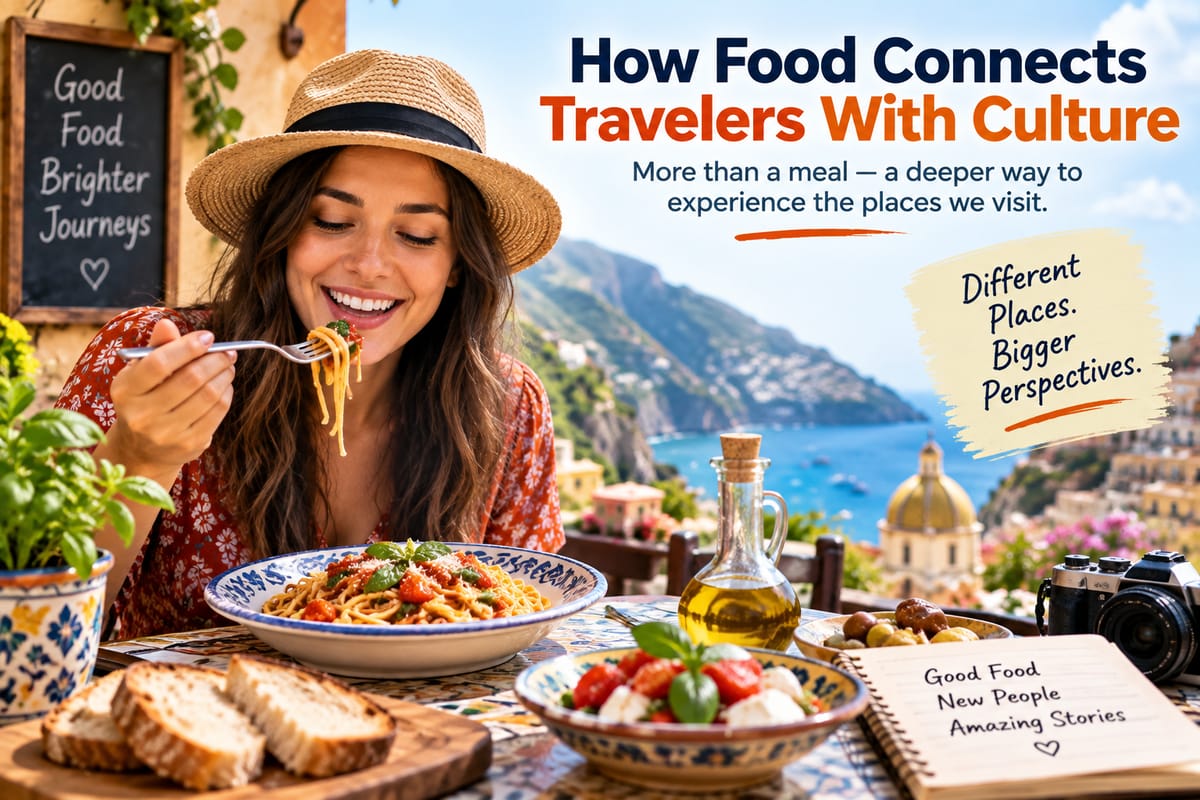
How Food Connects Travelers With Culture
Food is one of the easiest ways for travelers to experience a destination beyond its famous landmarks. A meal can reveal local history, traditions, agriculture, religion, family customs, migration patterns, and the everyday routines of the people who live there.
Unlike a monument or museum that may be visited for an hour, food often creates a more personal experience. Travelers sit at tables, visit markets, watch meals being prepared, learn unfamiliar ingredients, and share dishes with people from the local community.
This makes cuisine an important part of cultural travel. Food does more than satisfy hunger; it can provide a window into how communities developed and how traditions have been preserved and adapted over time.
Why Food Is an Important Part of Culture
Every community develops food traditions based on a combination of factors.
Climate affects which crops can be grown. Geography influences access to seafood, livestock, grains, fruits, and spices. Historical trade routes introduce new ingredients and cooking techniques, while migration can bring entirely new culinary traditions into a region.
Religion and cultural beliefs can also influence what people eat and how food is prepared.
As a result, local cuisine often reflects the environment and history of a place. A traditional dish may tell a story about the ingredients that were once available, the people who introduced them, or the circumstances that shaped how a community prepared food.
Travelers who explore these connections can gain a deeper understanding of the destination.
Food Turns Travel Into a More Personal Experience
Sightseeing often involves observing a place from the outside. Food can create an opportunity to participate more directly.
A traveler might:
- Eat breakfast at a neighborhood café.
- Visit a local food market.
- Take part in a cooking class.
- Try a traditional family recipe.
- Visit a farm or food producer.
- Eat at a community restaurant.
- Learn how a regional ingredient is produced.
- Share a meal with local residents.
These experiences can make a destination feel less like a collection of attractions and more like a living community.
This broader approach is central to Cultural Travel: Complete Guide to Meaningful Experiences, where cultural experiences become an important part of understanding the places travelers visit.
How Traditional Recipes Preserve History
Recipes can survive across generations even when other aspects of daily life change.
A family recipe may be passed from grandparents to parents and then to children, preserving techniques and flavors that might otherwise disappear.
Traditional foods can also reflect historical events.
For example, communities may develop particular dishes because certain ingredients were inexpensive, abundant, preserved easily, or introduced through trade. Over time, those practical choices can become cultural traditions.
A recipe therefore may contain more history than its list of ingredients suggests.
Understanding the relationship between cuisine and the past can also make other aspects of a destination more meaningful. How History and Heritage Shape Travel Destinations explores how historical experiences and cultural heritage influence the character of places travelers visit.
Markets Offer a Window Into Everyday Life
Local markets can be especially valuable for travelers interested in food and culture.
Markets bring together farmers, producers, vendors, cooks, and shoppers. They can reveal which ingredients are commonly used, what foods are in season, and how residents purchase the products they use at home.
A market may also show cultural details that are easy to miss in conventional tourist attractions.
Travelers can observe:
- Local fruits and vegetables
- Traditional spices
- Fresh seafood
- Regional grains
- Prepared foods
- Cooking ingredients
- Traditional snacks
- Local drinks
- Food preparation techniques
The experience can provide a better understanding of what people actually eat rather than only what is marketed to visitors.
Street Food Can Reveal Everyday Food Culture
Street food often provides another direct connection between travelers and local life.
Small food stalls, markets, carts, and neighborhood vendors may specialize in dishes that have become closely associated with a particular place.
These foods can be affordable, convenient, and deeply connected to everyday routines.
For travelers, trying street food can also provide an opportunity to learn about preparation methods, ingredients, and local eating habits.
However, travelers should still consider basic food safety. Choosing busy vendors with good hygiene practices, properly cooked food, and appropriate food storage can help reduce avoidable problems.
Food Tourism Goes Beyond Eating
Food travel is not limited to visiting restaurants.
It can involve an entire chain of experiences, including agriculture, fishing, production, transportation, markets, preparation, and dining.
A traveler might visit a coffee-growing region, tour an olive farm, learn how cheese is produced, explore a spice market, or participate in a traditional cooking workshop.
This broader approach is covered in Food Travel Explained: Exploring Destinations Through Cuisine.
Seeing where food comes from can change the way travelers understand a dish. A meal becomes connected to the land, labor, climate, and traditions that made it possible.
Cooking Classes Create Hands-On Cultural Experiences
Cooking classes are another way travelers can engage with local culture.
Instead of simply eating a finished dish, participants can learn:
- Which ingredients are commonly used
- How foods are prepared
- Which cooking techniques are traditional
- Why certain dishes are served on particular occasions
- How recipes have changed over time
- What foods are associated with family celebrations
The experience can also create conversations between travelers and local cooks.
Questions about ingredients and techniques often lead naturally into discussions about family traditions, holidays, regional differences, and everyday life.
Family Meals Can Reveal Social Traditions
Food is frequently connected to relationships.
Family gatherings, celebrations, religious occasions, weddings, festivals, and community events may all involve particular meals.
The way food is prepared and shared can therefore reveal how people organize social life.
For a traveler, learning why a particular dish is served at an important event can be as meaningful as tasting it.
The social setting surrounding a meal may also matter as much as the food itself. Who prepares it, who eats together, when it is served, and how it is shared can all provide cultural insight.
Food Shows How Cultures Change
Cuisine is not frozen in time.
Recipes evolve as communities encounter new ingredients, technologies, migration patterns, and outside influences.
A traditional dish may therefore contain elements from several different periods of history.
Trade is one example. Ingredients that were once unavailable in a region can become common after new trade connections develop. Migration can have a similar effect by introducing new cooking techniques, flavors, and dishes.
This means food can show both cultural continuity and cultural change.
Travelers can see how communities preserve familiar traditions while adapting them to changing circumstances.
Migration Creates New Food Traditions
Migration has influenced cuisines around the world.
People carry recipes and cooking practices with them when they move to new countries or regions. Over time, those traditions may remain recognizable while incorporating local ingredients and techniques.
This can create new forms of cuisine that reflect multiple cultural influences.
Travelers can often see this process in major cities, where restaurants and food markets represent communities from different parts of the world.
Food can therefore provide a practical example of how cultures interact without necessarily losing their individual identities.
Regional Cuisine Can Differ Within the Same Country
Travelers should not assume that a country’s cuisine is uniform.
Large countries often contain substantial regional differences based on geography, climate, history, ethnicity, agriculture, and local traditions.
Even neighboring regions may have different:
- Staple ingredients
- Cooking methods
- Seasonings
- Signature dishes
- Meal traditions
- Food festivals
- Dining customs
Exploring these differences can make a trip more rewarding because it reveals the diversity that exists within a single national culture.
Food Festivals Connect Visitors With Communities
Food festivals can bring together residents, producers, cooks, performers, and travelers.
These events may celebrate a particular ingredient, harvest, traditional dish, cultural tradition, or regional identity.
Visitors can experience food alongside music, crafts, storytelling, dancing, and other cultural activities.
The combination provides a broader context for understanding why particular foods matter to a community.
However, travelers should remember that festivals may be designed for both residents and visitors. Respecting local customs and participating appropriately helps ensure that the experience remains mutually positive.
Responsible Food Tourism Matters
Food tourism can provide economic opportunities for restaurants, farmers, food producers, market vendors, guides, and other local businesses.
When travelers spend money with locally owned businesses, some of that tourism spending can remain within the destination.
At the same time, increased demand can create challenges. Popular food traditions may become commercialized, prices can change, and local resources may face greater pressure.
The relationship between tourism and communities is broader than food alone. How Tourism Affects Local Communities explores some of the wider economic, social, and cultural effects tourism can have on destinations.
Supporting Local Food Producers
Travelers interested in cultural food experiences can look beyond large international chains.
Depending on the destination, locally owned businesses may include:
- Family-run restaurants
- Independent cafés
- Farmers’ markets
- Local bakeries
- Small food producers
- Community food tours
- Traditional cooking schools
- Regional farms
- Independent food vendors
Spending with these businesses can give travelers a more direct connection to the local food system.
It can also provide opportunities to ask questions and learn from people who have firsthand knowledge of regional cuisine.
Respecting Food Customs While Traveling
Food traditions can involve cultural or religious practices that visitors may not immediately understand.
Travelers should be aware that customs regarding ingredients, meal times, table manners, alcohol, food preparation, and communal dining can vary considerably.
A respectful approach is to observe, ask appropriate questions, and follow local guidance.
Learning a few basic dining customs before visiting a destination can also prevent misunderstandings.
The goal is not to approach every meal as a cultural performance but to recognize that food can carry meaning for the people who prepare and share it.
Food Creates Memories That Last Beyond a Trip
Travelers often remember destinations through sensory experiences.
The smell of fresh bread in a market, the taste of an unfamiliar spice, a meal shared with new friends, or the experience of learning a traditional recipe can remain memorable long after a trip ends.
These memories are different from simply photographing a landmark because they connect a destination with a personal experience.
Food can make travel more memorable precisely because it engages multiple senses and often involves direct interaction with people.
Learning Through Food Can Change How Travelers See a Destination
Food provides travelers with a practical way to understand culture through everyday life.
A dish can reveal geography. A recipe can preserve history. A market can show local commerce. A family meal can demonstrate social traditions. A cooking technique can reflect generations of accumulated knowledge.
When travelers approach cuisine with curiosity and respect, eating becomes more than another activity on an itinerary. It becomes a way to understand the people, history, environment, and traditions that give a destination its character.





2 Comments
Micle harison
June 7, 2019Lorem ipsum dolor sit amet, usu ut perfecto postulant deterruisset, libris causae volutpat at est, ius id modus laoreet urbanitas. Mel ei delenit dolores.
John Doe
June 7, 2019Some consultants are employed indirectly by the client via a consultancy staffing company.