
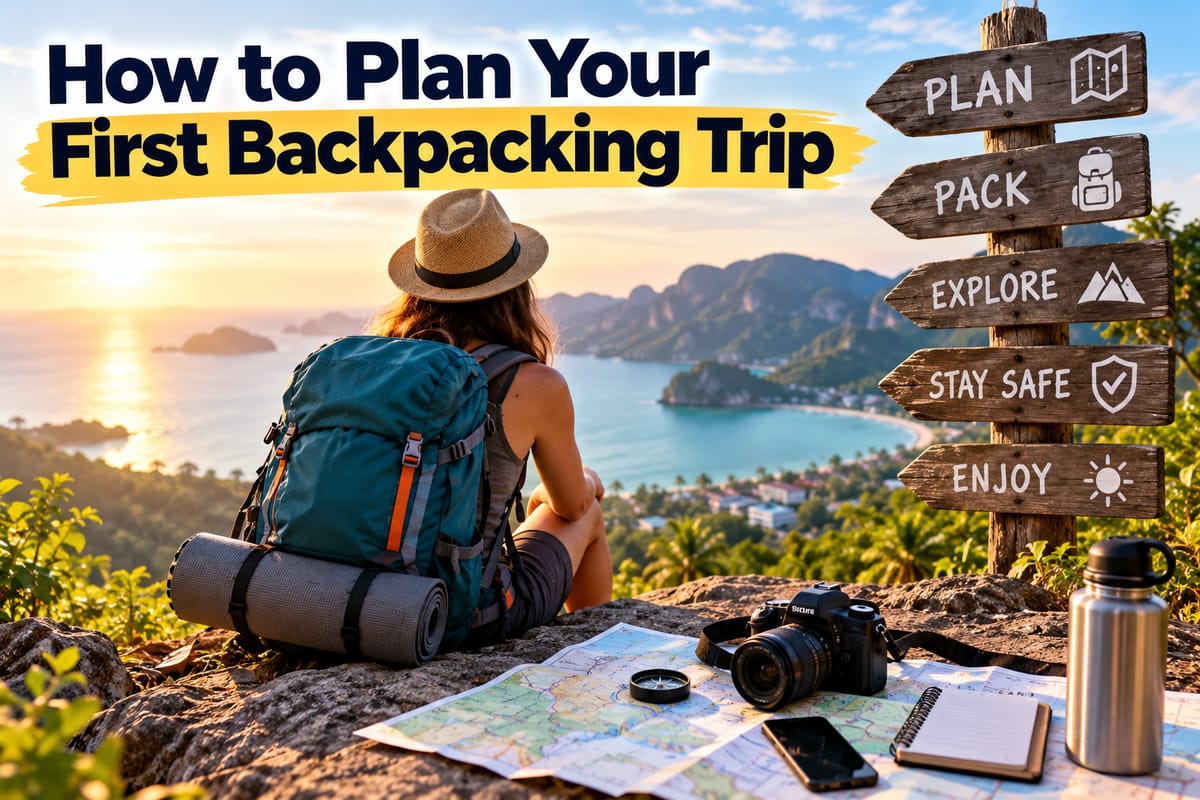
How to Plan Your First Backpacking Trip
Planning your first backpacking trip can feel exciting and overwhelming at the same time. Unlike a traditional vacation where much of the experience may revolve around one hotel or resort, backpacking often involves moving between destinations, carrying your belongings, navigating unfamiliar places, and making decisions along the way.
The good news is that a first backpacking trip does not need to be complicated. With a realistic route, manageable schedule, appropriate equipment, a sensible budget, and basic safety preparation, travelers can build an experience that feels adventurous without becoming unnecessarily difficult.
The key is to prepare for the important details while leaving enough flexibility to enjoy the journey.
Decide What You Want From the Trip
Before choosing a destination, think about what you want your first backpacking experience to be like.
You might be interested in:
- Exploring cities
- Hiking and nature
- Beaches
- Cultural experiences
- Wildlife
- Food
- Historic sites
- Outdoor activities
- Meeting other travelers
- Traveling slowly through several destinations
Your priorities will influence almost every other decision, including where you go, what you pack, how much you spend, and how long you stay.
A first trip is often easier when the itinerary matches your interests rather than trying to experience every type of travel at once.
Choose a Manageable Destination
Your first backpacking destination should be somewhere you can reasonably navigate and afford.
Consider:
- Transportation infrastructure
- Accommodation availability
- Language
- Weather
- Travel costs
- Entry requirements
- Healthcare access
- Local transportation
- General travel conditions
- Distance between destinations
If you are traveling internationally, review the International Travel Guide for broader information about preparing for international journeys.
You do not need to choose the most remote or challenging destination to have a genuine backpacking experience.
Start With a Simple Route
One of the biggest mistakes first-time backpackers can make is planning too many destinations.
A route that includes six cities in ten days may look exciting on paper, but constant packing, transportation, check-ins, and check-outs can consume much of the trip.
Instead, consider spending more time in fewer places.
For example, a trip might include:
- Arrival city
- One or two intermediate destinations
- Final destination
- Return journey
This gives you more time to explore rather than constantly traveling between locations.
Research How You Will Move Around
Transportation is one of the most important parts of backpacking.
Research the options between destinations before leaving.
Depending on the region, you may use:
- Trains
- Buses
- Flights
- Ferries
- Shared transportation
- Rental vehicles
- Walking
- Local transit
Check how long each journey takes and how frequently services operate.
A route that appears short on a map may take much longer when transfers and waiting times are included.
Build a Flexible Itinerary
Backpacking works particularly well when travelers have a general plan without scheduling every hour.
Determine where you will sleep and how you will get between major destinations, then leave some time for spontaneous activities.
A flexible itinerary might identify:
- Arrival date
- Departure date
- Accommodation
- Transportation
- Major attractions
- Optional activities
- Free days
How to Create a Travel Itinerary That Balances Activities and Free Time provides additional guidance on building a schedule that balances planned activities with downtime.
Decide How Long to Travel
Your first backpacking trip does not need to last for months.
A shorter journey can provide enough time to learn how you enjoy traveling independently without creating unnecessary logistical challenges.
Consider your:
- Budget
- Work or school schedule
- Travel experience
- Destination
- Number of planned stops
- Comfort with long journeys
A one- or two-week trip can be enough to develop valuable backpacking experience.
Set a Realistic Budget
Backpacking is sometimes associated with inexpensive travel, but costs can vary considerably.
Create a budget that includes:
- Transportation
- Accommodation
- Food
- Local transportation
- Activities
- Entry fees
- Travel insurance
- Visas
- Communication
- Emergency expenses
- Shopping
Do not budget only for your planned activities. Set aside money for unexpected transportation, medical needs, replacement items, or changes to your itinerary.
Understand Your Daily Spending
A useful way to manage a backpacking budget is to estimate an average daily spending amount.
This can include:
- Accommodation
- Food
- Local transportation
- Entertainment
- Small purchases
You do not necessarily need to spend the same amount every day.
A low-cost day can offset a more expensive day involving a major attraction, long-distance transportation, or special meal.
The important thing is to monitor the overall budget rather than focusing on every individual purchase.
Choose Accommodation Carefully
Backpackers have many accommodation options, including hostels, guesthouses, budget hotels, campsites, and other forms of lodging.
When comparing accommodation, look beyond the nightly price.
Consider:
- Location
- Reviews
- Security
- Transportation access
- Check-in times
- Luggage storage
- Bathroom arrangements
- Kitchen facilities
- Cancellation policies
A slightly more expensive place in a convenient location can sometimes save money and time on transportation.
Decide What to Pack
Packing is one of the defining skills of backpacking.
The goal is not to carry everything you might possibly need. It is to carry what you are likely to use while keeping the load manageable.
A basic packing list might include:
- Lightweight clothing
- Comfortable walking shoes
- Weather-appropriate outerwear
- Toiletries
- Travel documents
- Phone and charger
- Power adapter where necessary
- Basic first-aid supplies
- Reusable water bottle
- Small laundry supplies
- Necessary medications
- Secure day bag
The exact list depends on the destination and activities.
Choose the Right Backpack
Your backpack should fit your body comfortably and match the length and type of trip.
Important considerations include:
- Capacity
- Weight
- Shoulder straps
- Hip belt
- Back support
- Compartments
- Weather resistance
- Accessibility
A larger backpack is not automatically better.
Extra capacity can encourage overpacking, which becomes noticeable after hours of walking or while navigating airports and train stations.
Pack for the Climate
Research the weather conditions you are likely to encounter.
If the trip covers multiple regions or elevations, conditions may vary considerably.
Pack clothing that can be layered rather than relying on one heavy item for every situation.
Lightweight, quick-drying clothing can also be useful for longer journeys because it allows travelers to wash items during the trip rather than carrying a separate outfit for every day.
Prepare for Outdoor Activities
If your backpacking trip includes hiking, camping, climbing, water activities, or other outdoor experiences, your preparation should reflect those activities.
Equipment requirements can vary significantly.
A short day hike requires different preparation from a multi-day trek in a remote area.
How to Prepare for Different Types of Adventure Travel provides broader guidance for preparing for different forms of active and adventure-focused travel.
Do not bring specialized equipment simply because it looks useful. Understand what the activity actually requires.
Keep Travel Documents Secure
Important documents should be accessible but protected.
Depending on your destination, these may include:
- Passport
- Identification
- Visa documents
- Transportation reservations
- Accommodation confirmations
- Travel insurance information
- Emergency contacts
- Copies of important documents
Consider keeping digital copies securely accessible in case physical documents are lost.
Think About Money Before You Leave
Avoid relying on only one way to access money.
Depending on the destination, travelers may want to carry a combination of:
- Payment cards
- Some local currency
- Emergency funds
- A secure digital payment option
Keep cards and cash in secure locations rather than storing everything together.
Inform your financial institution about international travel when appropriate and understand any applicable transaction or withdrawal fees.
Get Appropriate Travel Insurance
Travel insurance can help protect against certain unexpected costs, depending on the policy.
Potential coverage can include areas such as:
- Medical emergencies
- Trip cancellation
- Delayed travel
- Lost luggage
- Certain adventure activities
Coverage varies considerably, so read the policy rather than assuming that every activity or situation is included.
Adventure travelers should pay particular attention to exclusions involving higher-risk activities.
Plan for Communication
A working phone can be extremely useful when backpacking.
Before departure, determine how you will access mobile data and communication services.
Depending on the destination, options may include:
- International roaming
- Local SIM cards
- eSIMs
- Wi-Fi
- Travel-specific communication plans
Download important maps and travel information before leaving areas with reliable internet access.
Learn Basic Local Information
You do not need to become an expert on every destination before arriving.
However, learn basic information about:
- Local transportation
- Currency
- Common customs
- Important laws
- Emergency numbers
- Common scams
- Local etiquette
- Areas where additional caution may be appropriate
Knowing a few basic phrases in the local language can also make everyday interactions easier.
Make Safety Part of the Planning Process
Backpacking involves navigating unfamiliar environments, sometimes with limited information.
Basic safety preparation can reduce unnecessary problems.
The Travel Safety Guide provides broader information about protecting yourself and your belongings while traveling.
Practical habits can include keeping valuables secure, being aware of your surroundings, avoiding unnecessary displays of expensive belongings, and letting someone know your general travel plans.
Do Not Overlook Health Preparation
Health preparation should reflect the destination and activities.
Before leaving, consider:
- Necessary medications
- Basic first-aid supplies
- Food and water conditions
- Climate
- Physical demands
- Access to healthcare
- Any destination-specific health recommendations
If you take prescription medication, make sure you have enough for the trip and understand any rules concerning carrying it across borders.
Practice Walking With Your Backpack
A backpack that feels comfortable for five minutes at home may feel very different after several hours.
Before your trip, load it with approximately what you expect to carry and walk with it.
This can help identify:
- Uncomfortable straps
- Excess weight
- Poor weight distribution
- Unnecessary items
- Footwear problems
It is much easier to adjust your packing before departure than halfway through the trip.
Test Your Travel Routine Before Leaving
A short practice trip can be useful for first-time backpackers.
Try spending a weekend traveling with the same backpack and some of the same equipment you plan to use.
This can reveal practical problems such as:
- Packing difficulties
- Poor organization
- Uncomfortable clothing
- Inadequate chargers
- Too much luggage
- Missing essentials
A practice trip does not need to be elaborate. Even a short overnight journey can provide useful experience.
Plan Your First Day Carefully
The first day of a backpacking trip can be more tiring than expected.
After traveling for several hours, navigating an unfamiliar destination may require significant concentration.
Avoid scheduling too many major activities immediately after arrival.
Know in advance:
- How you will get from the airport or station to your accommodation
- Where you are staying
- How to check in
- Where you can obtain food or water
- What you need to do if your transportation is delayed
A calm first day can help you settle into the trip.
Avoid Changing Accommodation Every Night
Moving frequently can create unnecessary work.
Each move involves:
- Packing
- Checking out
- Traveling
- Finding the next accommodation
- Checking in
- Unpacking
Staying several nights in one location can provide more time to explore and recover from travel.
It also makes the trip feel less like a sequence of transportation connections.
Give Yourself Recovery Time
Backpacking can involve more walking and movement than an ordinary vacation.
Plan occasional slower periods.
You might spend one morning sleeping late, reading, visiting a café, doing laundry, or simply exploring nearby without a fixed schedule.
Rest is not wasted travel time. It can make the rest of the journey more enjoyable.
Keep Your Backpack Organized
Organization becomes increasingly important when you move between destinations.
Keep frequently used items in accessible locations.
For example:
- Passport and documents in a secure compartment
- Chargers together
- Toiletries in a separate bag
- Dirty clothing separated from clean clothing
- Frequently used clothing near the top
- Emergency supplies easy to access
Packing cubes or small organizers can make this easier, although they are not essential.
Expect Plans to Change
A backpacking itinerary is a plan, not a guarantee.
Transportation can be delayed. Accommodation can be unavailable. Weather can change. You may discover a destination you want to explore longer than expected.
Rather than treating every change as a failure, build enough flexibility into the trip to accommodate reasonable adjustments.
A backup route or extra day can sometimes make a major difference.
Know When Not to Take a Risk
Adventure is part of backpacking, but unnecessary risk is not.
If weather conditions become dangerous, a route appears unsafe, or you are exhausted, changing the plan can be the sensible choice.
The same applies to unfamiliar transportation, isolated areas, or activities that exceed your preparation and experience.
A memorable trip does not require taking avoidable risks.
Keep Someone Informed
If you are traveling alone, consider keeping a trusted person informed about your general itinerary.
You do not necessarily need to report every movement.
A simple system can include sharing:
- Major destinations
- Accommodation information
- Expected travel dates
- Significant changes
This can provide an additional layer of support if something unexpected happens.
Leave Room for Spontaneous Experiences
One of the best parts of backpacking is the freedom to discover things that were not in the original plan.
A local recommendation might lead you to a restaurant, market, trail, neighborhood, museum, or cultural experience that becomes one of the highlights of the trip.
A flexible itinerary allows these opportunities to fit naturally into the journey.
Review the Trip at the End
After your first backpacking trip, think about what worked and what did not.
Ask yourself:
- Did I pack too much?
- Was the backpack comfortable?
- Was the itinerary too ambitious?
- Did I spend more than expected?
- Which transportation worked best?
- Did I need more rest?
- Which items were unnecessary?
- What would I do differently next time?
These lessons can make future trips considerably easier.
Build Confidence One Trip at a Time
Planning a first backpacking trip is ultimately about finding a balance between preparation and independence.
You need enough planning to understand where you are going, how you will get there, where you will sleep, how much the journey will cost, and how to handle common problems. But you also need enough flexibility to respond to unexpected opportunities and changes.
Start with a manageable destination and realistic itinerary. Pack thoughtfully rather than heavily, prepare for the activities you actually intend to do, and make safety part of the trip from the beginning.
Your first backpacking journey does not have to be the most ambitious trip you will ever take. It simply needs to give you the experience and confidence to discover how you like to travel—and where you want to go next.




2 Comments
Micle harison
June 7, 2019Lorem ipsum dolor sit amet, usu ut perfecto postulant deterruisset, libris causae volutpat at est, ius id modus laoreet urbanitas. Mel ei delenit dolores.
John Doe
June 7, 2019Some consultants are employed indirectly by the client via a consultancy staffing company.