
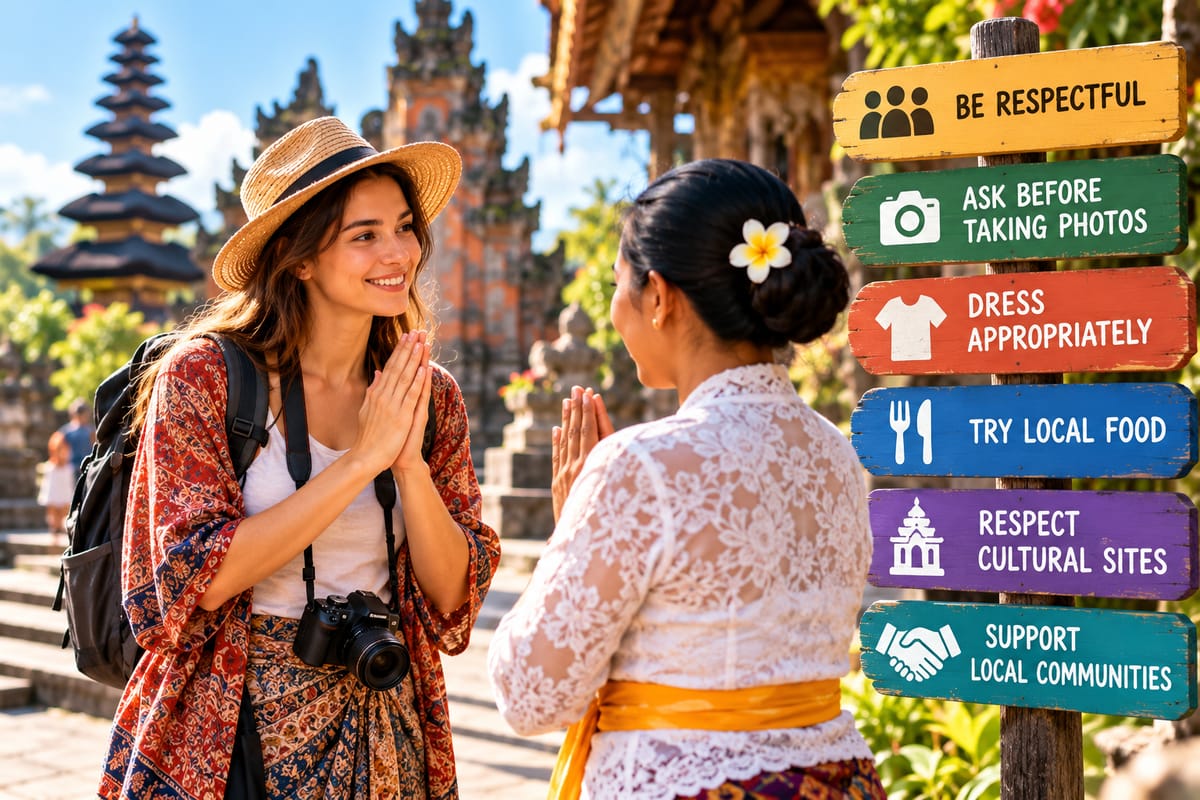
How to Respect Local Cultures While Traveling
Travel allows people to experience places that may have different languages, traditions, beliefs, customs, foods, social expectations, and ways of life. Those differences are often part of what makes a destination memorable, but they also require travelers to approach unfamiliar environments with awareness and respect.
Respecting local cultures does not mean knowing every custom before arriving. It means being willing to learn, observing how people behave, asking appropriate questions, and recognizing that visitors are guests in someone else’s community.
A thoughtful approach can make travel more rewarding while also helping travelers avoid misunderstandings and interactions that may unintentionally cause offense.
What Cultural Respect Means When Traveling
Cultural respect involves recognizing that different communities have their own values, traditions, social norms, and ways of communicating.
A respectful traveler does not automatically assume that familiar habits are appropriate everywhere.
Instead, they consider questions such as:
- How should people dress in this setting?
- Are photographs appropriate here?
- How should visitors greet people?
- Are there religious or cultural practices that require special consideration?
- Is bargaining expected or discouraged?
- What behavior is considered rude?
- Which public spaces have specific rules?
- How should visitors behave when entering someone’s home or place of worship?
These questions are not about trying to imitate local people. They are about understanding enough to participate respectfully.
Research the Destination Before You Go
Basic preparation can prevent many cultural misunderstandings.
Before traveling, learn about the destination’s common customs, social expectations, and important cultural practices. Government travel information, reputable travel organizations, local tourism resources, and guidance from people familiar with the destination can all provide useful context.
Research can cover:
- Appropriate clothing
- Greeting customs
- Dining etiquette
- Religious practices
- Photography rules
- Public behavior
- Tipping expectations
- Gift-giving customs
- Language basics
- Local holidays and observances
You do not need to memorize an entire culture. A little preparation can demonstrate consideration and make it easier to adapt once you arrive.
Learn a Few Local Words
Learning a few words in the local language can make everyday interactions more comfortable.
Simple expressions such as “hello,” “please,” “thank you,” “excuse me,” and “goodbye” can be useful even when you cannot hold a full conversation.
Pronunciation does not have to be perfect. Making a genuine effort can show that you recognize the value of communicating on local terms rather than expecting everyone to accommodate you.
Language can also help travelers understand signs, menus, transportation instructions, and basic social cues.
Observe Before Assuming
When entering an unfamiliar environment, take a moment to observe.
Watch how local people behave and how others interact with the space. This can provide clues about appropriate volume, clothing, greetings, personal space, and other forms of etiquette.
Observation is particularly useful when written rules are limited.
For example, if you are unsure whether people are expected to remove their shoes before entering a particular place, look for signs or observe what others do rather than assuming your usual practice applies.
Respect Religious and Sacred Places
Religious sites can be among the most meaningful places travelers visit, but they are not simply tourist attractions.
Churches, mosques, temples, shrines, monasteries, synagogues, sacred landscapes, and other religious spaces may have specific expectations regarding clothing, photography, footwear, silence, movement, or participation.
Read posted instructions and follow them carefully.
If photography is prohibited, do not take photographs simply because other visitors appear to be doing so. If an area is restricted to worshippers or community members, respect the boundary.
The goal is to experience the place without interfering with its religious or cultural purpose.
Dress Appropriately for the Setting
Clothing expectations vary significantly between destinations and even between different locations within the same destination.
What is appropriate at a beach may not be appropriate at a religious site, rural community, government building, or traditional ceremony.
Travelers should research local expectations and pack accordingly.
Dressing appropriately is not necessarily about abandoning personal style. It is about recognizing that clothing can communicate respect and that local expectations may differ from those at home.
Ask Before Taking Photographs
Photography can be one of the best ways to remember a trip, but not everything and everyone should automatically be photographed.
Ask permission before taking close-up photographs of people, particularly when the interaction is personal or the person is clearly the subject of the image.
Be especially cautious around:
- Children
- Religious ceremonies
- Funerals
- Private homes
- Military or security facilities
- Indigenous or culturally significant sites
- People engaged in sensitive activities
A camera can create a different relationship between visitor and resident. Asking first gives people an opportunity to decide whether they are comfortable being photographed.
Do Not Treat People as Tourist Attractions
Communities are made up of people living ordinary lives, not performances created for visitors.
Travelers should be cautious about photographing people without permission, making assumptions about their lives, or treating poverty, unusual customs, or traditional clothing as entertainment.
A respectful approach recognizes people’s dignity and individuality.
If a community offers a cultural experience specifically for visitors, participate according to the guidelines provided and remember that there may be cultural meaning behind what is being shared.
Approach Cultural Experiences With Curiosity
Curiosity is valuable when it is combined with humility.
Instead of asking why people do something “strange” or “different,” consider asking respectful questions about the meaning behind a tradition.
Questions such as these can open better conversations:
- “Could you tell me what this tradition means?”
- “Is there a respectful way for visitors to participate?”
- “Is it appropriate for me to take a photograph?”
- “What should I know before entering this place?”
This approach recognizes that you are learning rather than judging.
Travel that centers on meaningful cultural exchange can provide a deeper understanding of destinations. The Cultural Travel: Complete Guide to Meaningful Experiences explores this approach in greater detail.
Respect Local Food Traditions
Food is closely connected to culture, history, religion, agriculture, and family traditions.
Travelers should approach unfamiliar food with an open mind while recognizing that eating practices can have cultural significance.
Be aware of:
- Religious dietary requirements
- Table manners
- Meal schedules
- Appropriate utensils
- Shared dishes
- Tipping customs
- Foods that may be considered sacred or ceremonial
Trying local food can be a meaningful way to understand a destination when approached respectfully.
The connection between cuisine and cultural experience is explored in How Food Connects Travelers With Culture.
Do Not Mock Unfamiliar Customs
A tradition may seem unusual simply because it is unfamiliar.
Laughing at someone’s accent, clothing, food, greeting style, religious practice, or social customs can quickly turn cultural curiosity into disrespect.
If something surprises you, try to understand it before forming an opinion.
Travel is an opportunity to recognize that many everyday practices are shaped by history and community rather than being universal rules.
Understand That History Shapes Culture
Modern communities are influenced by their history.
Colonialism, migration, conflict, trade, religion, political changes, economic development, and cultural exchange can all influence how destinations look and how communities understand themselves.
Learning some of that history can help travelers interpret what they encounter more thoughtfully.
The relationship between historical heritage and travel is explored in How History and Heritage Shape Travel Destinations.
Be Careful With Humor
Humor does not always translate across cultures.
A joke that feels harmless at home may be confusing or offensive somewhere else. Sarcasm, gestures, personal questions, and comments about sensitive subjects can carry different meanings depending on the cultural context.
When communicating with people you do not know well, especially across a language barrier, straightforward and respectful communication is often safer than relying on humor.
Respect Personal Space and Social Boundaries
Ideas about personal space differ between cultures.
Some communities may be comfortable with physical contact during greetings, while others may prefer greater distance. Expectations can also vary around eye contact, gestures, touching, and public displays of affection.
If you are uncertain, follow the other person’s cues and avoid assuming that your normal behavior is universally appropriate.
Be Mindful of Public Behavior
Travelers sometimes behave differently abroad because they feel anonymous or temporarily removed from their normal routines.
That does not make local rules less important.
Follow local laws and public regulations, including those relating to:
- Alcohol
- Smoking
- Noise
- Photography
- Public gatherings
- Littering
- Dress
- Traffic
- Protected sites
A visitor’s status as a tourist does not remove the responsibility to behave appropriately.
Respect Local Businesses
Spending money locally can support communities, but travelers should also treat local businesses fairly.
Avoid assuming that small businesses should provide services at extremely low prices simply because local costs may differ from those at home.
When bargaining is part of the local marketplace, negotiate respectfully rather than treating the process as an opportunity to humiliate or exploit a seller.
If prices are fixed, accept them without creating unnecessary conflict.
Consider Where Your Money Goes
Travel spending can have economic effects beyond the individual transaction.
Choosing locally owned restaurants, accommodations, guides, markets, and businesses can sometimes help more tourism revenue remain within the destination.
However, travelers should not assume that a business is locally owned based solely on its appearance. When this matters to your trip, research the business or ask directly.
Responsible spending is one part of considering the wider effects of tourism.
Respect Local Communities and Their Resources
Tourism can create jobs and economic opportunities, but it can also place pressure on housing, infrastructure, natural resources, public spaces, and local communities.
Travelers can reduce some negative effects by:
- Avoiding unnecessary litter
- Conserving water and energy
- Following local environmental rules
- Respecting residential areas
- Avoiding restricted sites
- Supporting responsible businesses
- Following visitor limits
- Treating public spaces carefully
The broader relationship between visitors and destinations is discussed in How Tourism Affects Local Communities.
Follow Rules at Cultural and Historical Sites
Historic buildings, archaeological sites, museums, monuments, and heritage areas may have rules designed to protect fragile materials or culturally significant spaces.
Do not climb structures, touch artifacts, remove objects, cross barriers, or ignore designated pathways simply to get a better photograph.
A momentary experience is not worth contributing to the deterioration of something that may have cultural significance for generations.
Avoid Taking Cultural Objects Home
A souvenir should not be an artifact removed from a culturally important location.
Do not take stones, archaeological materials, religious objects, fossils, protected plants, or other items from places where removal is prohibited.
Instead, purchase souvenirs through legitimate businesses and ask about the origin of products when appropriate.
This is particularly important when purchasing antiques, wildlife products, artworks, or traditional objects that may be subject to restrictions.
Be Thoughtful About Indigenous Communities
Travel involving Indigenous communities requires particular care.
Visitors should follow community-specific rules regarding photography, ceremonies, sacred places, language, and participation.
Do not assume that a cultural tradition exists for tourists to observe or reproduce.
When communities establish guidelines for visitors, those guidelines should be treated as part of the experience rather than as unnecessary restrictions.
Avoid Cultural Stereotypes
A country or culture is rarely represented accurately by a handful of stereotypes.
People within the same destination may differ according to region, generation, religion, ethnicity, profession, socioeconomic background, and personal experience.
Avoid assuming that every resident shares the same beliefs or practices.
Instead, treat cultural information as context rather than a rigid set of rules that applies identically to every person.
Learn From Mistakes
Even well-prepared travelers can make cultural mistakes.
You might use the wrong greeting, enter a space incorrectly, misunderstand a gesture, or violate an etiquette rule without realizing it.
If someone politely corrects you, listen rather than becoming defensive.
A simple apology and willingness to adjust can resolve many misunderstandings.
Respect does not require perfection. It requires a willingness to learn.
Avoid Turning Every Interaction Into Content
Modern travelers often document trips through photographs, videos, blogs, and social media.
Documentation can be enjoyable, but constant recording can interfere with genuine interaction.
Put the camera away sometimes. Listen to conversations. Enjoy a meal without immediately photographing it. Experience a ceremony without viewing it entirely through a screen.
Not every meaningful travel experience needs to become content.
Support Cultural Experiences Responsibly
When booking cultural tours or experiences, consider how they are organized.
Look for experiences that:
- Treat local people respectfully
- Explain cultural practices accurately
- Provide fair compensation
- Follow community guidelines
- Avoid exploiting vulnerable people
- Protect culturally significant places
A responsible experience should give visitors an opportunity to learn without requiring local people to surrender their dignity or privacy.
Avoid Assuming Everyone Speaks Your Language
English or another widely spoken language may be common in tourist areas, but travelers should not assume that every resident speaks it.
Learn basic local phrases where practical and use translation tools when necessary.
Most importantly, remain patient.
Communication can take longer when people do not share a first language, and frustration can quickly turn an ordinary misunderstanding into an unpleasant interaction.
Be Patient With Different Ways of Doing Things
Travel often involves systems that operate differently from what you are accustomed to.
Public transportation may run differently. Restaurants may serve food at different times. Shops may close during periods that seem unusual. Queues, appointments, customer service, and payment practices may vary.
Differences are not automatically signs that something is wrong.
Learning to adapt is part of traveling respectfully.
Consider the Difference Between Curiosity and Intrusion
Asking questions can create meaningful cultural exchanges, but not every question is appropriate.
Avoid intrusive questions about someone’s income, family situation, religion, politics, relationships, health, or personal history unless the person clearly invites that conversation.
A traveler can be curious without treating residents as sources of information or entertainment.
Leave Places as You Found Them
Respect for local culture also includes physical respect for the destination.
Dispose of waste appropriately, follow designated paths, respect signs, and avoid damaging natural or cultural sites.
If local rules prohibit certain activities, follow them even when enforcement appears limited.
Responsible travel means recognizing that a destination belongs to the people and communities who live there, not simply to the visitors passing through.
Think Beyond the Tourist Perspective
One of the most valuable shifts a traveler can make is to consider how a destination looks from the perspective of the people who live there.
A crowded attraction may be an exciting sightseeing opportunity for a visitor but a daily inconvenience for residents. A photograph may be a treasured memory for a traveler but an unwanted intrusion for the person pictured.
Considering both perspectives does not eliminate the enjoyment of travel. It can make the experience more thoughtful and meaningful.
Let Respect Shape the Travel Experience
Respecting local cultures is ultimately about being a considerate guest.
Research before traveling, learn basic language, observe local behavior, dress appropriately, ask before photographing people, respect religious and cultural sites, support local businesses responsibly, and remain open to unfamiliar ways of doing things.
Most importantly, approach differences with curiosity rather than judgment. A destination becomes more meaningful when travelers take the time to understand the people, history, traditions, and communities that make it what it is.
Travel does not require visitors to become local. It simply asks them to recognize that they are entering someone else’s home, community, or cultural environment—and to behave accordingly.





2 Comments
Micle harison
June 7, 2019Lorem ipsum dolor sit amet, usu ut perfecto postulant deterruisset, libris causae volutpat at est, ius id modus laoreet urbanitas. Mel ei delenit dolores.
John Doe
June 7, 2019Some consultants are employed indirectly by the client via a consultancy staffing company.