
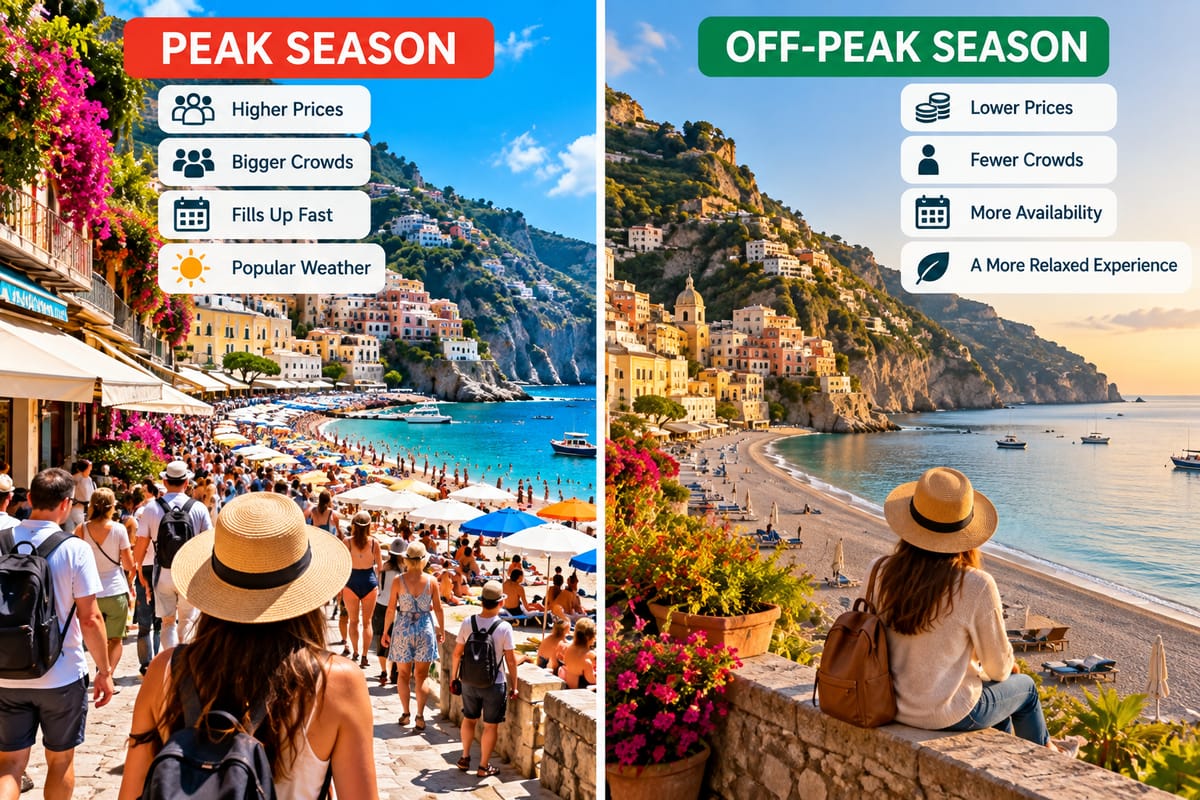
What Are Peak and Off-Peak Travel Seasons?
Travel prices, crowds, weather conditions, availability, and the overall character of a destination can change dramatically depending on when you visit. A beach town that feels lively and energetic during the summer may be quiet and inexpensive a few months later. A historic European city can become crowded during major holidays, while the same streets may feel considerably more relaxed during the shoulder season.
These differences are closely connected to peak, off-peak, and shoulder travel seasons.
Understanding travel seasons can help travelers decide when to take a trip based on their priorities. Some people are willing to pay more for ideal weather and a full calendar of activities. Others prefer lower prices, fewer crowds, and a slower pace, even if conditions are less predictable.
There is no universally perfect travel season. The right time depends on the destination, purpose of the trip, budget, weather preferences, school schedules, local events, and the experiences a traveler wants to have.
What Is a Peak Travel Season?
Peak travel season is the period when demand for travel to a particular destination is at its highest.
During this period, more people typically visit hotels, attractions, restaurants, beaches, transportation hubs, and other tourist areas. Because demand is high, businesses may charge higher prices and popular accommodations or activities can sell out quickly.
Peak season varies from destination to destination.
For example, a coastal destination may experience its busiest period during warm-weather months, while a ski resort may have its peak season during winter. Major cities can experience several peak periods throughout the year because of holidays, festivals, conventions, sporting events, or cultural events.
Peak travel can be influenced by several factors, including:
- Pleasant weather
- School holidays
- Public holidays
- Major festivals and events
- Seasonal attractions
- Popular cultural celebrations
- Wildlife viewing periods
- Winter sports conditions
- Long vacation periods
- Regional travel patterns
Peak season is therefore not simply another name for summer. It refers to the period when travel demand is particularly strong for a specific destination.
What Is an Off-Peak Travel Season?
Off-peak season is the period when visitor demand is significantly lower than during the destination’s busiest travel periods.
Hotels, airlines, restaurants, tour operators, and attractions may have fewer customers during these periods. As a result, travelers may find lower prices, greater availability, and less competition for popular experiences.
Off-peak travel can occur for many reasons.
A destination might experience lower demand because of:
- Less favorable weather
- Cooler or hotter temperatures
- Rainy seasons
- The end of school holidays
- Reduced daylight
- Fewer scheduled events
- Seasonal closures
- Lower demand from international visitors
- Reduced transportation schedules
Off-peak does not automatically mean that a destination is unpleasant. In some cases, it can provide a completely different experience.
A city that is overwhelmed by visitors during its busiest months may become much easier to explore when demand declines. Travelers may spend less time waiting in lines, find better accommodation availability, and interact with local businesses in a less crowded environment.
What Is Shoulder Season?
Between peak and off-peak periods is often what travelers call shoulder season.
Shoulder season generally occurs shortly before or after the busiest travel period. It can offer a balance between favorable conditions and lower demand.
For many travelers, shoulder season is attractive because it may combine several benefits:
- Moderate visitor numbers
- Better accommodation availability
- Potentially lower prices
- Reasonably favorable weather
- More relaxed attractions
- Greater flexibility
- A wider selection of travel dates
However, shoulder season is not guaranteed to provide the same conditions every year. Weather can be unpredictable, and some seasonal attractions may operate on reduced schedules.
Understanding this middle period is particularly useful for travelers who want to avoid the extremes of both peak and off-peak travel.
Peak Season vs. Off-Peak Season
The most obvious difference between peak and off-peak travel is demand, but the effects extend much further.
| Factor | Peak Season | Off-Peak Season |
|---|---|---|
| Visitor numbers | Usually high | Usually lower |
| Accommodation prices | Often higher | Often lower |
| Flight demand | Often higher | Often lower |
| Attraction crowds | Usually heavier | Usually lighter |
| Availability | Can be limited | Often better |
| Restaurant reservations | May require advance planning | Often easier |
| Weather | Often associated with favorable conditions | May be less predictable |
| Local atmosphere | Lively and busy | Quieter and slower |
| Seasonal activities | Often widely available | May be limited |
| Planning flexibility | Often requires advance booking | May allow more spontaneity |
These are general patterns rather than universal rules. Each destination has its own tourism calendar.
Why Do Travel Seasons Exist?
Travel seasons develop because people do not travel evenly throughout the year.
Several forces influence when people choose to take trips.
Weather
Weather is one of the biggest influences on travel demand.
People may prefer destinations when temperatures are comfortable, rainfall is limited, or outdoor activities are easier to enjoy.
A tropical destination, for example, may have a busy dry season and a quieter rainy season. A mountain destination may see increased demand when snow conditions are suitable for skiing.
School Calendars
Families with school-age children often have limited opportunities to travel.
School breaks can therefore create significant increases in demand. Summer vacations, winter breaks, spring holidays, and other school holidays can affect hotel prices, transportation demand, and attraction crowds.
Public Holidays
National holidays can create short but intense periods of increased travel.
Long weekends and holiday celebrations may encourage domestic and international trips, particularly when people have several consecutive days away from work.
Festivals and Events
Some destinations attract large numbers of visitors because of specific events.
These may include:
- Music festivals
- Cultural celebrations
- Sporting competitions
- Religious events
- Food festivals
- Film festivals
- Trade shows
- Major exhibitions
A destination may therefore have a peak season that is driven by an event rather than weather.
Natural Attractions
Wildlife migrations, flowering seasons, northern lights, autumn foliage, whale watching, and other natural phenomena can influence when travelers visit.
These experiences can create highly concentrated periods of demand.
How Peak Season Affects Travel Costs
Peak season frequently comes with higher travel costs because demand is stronger.
Hotels may raise room rates when occupancy is high. Airlines can also adjust fares based on demand and remaining seat availability. Tours, rental cars, and other travel services can become more expensive when large numbers of visitors compete for limited capacity.
The biggest cost differences often appear in accommodation and transportation.
A traveler visiting a destination during a popular holiday period may pay substantially more than someone visiting during a less popular period.
However, price increases are not universal. Some destinations have relatively stable prices throughout the year, while others experience significant seasonal fluctuations.
Travelers planning international trips can benefit from understanding these differences as part of a broader planning process. A detailed International Travel Guide can also help put seasonal considerations into the context of transportation, documentation, budgeting, and destination planning.
How Off-Peak Travel Can Reduce Costs
One of the biggest attractions of off-peak travel is the possibility of saving money.
When demand decreases, businesses may use lower prices or special offers to encourage visitors.
Potential savings can appear in:
- Hotel rooms
- Vacation rentals
- Flights
- Rental cars
- Tours
- Attraction tickets
- Restaurant packages
- Travel bundles
The amount saved depends heavily on the destination and timing.
Travelers should also consider the total cost of a trip rather than focusing on one discounted price. A cheaper hotel may not represent a real saving if transportation is more expensive or if important attractions are closed.
Likewise, an inexpensive flight may not be particularly useful if it arrives during inconvenient hours or requires expensive ground transportation.
Are Peak Travel Seasons Always Better?
Peak season can provide several advantages.
Popular attractions are often operating at full capacity, seasonal activities may be widely available, restaurants and businesses may have extended hours, and transportation networks can operate more frequently.
For travelers who want a destination at its most energetic, these conditions can be appealing.
Peak season can also be particularly useful when the timing of a specific experience matters. Someone planning a beach holiday may prioritize warm weather, while a skier may need reliable snow conditions.
The tradeoff is that these advantages can come with higher prices and larger crowds.
Are Off-Peak Seasons Always Better?
Off-peak travel can provide lower costs and a more relaxed experience, but it also comes with potential compromises.
Some attractions may close temporarily. Tour schedules can be reduced. Weather may be less predictable. Certain restaurants and accommodations may operate seasonally.
In some destinations, off-peak weather can significantly affect the type of activities available.
For this reason, travelers should not choose an off-peak period solely because it is cheaper.
The question should be whether the conditions during that period still support the purpose of the trip.
How Travel Goals Affect the Best Season to Visit
The ideal travel season depends heavily on what someone wants to do.
A traveler interested in museums and historic architecture may be comfortable visiting during a quieter period with cooler weather. Someone planning an outdoor adventure may place much greater importance on seasonal conditions.
Consider how different goals can influence timing.
Beach Vacations
Beach travelers often prioritize:
- Warm temperatures
- Low rainfall
- Calm water
- Long daylight hours
- Open beachfront businesses
These factors can make certain months considerably more attractive than others.
City Breaks
City travelers may have more flexibility.
Museums, restaurants, shopping districts, historic sites, and indoor attractions may remain available throughout much of the year.
For these trips, avoiding crowds may sometimes be more important than having perfect weather.
Hiking and Outdoor Adventures
Outdoor travelers need to consider:
- Temperature
- Rainfall
- Trail conditions
- Daylight
- Wildlife activity
- Seasonal closures
- Safety conditions
The busiest season is not necessarily the most suitable season for every outdoor activity.
Wildlife Travel
Wildlife-focused trips require particularly careful seasonal planning.
Animals may migrate, breed, feed, or become easier to observe at different times of the year. Travelers should research the seasonal behavior relevant to the specific destination rather than assuming that the busiest tourist period automatically provides the best wildlife experience.
Cultural Travel
Travelers interested in festivals, traditional celebrations, performances, and cultural events may intentionally choose peak periods.
In this situation, high demand is part of the attraction rather than simply an inconvenience.
How Crowds Change the Travel Experience
Crowds can affect a trip in ways that are not immediately obvious.
A popular attraction may require advance reservations. Restaurants may have long waiting times. Roads can become congested, and public transportation may be crowded.
Large visitor numbers can also change the atmosphere of a destination.
A historic neighborhood may feel lively and social during peak season but peaceful and residential during quieter months.
Neither experience is inherently right for every traveler. The important consideration is whether the atmosphere matches the type of trip being planned.
Travelers can also consider how specific activities influence their experience. For example, choosing a destination based on its attractions rather than simply its reputation can make the timing decision more meaningful. Understanding How Travel Activities Shape Destination Experiences can help travelers think about what they actually want to do once they arrive.
How Travel Seasons Affect Accommodation
Accommodation availability can change substantially between peak and off-peak periods.
During peak season, desirable hotels and vacation rentals may fill quickly. Travelers may need to reserve months in advance, particularly when visiting during major holidays or events.
During quieter periods, travelers may have more choices.
This can mean:
- More room categories
- Greater availability in popular neighborhoods
- More flexibility with dates
- Potentially lower prices
- Greater choice among accommodations
However, seasonal closures can reduce the number of available properties in some destinations.
A low-demand period does not necessarily mean every hotel is open.
How Travel Seasons Affect Flights
Airfare is influenced by demand, available capacity, route competition, holidays, and booking timing.
Peak travel periods often generate stronger demand, which can contribute to higher fares.
Off-peak periods may provide cheaper options, although this is not guaranteed.
Travelers should compare multiple dates rather than assuming that a particular month will always be inexpensive.
A difference of one or two days can sometimes produce a meaningful change in airfare, particularly around holidays and weekends.
Why Flexible Travel Plans Matter
Flexibility can be one of the most valuable tools for managing seasonal travel costs.
If a traveler can change departure dates, stay a few extra days, travel midweek, or choose a nearby airport, they may discover substantially different prices and availability.
This is particularly useful when traveling during periods of high demand.
A traveler who is committed to a specific date may have fewer options. Someone with several possible dates can compare peak, shoulder, and off-peak periods before making a decision.
Understanding Why Flexible Travel Plans Matter can help travelers incorporate this flexibility into the broader planning process.
How to Decide When to Travel
Choosing a travel season becomes easier when the decision is broken into several questions.
1. What Is the Main Purpose of the Trip?
Start with the experience.
Are you traveling for:
- Relaxation?
- Outdoor activities?
- Cultural experiences?
- Business?
- Family time?
- Wildlife?
- Food?
- Festivals?
- Sightseeing?
- Adventure?
The answer determines which seasonal conditions matter most.
2. What Weather Can You Tolerate?
Consider both ideal and acceptable weather.
A traveler who dislikes rain may need to avoid a destination’s wettest period. Someone comfortable with cooler temperatures may have considerably more flexibility.
3. How Important Are Crowds?
If long lines and busy attractions are frustrating, consider shoulder or off-peak periods.
If a lively atmosphere is part of the appeal, peak season may be more attractive.
4. What Is the Budget?
Compare the complete cost of the trip.
Look beyond airfare and hotel rates to include:
- Transportation
- Food
- Activities
- Entrance fees
- Travel insurance
- Local transportation
- Parking
- Seasonal surcharges
5. Which Attractions Will Be Open?
This is particularly important when considering off-peak travel.
Check whether the activities you care about operate during your intended dates.
6. Are There Local Events?
A festival, sporting event, conference, or public holiday can dramatically change demand.
Check the local calendar before finalizing dates.
Destination Choice Should Come Before Season Choice
Travelers sometimes begin by asking, “When should I travel?”
A better approach can be to first determine what kind of destination fits the trip.
Climate, culture, attractions, transportation, cost, and activities all influence whether a location matches a traveler’s goals.
A resource such as Choosing Your Ideal Travel Destination can help frame that decision before comparing seasonal travel conditions.
Once the destination is selected, travelers can examine its peak, shoulder, and off-peak periods.
This prevents a common planning mistake: choosing inexpensive travel dates for a destination that does not offer the experiences the traveler actually wants during those dates.
Common Mistakes When Planning Around Travel Seasons
Assuming Summer Is Always Peak Season
Summer is a major travel period in many places, but not everywhere.
Some destinations experience their busiest periods during winter, holidays, or specific event seasons.
Assuming Off-Peak Means Bad Weather
A quieter season can still have excellent conditions.
Seasonal patterns differ significantly between destinations.
Focusing Only on Hotel Prices
A cheap hotel does not automatically mean a cheap trip.
Transportation, attractions, food, and other expenses can offset accommodation savings.
Ignoring Seasonal Closures
Some attractions, hotels, restaurants, roads, and transportation routes may operate only during certain periods.
Booking Without Checking Events
A supposedly quiet month can become extremely busy if a major event is taking place.
Treating Every Destination the Same
There is no universal travel calendar.
Peak season in one country may coincide with off-peak conditions somewhere else.
Tips for Making the Most of Peak Season
Travelers who prefer peak season can reduce some of its disadvantages with careful planning.
Book Important Services Early
Accommodation, flights, rental cars, and popular activities can become limited.
Travel at Less Busy Times of Day
Arriving early at major attractions can help avoid some crowds.
Consider Weekdays
If the destination is especially busy on weekends, shifting activities to weekdays may make the experience more manageable.
Reserve Popular Restaurants and Activities
Advance reservations can prevent unnecessary waiting and disappointment.
Build Extra Time Into the Schedule
Crowded roads, transportation delays, and longer attraction queues can make an overly tight itinerary stressful.
Tips for Making the Most of Off-Peak Season
Off-peak travel can reward travelers who plan around its limitations.
Research Seasonal Operating Hours
Check whether attractions and businesses operate normally during the period you plan to visit.
Pack for Variable Conditions
Weather can be less predictable outside the primary tourist season.
Look for Local Experiences
Quieter periods can provide more opportunities to explore neighborhoods, markets, restaurants, museums, and cultural sites without large crowds.
Keep the Itinerary Flexible
A flexible schedule makes it easier to adapt when weather affects outdoor plans.
Check Transportation
Some seasonal destinations reduce transportation frequency outside peak periods.
Peak, Shoulder, and Off-Peak Travel Can Serve Different Travelers
Travel seasons are not simply a question of finding the cheapest month.
Peak season may appeal to travelers who prioritize predictable conditions, seasonal attractions, events, and a lively atmosphere.
Shoulder season can appeal to travelers seeking a balance between favorable conditions, availability, and moderate visitor numbers.
Off-peak season may suit people who prioritize lower costs, fewer crowds, flexibility, and a quieter destination experience.
The important distinction is that travel season should support the purpose of the trip rather than determine it entirely.
A Simple Seasonal Travel Planning Checklist
Before booking a trip, consider the following:
- Identify the destination’s typical peak season.
- Identify its shoulder and off-peak periods.
- Check average weather conditions.
- Look for major local events.
- Check school and public holiday periods.
- Compare transportation prices across several dates.
- Compare accommodation prices.
- Check attraction opening schedules.
- Research seasonal closures.
- Consider expected crowd levels.
- Determine which activities matter most.
- Decide how much schedule flexibility you have.
- Calculate the total trip cost rather than focusing on one expense.
- Leave room in the itinerary for changing conditions.
Making Seasonality Work for Your Travel Style
Peak and off-peak travel seasons are useful planning concepts because they reveal how strongly timing can influence a trip. The same destination can offer dramatically different prices, crowds, availability, weather, and atmosphere depending on when a traveler arrives.
The best approach is to consider the complete travel experience. Start with the destination and the activities that matter most, then evaluate weather, demand, prices, availability, and local events.
For travelers who value flexibility, shoulder and off-peak periods can open up alternatives that might otherwise be overlooked. For travelers focused on a particular seasonal experience, peak periods may provide access to conditions or events that are unavailable at other times.
Ultimately, understanding travel seasons gives travelers more control over the choices they make. Instead of treating a destination as having one “best” time to visit, travelers can compare different periods and choose the combination of cost, weather, crowds, availability, and experiences that best fits their own trip.




2 Comments
Micle harison
June 7, 2019Lorem ipsum dolor sit amet, usu ut perfecto postulant deterruisset, libris causae volutpat at est, ius id modus laoreet urbanitas. Mel ei delenit dolores.
John Doe
June 7, 2019Some consultants are employed indirectly by the client via a consultancy staffing company.