
How Reaction Time Affects Sports Performance
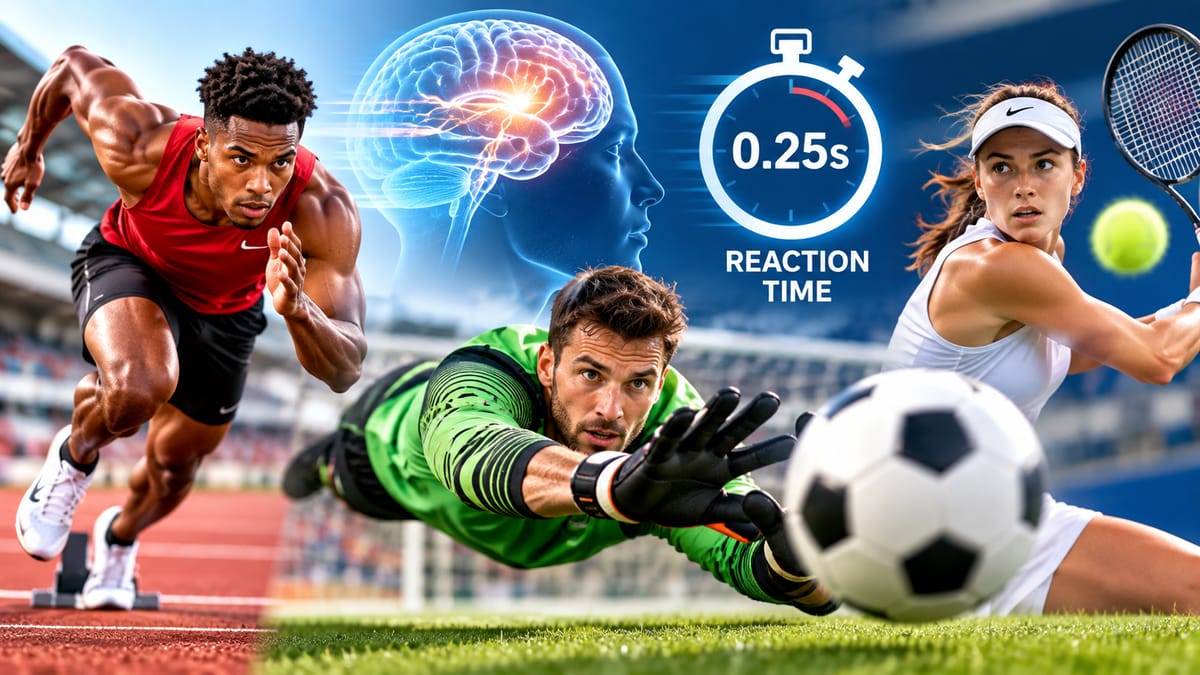
In sports, the difference between making a successful play and missing an opportunity can come down to a fraction of a second.
An athlete may have excellent strength, speed, technique and endurance, but those abilities are only useful if they can respond quickly enough when the situation changes. A goalkeeper must react to a shot, a baseball batter must respond to a pitch, a tennis player must adjust to an opponent’s stroke, and a basketball player may have only moments to decide whether to pass, shoot or defend.
This ability to respond rapidly to a stimulus is known as reaction time.
Reaction time is an important part of athletic performance because competitive sports rarely unfold in predictable conditions. Athletes must continuously process information, identify what is happening and produce an appropriate physical response.
What Is Reaction Time in Sports?
Reaction time refers to the amount of time between detecting a stimulus and beginning a response.
The stimulus might be visual, auditory or physical. For example, a sprinter may react to the sound of a starting signal, while a soccer goalkeeper may respond to the movement of a player’s foot before a shot.
Reaction time is different from movement time.
Reaction time is the period required to initiate a response after detecting a stimulus.
Movement time is the time required to complete the resulting physical movement.
Together, these abilities contribute to how quickly an athlete can respond to events during competition.
In real sporting situations, however, performance is more complicated than simply reacting as quickly as possible. Athletes also need to interpret information correctly and select an appropriate response.
A lightning-fast reaction that produces the wrong movement is not particularly useful.
Why Reaction Time Matters in Competitive Sports
Sports are filled with rapidly changing situations. Players rarely know exactly what will happen next, particularly in opposition-based sports.
A defender may have to recognize whether an opponent is going to pass, accelerate or change direction. A tennis player has to interpret an opponent’s body position and racket movement before deciding where to move.
This makes reaction time closely connected with anticipation and decision-making.
An athlete who can recognize a developing situation before it fully unfolds may effectively reduce the amount of time needed to respond. Rather than waiting for an event to happen and then reacting, the athlete uses visual and contextual information to prepare for the likely outcome.
That is one reason elite athletes can sometimes appear to react almost instantly.
Reaction Time and Athletic Performance
Reaction time is one component of a much larger performance system.
Strength, speed, balance, coordination, flexibility, endurance, technique, tactical awareness and psychological factors all interact during competition. The relationship between these abilities is explored in greater detail in Understanding Athletic Performance Principles.
An athlete with fast reactions but poor coordination may struggle to turn a quick response into an effective movement.
Similarly, an athlete may possess excellent physical abilities but respond slowly because they have difficulty recognizing the relevant stimulus.
This is why reaction time should generally be viewed as part of overall athletic performance rather than an isolated measure.
Simple Reaction Time vs. Choice Reaction Time
Not every sporting reaction is the same.
Simple reaction time
A simple reaction involves one known stimulus and one expected response.
A basic example would be responding to a starting signal by beginning a sprint.
Because the athlete knows what stimulus to expect and what response is required, the decision-making component is relatively limited.
Choice reaction time
Choice reactions are more complicated.
An athlete may have to identify a stimulus and then select one response from several possibilities.
A basketball player receiving the ball might have to decide whether to shoot, pass or drive toward the basket. A tennis player may need to determine whether an opponent’s shot is heading toward the forehand or backhand side.
Choice reaction time therefore involves perception, decision-making and physical execution.
How the Brain Processes Sporting Reactions
A sporting reaction begins with sensory information.
An athlete sees, hears or feels something that requires a response. The nervous system processes that information, determines what action is appropriate and sends signals to the muscles involved in the movement.
The process happens extremely quickly, but several stages are involved.
- Stimulus detection — The athlete identifies relevant information.
- Information processing — The brain interprets what the stimulus means.
- Decision-making — The athlete selects an appropriate response.
- Motor command — Signals are sent to the muscles.
- Movement execution — The athlete performs the action.
Training can help athletes become more efficient at different parts of this process.
Importantly, athletes are not simply trying to make their nervous systems react faster. They are also learning to identify meaningful information and ignore distractions.
Anticipation Can Be More Important Than Raw Reaction Speed
Some of the fastest-looking sporting reactions are actually the result of anticipation.
Consider a goalkeeper facing a penalty kick. The goalkeeper does not simply wait for the ball to travel and then react. Body positioning, the player’s approach, hip movement and foot placement can provide clues about the direction of the shot.
Similar processes occur across many sports.
A baseball batter can use the pitcher’s motion to anticipate a pitch. A soccer defender can read an attacking player’s posture. A boxer can recognize patterns in an opponent’s movement.
Anticipation allows athletes to begin preparing for an action before the final stimulus occurs.
That can make an athlete appear to have extraordinary reaction speed when much of the advantage comes from experience, perception and preparation.
The Role of Vision in Reaction Time
Vision is particularly important in sports where athletes must respond to moving objects or opponents.
Players need to identify relevant visual information while ignoring distractions. They may need to track a ball, monitor an opponent and remain aware of teammates simultaneously.
Visual reaction performance can therefore depend on more than simply having good eyesight.
Athletes also need to process information efficiently.
For example, a soccer player does not need to track every movement on the field equally. Experienced players learn to focus on cues that are more likely to predict what happens next.
This ability to extract useful information becomes especially valuable as the speed of competition increases.
How Movement Mechanics Influence Reaction Performance
Reaction speed does not exist separately from movement mechanics.
Once an athlete decides to respond, body positioning and technique determine how efficiently that response can be converted into movement.
A sprinter reacting to a starting signal must produce force from a specific body position. A tennis player responding to a wide shot must coordinate footwork, balance and racket movement.
Understanding How Sports Biomechanics Explains Human Movement helps explain why an athlete’s physical response depends on how the body is positioned and how force is produced.
An athlete may detect a stimulus quickly but still move slowly if their technique creates unnecessary movement or puts them in a poor starting position.
Reaction Time Across Different Sports
The importance and nature of reaction time vary considerably between sports.
Soccer
Soccer players constantly respond to passes, tackles, shots, changes of direction and movements from teammates and opponents.
Reaction time becomes particularly important for goalkeepers, who may have only a short window to respond to shots from close range.
Tennis
Tennis players must respond to balls traveling at high speeds while simultaneously predicting trajectory, spin, placement and bounce.
The ability to anticipate an opponent’s shot can be just as important as raw reaction speed.
Basketball
Basketball involves rapid transitions between offense and defense.
Players must react to changes in possession, screens, passes, drives and rebounds while making decisions under pressure.
Baseball
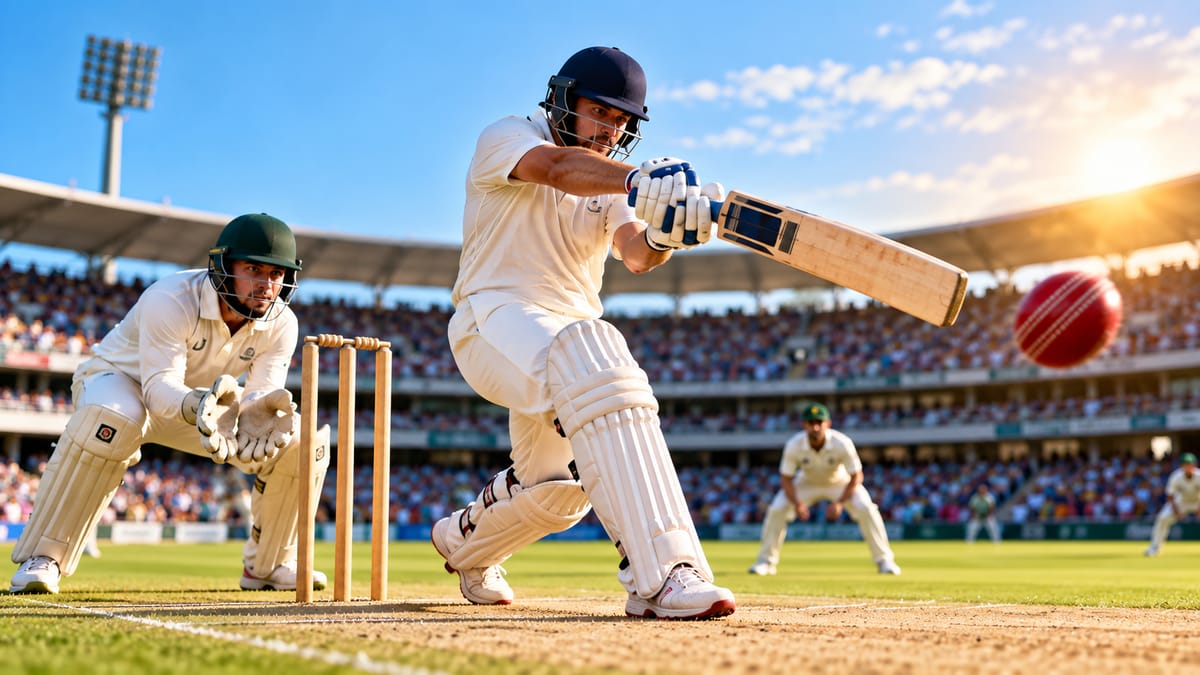
Batters have extremely limited time to respond to pitches.
They must process information about pitch speed, movement and location and decide whether to swing.
Boxing and combat sports
Reaction time can have immediate consequences in combat sports.
Athletes must recognize attacks, defend against them and create opportunities to counter. However, anticipation, footwork and positioning can reduce the need to rely entirely on raw reaction speed.
Motorsports
Drivers must respond rapidly to changes in track conditions, vehicle behavior and other competitors.
At high speeds, even small delays can produce significant differences in position or control.
Can Athletes Improve Their Reaction Time?
Reaction performance can be trained, although improvement depends on the type of reaction being targeted.
Athletes can practice drills that require them to respond to visual or auditory signals, react to unpredictable movements or make rapid decisions under competitive conditions.
The most useful drills generally resemble the demands of the sport.
For example, a soccer player may benefit more from reacting to an opponent’s movement while controlling a ball than from repeatedly pressing a button when a light appears.
Sport-specific training helps connect perception and decision-making with the movements athletes actually need during competition.
Decision-Making Is Part of Reaction Performance
Reaction time should not be reduced to speed alone.
An athlete needs to determine what to react to and how to respond.
In many sports, making the correct decision slightly later can be more valuable than making an incorrect decision instantly.
This is particularly important in situations involving multiple possible outcomes.
A basketball defender who immediately moves toward the wrong player has technically reacted quickly, but the response has harmed the team.
Training therefore increasingly incorporates decision-making, unpredictable stimuli and game-like scenarios instead of relying exclusively on predictable reaction drills.
Fatigue Can Affect Reactions
Physical and mental fatigue can influence an athlete’s ability to process information and execute movements.
As a competition continues, athletes may have greater difficulty maintaining concentration and responding accurately to rapidly changing situations.
Fatigue can also affect movement mechanics and coordination.
This is one reason recovery is an important component of athletic development. An athlete who is physically prepared but mentally fatigued may not perform at the same level as an athlete who enters competition fully recovered.
Performance analysis can help coaches identify these patterns. A Complete Guide to Sports Performance Analysis can provide broader context for understanding how performance data can be used to evaluate athletes and training outcomes.
Confidence and Reaction Performance
Psychological factors can also influence how athletes respond under pressure.
Confidence may affect decision-making, focus and willingness to commit to a movement.
An athlete who hesitates can lose valuable time even if their physical reaction capabilities are excellent. Conversely, an athlete who trusts their preparation may commit to a response more efficiently.
This does not mean confidence automatically makes an athlete faster. Rather, psychological readiness can influence how effectively physical abilities are used during competition.
The relationship between mindset and performance is explored further in How Confidence Affects Sports Performance.
Why Experience Can Make Athletes Seem Faster
Experienced athletes often appear to react faster than beginners, even when the difference is not simply a matter of raw reaction speed.
Experience gives athletes access to patterns.
A veteran player may recognize an opponent’s movement almost immediately because they have encountered similar situations many times before.
That allows the athlete to anticipate what is likely to happen and prepare accordingly.
Beginners often need to consciously analyze the same situation. Experienced athletes can recognize familiar patterns much more efficiently.
This is one reason sport-specific experience is difficult to replace with generic reaction exercises.
Measuring Reaction Time in Sports
Coaches and sports scientists can measure reaction performance in several ways.
Simple laboratory tests can measure how quickly an athlete responds to a light or sound. More advanced systems can introduce multiple stimuli and require specific movements.
Sports-specific testing may involve:
- Responding to moving targets
- Changing direction based on visual signals
- Catching or striking unpredictable objects
- Responding to an opponent’s movement
- Making decisions under time pressure
- Combining reaction tasks with physical movement
The goal is to determine whether an athlete can translate perception into useful performance.
A test that measures only button-press speed may provide limited information about how an athlete performs during a real game.
Reaction Time Is Only One Piece of the Performance Puzzle
Fast reactions can provide an advantage, but they do not guarantee sporting success.
Athletes also need the physical capacity to execute movements, the technical skills to perform them correctly and the tactical awareness to choose appropriate responses.
Training should therefore treat reaction time as part of an interconnected system.
The most effective performers are not necessarily those who simply react fastest to every stimulus. They are often the athletes who recognize important information quickly, anticipate what may happen next, make effective decisions and execute the appropriate movement with precision.
As sports become increasingly data-driven, coaches and athletes have more opportunities to study these components together. Reaction time can then be evaluated alongside speed, movement quality, decision-making, fatigue and other performance measures.
That broader approach helps explain why fractions of a second can matter so much in sport—and why the fastest response is not always the one that wins the play.



2 Comments
Micle harison
June 7, 2019Lorem ipsum dolor sit amet, usu ut perfecto postulant deterruisset, libris causae volutpat at est, ius id modus laoreet urbanitas. Mel ei delenit dolores.
John Doe
June 7, 2019Some consultants are employed indirectly by the client via a consultancy staffing company.