
What Is Sports Science and What Does It Study?
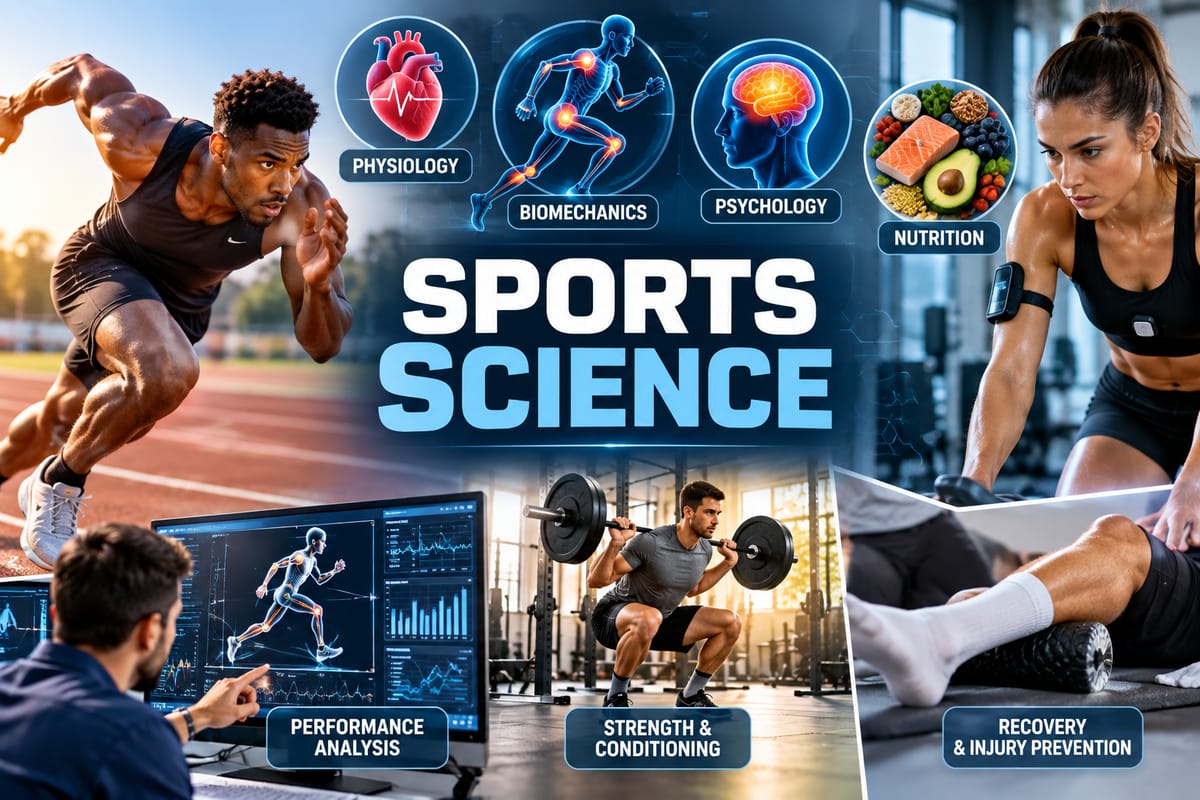
Sports science is the study of how the human body and mind respond to physical activity, training, competition, recovery, and the sporting environment. It brings together knowledge from areas such as physiology, biomechanics, psychology, nutrition, medicine, and performance analysis to better understand what helps athletes perform effectively and safely.
While sports science was once largely associated with elite competitors, its principles are now used across professional sports, schools, fitness programs, rehabilitation, and recreational exercise.
From analyzing how an athlete runs to understanding how the body recovers after intense training, sports science examines many of the factors that influence physical performance.
What Does Sports Science Actually Study?
Sports science covers a broad range of questions about exercise and athletic performance.
Researchers and practitioners may investigate how muscles produce force, how the cardiovascular system responds to exercise, how athletes learn skills, how nutrition affects performance, or how training loads influence recovery.
The field can generally be divided into several interconnected areas:
- Exercise physiology
- Biomechanics
- Sports psychology
- Sports nutrition
- Strength and conditioning
- Performance analysis
- Motor learning and skill development
- Sports medicine and injury prevention
- Recovery science
- Exercise and environmental physiology
These areas often overlap. For example, improving a runner’s performance could involve studying their running mechanics, aerobic capacity, strength, nutrition, training schedule, and psychological preparation at the same time.
Exercise Physiology Examines How the Body Responds to Training
Exercise physiology is one of the central areas of sports science.
It examines how the body’s systems respond to physical activity and how those systems adapt when exercise is performed repeatedly.
Researchers may study:
- Heart rate
- Oxygen consumption
- Blood circulation
- Breathing and lung function
- Muscle contractions
- Energy production
- Lactate responses
- Fatigue
- Thermoregulation
- Training adaptations
One important concept is aerobic capacity, often discussed using VO₂ max. It represents the body’s ability to take in and use oxygen during demanding exercise and is particularly relevant to endurance activities.
Exercise physiology can also help explain why training programs need to be progressively structured. The body adapts to repeated physical demands, but the type and amount of adaptation depend on factors such as exercise intensity, duration, frequency, recovery, and individual characteristics.
Biomechanics Studies How Athletes Move
Biomechanics applies principles of physics and mechanical analysis to human movement.
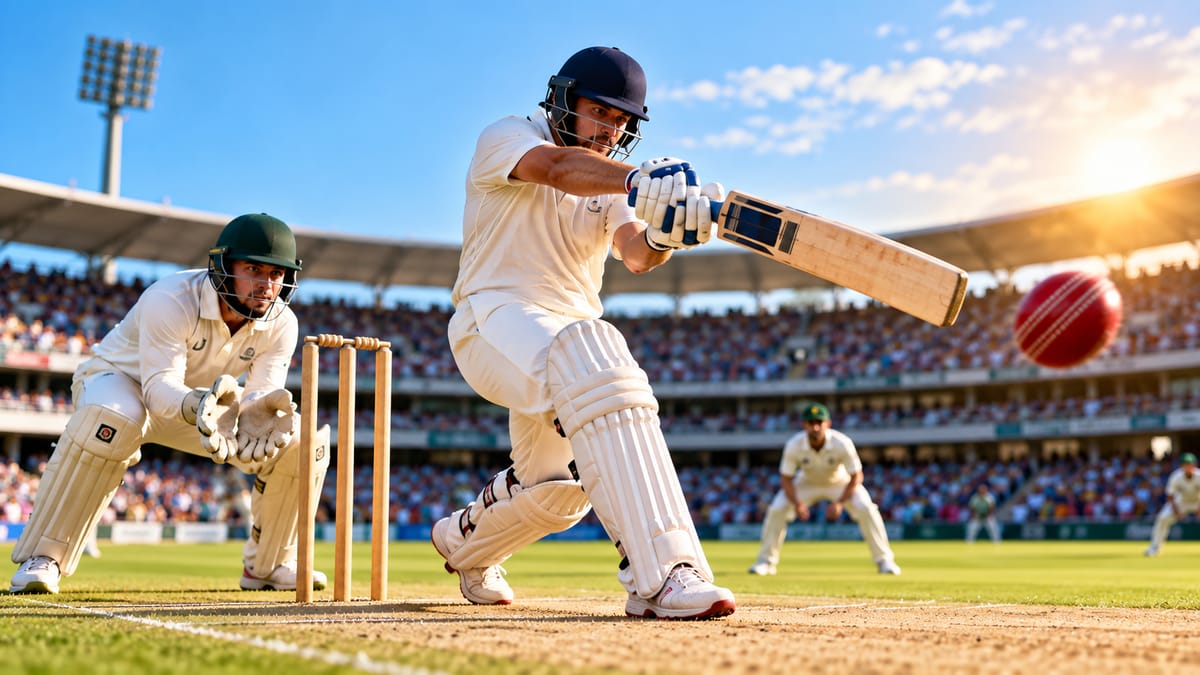
It can examine everything from the angle of a runner’s knee during a stride to the forces involved when a baseball player swings a bat or a basketball player jumps.
Sports scientists may analyze:
- Joint angles
- Force production
- Balance
- Acceleration
- Ground reaction forces
- Body position
- Movement efficiency
- Coordination
- Technique
Understanding these factors can help coaches and athletes identify movement patterns that may affect performance or place unnecessary stress on the body.
A deeper look at this field can be found in How Sports Biomechanics Explains Human Movement.
Sports Psychology Looks Beyond Physical Ability
Athletic performance is not determined entirely by physical characteristics.
Sports psychology examines the mental and emotional factors associated with exercise and competition. Researchers and practitioners may explore motivation, confidence, concentration, stress, anxiety, goal setting, team dynamics, and psychological recovery.
An athlete can be physically prepared but still struggle to perform under competitive pressure.
Mental preparation can therefore become an important component of training. Techniques such as visualization, structured goal setting, attention control, relaxation strategies, and pre-performance routines may be used to help athletes manage the psychological demands of competition.
Sports psychology also examines broader issues such as burnout, motivation changes, athlete identity, and the relationship between mental well-being and sporting participation.
Sports Nutrition Examines Fuel, Hydration and Recovery
Nutrition provides another major area of sports science.
Athletes use energy from food to support training, competition, recovery, and normal physiological functions. Sports nutrition therefore considers how carbohydrates, proteins, fats, vitamins, minerals, fluids, and overall energy intake relate to physical activity.
Nutrition strategies can vary considerably depending on the sport.
An endurance athlete may have different carbohydrate requirements from a strength athlete, while athletes competing in weight-class sports may face additional considerations surrounding body mass and nutrition.
Hydration is another important topic. Fluid requirements can change depending on exercise intensity, duration, temperature, humidity, clothing, and individual sweat rates.
Sports nutrition is therefore not simply about eating more or following a particular diet. It involves matching nutritional strategies to the demands of training and competition.
Strength and Conditioning Applies Sports Science to Training
Strength and conditioning translates scientific principles into structured exercise programs designed to improve physical qualities relevant to performance.
Depending on the sport, training may target:
- Strength
- Power
- Speed
- Agility
- Muscular endurance
- Mobility
- Balance
- Coordination
- Aerobic capacity
Training programs are typically designed around the specific demands of an athlete’s sport and position.
A football player, swimmer, sprinter, and distance runner may all require strength, but the way that strength is developed and applied can differ considerably.
The broader principles involved in developing athletic fitness are explored in The Complete Guide to Fitness for Athletes.
Sports Science Also Studies Recovery
Training creates stress on the body. Recovery provides an opportunity for the body to repair, adapt, and prepare for subsequent physical demands.
Sports science therefore pays close attention to recovery.
Researchers and coaches may consider:
- Sleep
- Rest periods
- Training intensity
- Nutrition
- Hydration
- Muscle soreness
- Fatigue
- Training frequency
- Psychological stress
Recovery is not necessarily the same for every athlete. Age, training history, fitness level, sport, workload, sleep quality, nutrition, and other factors can influence how quickly an individual recovers.
This is one reason sports scientists increasingly focus on managing training load rather than simply encouraging athletes to train harder.
Understanding Training Load Is Important
Training load describes the physical and sometimes psychological demands placed on an athlete.
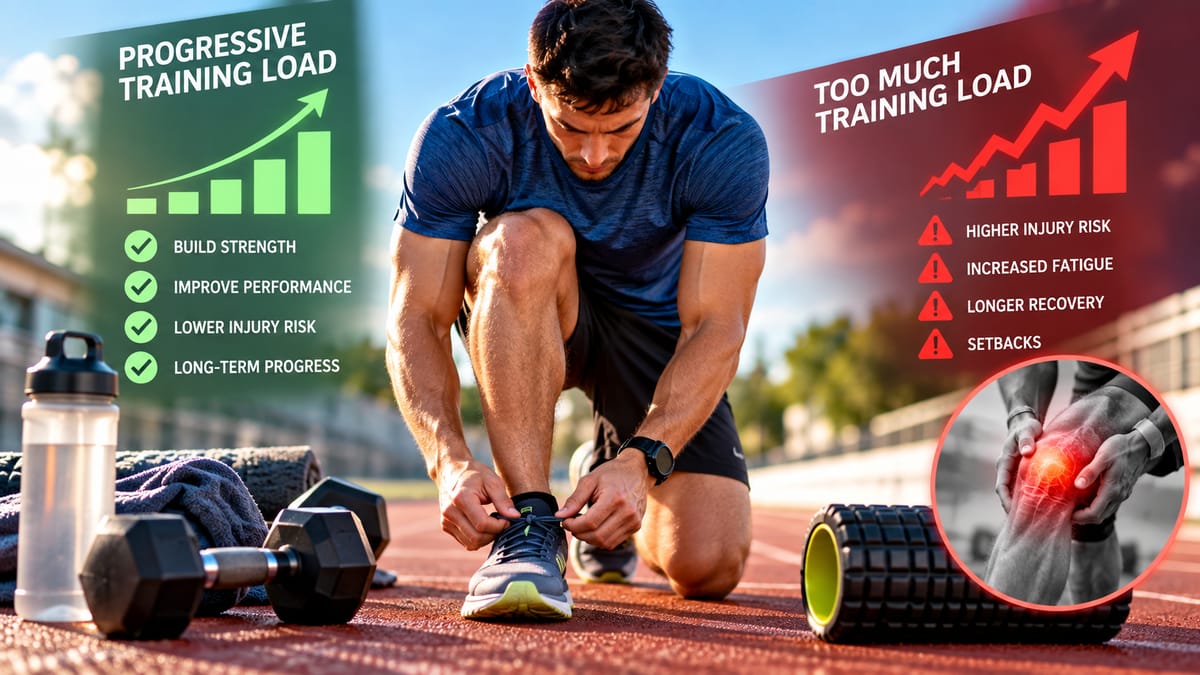
A training program can become problematic when workload increases too quickly or when demanding sessions are combined without sufficient recovery.
Sports scientists can use different measures to monitor training load, including exercise duration, intensity, heart-rate responses, distance covered, repetitions, resistance used, and subjective ratings of effort.
Monitoring these variables can help coaches identify patterns of excessive fatigue and adjust training when necessary.
The goal is not simply to minimize training stress. Athletes need sufficient stimulus to create adaptation. The challenge is finding an appropriate relationship between training stress and recovery.
Sports Science Helps Explain Athletic Performance
Athletic performance is the result of multiple interacting factors.
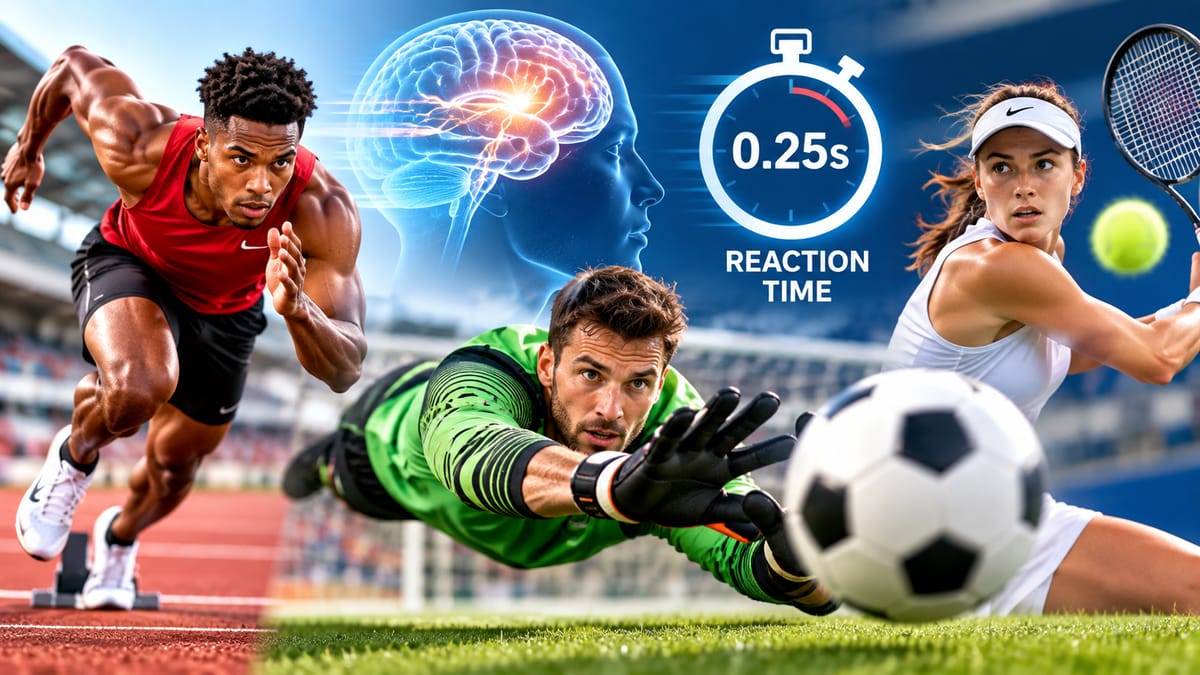
A sprinter’s performance, for example, can depend on strength, power, acceleration technique, reaction time, coordination, mobility, training history, recovery, nutrition, and psychological preparation.
Similarly, an endurance athlete’s performance can be influenced by aerobic capacity, running or cycling economy, pacing strategy, muscular endurance, environmental conditions, nutrition, and fatigue resistance.
This makes performance science inherently multidisciplinary.
Understanding Athletic Performance Principles provides a broader look at the factors that contribute to athletic performance and how they interact.
Performance Analysis Turns Competition Into Data
Modern sports generate enormous amounts of information.
Cameras, wearable sensors, GPS devices, timing systems, heart-rate monitors, force plates, motion-capture systems, and other technologies can collect data about athletes during training and competition.
Performance analysts can use this information to examine what happened during an event and identify patterns that may otherwise be difficult to see.
Depending on the sport, analysis might include:
- Distance covered
- Sprint frequency
- Passing accuracy
- Shot locations
- Possession
- Acceleration and deceleration
- Movement patterns
- Heart-rate responses
- Technical errors
- Tactical decisions
The purpose is not simply to collect as much information as possible. Useful analysis requires identifying meaningful variables and interpreting them within the context of the sport.
More detail on this area is available in the Complete Guide to Sports Performance Analysis.
Technology Has Changed Sports Science
Technology has significantly expanded what sports scientists can measure.
Wearable devices can track movement and physiological information. High-speed cameras can capture movements that are difficult to observe with the naked eye. Motion-analysis systems can break down technique frame by frame.
Artificial intelligence and machine learning are also increasingly being explored for sports data analysis, although the quality of any conclusion depends heavily on the quality of the underlying data and the way analytical models are designed.
Technology can provide more information, but more data does not automatically produce better decisions.
Coaches and sports scientists still need to understand what the measurements mean and whether they are relevant to the athlete’s specific circumstances.
Injury Prevention Is Another Major Area
Sports science can contribute to injury-prevention strategies by examining how training, movement, workload, equipment, environment, and previous injuries interact.
Biomechanical assessments may identify movement characteristics worth addressing, while training-load monitoring can help coaches understand how an athlete’s workload changes over time.
However, injury prevention is rarely about finding a single factor that guarantees protection from injury.
Sports injuries can have multiple contributing causes, including physical preparation, previous injury, technique, fatigue, playing surface, equipment, competition demands, and chance events.
Sports science therefore tends to focus on reducing modifiable risks rather than promising complete injury prevention.
Environmental Conditions Can Affect Performance
Athletes do not compete in controlled laboratory environments.
Temperature, humidity, altitude, wind, air quality, and playing surfaces can all influence performance.
Heat can increase physiological strain and affect hydration needs. High altitude reduces the amount of oxygen available in the air, which can affect endurance performance and require athletes to adapt their preparation.
Sports scientists study these environmental factors to help athletes prepare for the conditions they are likely to encounter.
Environmental research can also inform decisions about hydration, acclimatization, clothing, training schedules, and competition strategies.
Sports Science Is Relevant Outside Professional Sports
Although professional teams often have large sports-science departments, the field is not limited to elite athletes.
Its principles can also be applied to recreational runners, gym users, youth athletes, older adults, and people returning to physical activity.
Understanding how the body responds to training can help people build exercise programs that are progressive and appropriate for their abilities.
It can also encourage a more informed approach to recovery, nutrition, technique, and workload.
The same basic scientific principles apply whether someone is preparing for an Olympic competition or trying to improve their general fitness.
What Does a Sports Scientist Do?
The responsibilities of a sports scientist can vary considerably depending on their specialization and workplace.
A sports scientist might work with athletes and coaches to:
- Design or evaluate training programs
- Conduct fitness testing
- Analyze movement
- Monitor training loads
- Study physiological responses
- Assess performance data
- Support recovery strategies
- Conduct research
- Evaluate equipment or technology
- Communicate scientific findings to coaching staff
Some professionals specialize in a particular area, such as exercise physiology or biomechanics, while others work across multiple disciplines.
Sports scientists can also work in universities, research institutions, professional teams, sports organizations, fitness companies, healthcare environments, and technology businesses.
How Sports Science and Coaching Work Together
Sports science does not replace coaching.
Coaches bring practical knowledge of the sport, athletes, competition environments, tactics, communication, and day-to-day training. Sports scientists can contribute scientific measurement, research knowledge, testing methods, and data interpretation.
When those areas work together effectively, scientific information can become more useful in real-world training.
The process is not simply about collecting measurements and telling athletes what to do. It involves understanding the athlete’s goals, interpreting evidence, considering practical constraints, and deciding how information can be applied.
Why Individual Differences Matter
One of the most important principles in sports science is that athletes do not respond identically to the same training program.
Two athletes can complete the same workout and experience different levels of fatigue, adaptation, soreness, or performance improvement.
Genetics, age, training history, sleep, nutrition, stress, health, skill level, and other factors can influence responses to exercise.
This is why sports science increasingly emphasizes individualized approaches.
A training method that works well for one athlete may need to be modified for another.
The Growing Role of Evidence-Based Training
Sports science also encourages coaches and athletes to distinguish between established evidence, emerging research, practical experience, and unsupported claims.
Not every popular training method has strong scientific evidence behind it. At the same time, scientific research does not always provide a simple answer to every practical coaching question.
Evidence-based practice therefore involves considering research alongside professional expertise and the individual athlete’s circumstances.
This approach can help prevent training decisions from being driven solely by trends or anecdotal success stories.
Where Sports Science Is Heading
The field continues to evolve as new technologies and research methods become available.
Wearable sensors, automated video analysis, artificial intelligence, advanced motion capture, personalized training programs, and increasingly sophisticated physiological testing are expanding the amount of information available to athletes and coaches.
At the same time, sports scientists are becoming increasingly interested in how physical performance interacts with sleep, nutrition, psychology, recovery, environment, and long-term health.
The future of sports science is therefore unlikely to belong to a single discipline. Instead, progress will increasingly come from combining different forms of knowledge to understand athletes as complete systems.
Sports Science Connects Research With Performance
Sports science provides a framework for understanding what happens when people train, compete, recover, and adapt.
It studies the body through exercise physiology, movement through biomechanics, the mind through sports psychology, fuel and hydration through sports nutrition, and performance through testing and data analysis.
Its value comes from bringing these areas together.
Whether the goal is improving elite athletic performance, reducing injury risk, developing a training program, or simply understanding how exercise affects the body, sports science provides the research-based foundation for making better-informed decisions about physical activity and performance.


2 Comments
Micle harison
June 7, 2019Lorem ipsum dolor sit amet, usu ut perfecto postulant deterruisset, libris causae volutpat at est, ius id modus laoreet urbanitas. Mel ei delenit dolores.
John Doe
June 7, 2019Some consultants are employed indirectly by the client via a consultancy staffing company.