
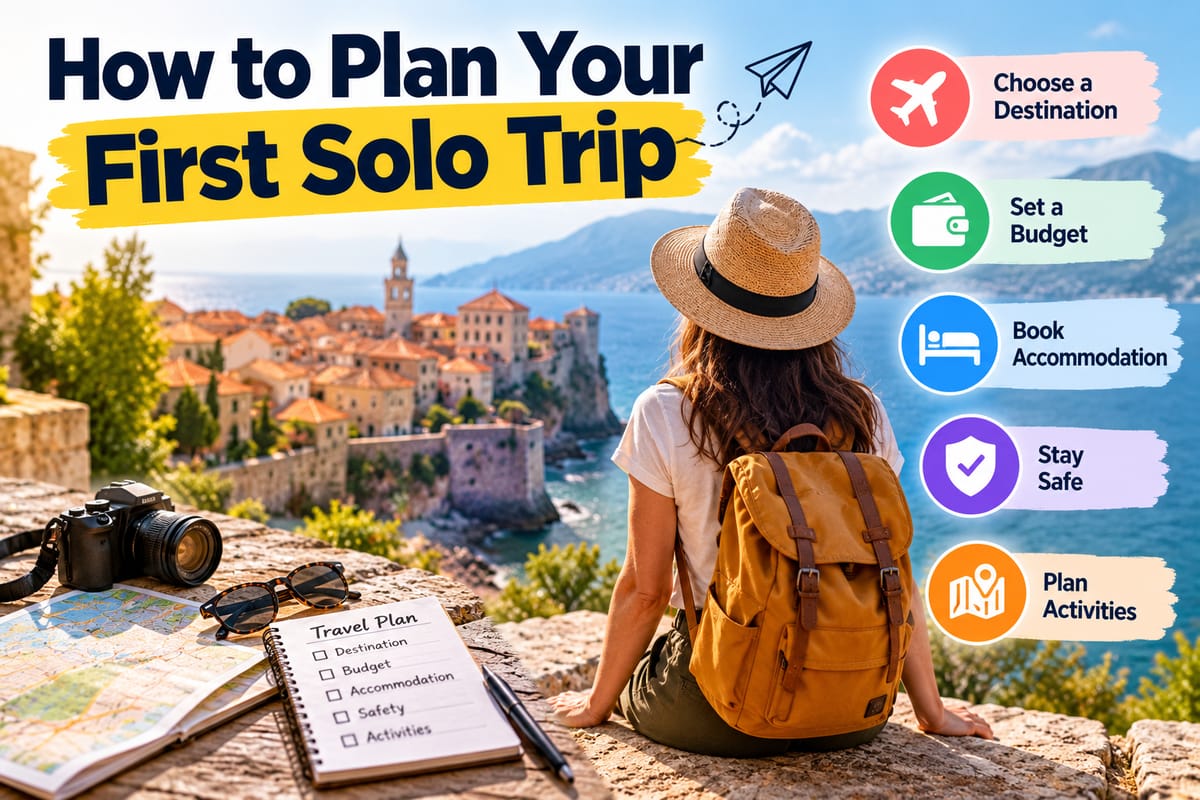
How to Plan Your First Solo Trip
Taking your first solo trip can feel both exciting and unfamiliar. Traveling alone means having the freedom to choose your destination, schedule, activities, accommodation, and pace without coordinating every decision with another person.
At the same time, solo travel requires more personal planning. You are responsible for your transportation, accommodation, documents, finances, communication, and basic safety arrangements.
A successful first solo trip does not require an elaborate itinerary or years of travel experience. It starts with choosing a manageable destination, creating a realistic budget, organizing the essential details, and leaving enough flexibility to enjoy the experience.
Decide What You Want From Your First Solo Trip
Before choosing a destination, think about what you want the trip to accomplish.
You might want:
- A relaxing break
- A cultural experience
- Outdoor adventure
- Time in nature
- Food and local experiences
- Museums and history
- Beach time
- Personal independence
- A short city break
Your priorities can help determine the type of destination and itinerary that will work best.
For example, someone looking for relaxation may prefer a destination with straightforward transportation and comfortable accommodation, while someone interested in adventure may prioritize access to outdoor activities.
Choose a Manageable Destination
Your first solo trip does not need to be the most ambitious journey you can imagine.
A destination with reliable transportation, accessible accommodation, familiar communication options, and plenty of activities can make the first experience easier to manage.
Consider:
- How easy it is to get around
- Language considerations
- Transportation options
- Accommodation availability
- Local infrastructure
- Travel distance
- Entry requirements
- General safety considerations
- Your personal comfort level
The Choosing Your Ideal Travel Destination guide can help you evaluate destinations based on your interests, travel style, and practical requirements.
Start With a Shorter Trip
A first solo trip does not have to last several weeks.
A two- or three-day trip can provide an opportunity to learn how you feel about traveling alone without creating an overly complicated itinerary.
A shorter trip can help you practice:
- Navigating airports or stations
- Checking into accommodation
- Managing your own schedule
- Eating alone
- Using local transportation
- Handling unexpected changes
- Keeping track of personal belongings
Once you become more comfortable, longer solo trips may feel easier to plan.
Research Entry Requirements
International travel can involve requirements that do not apply to domestic trips.
Depending on the destination and your nationality, you may need:
- A valid passport
- A visa
- Travel authorization
- Proof of onward travel
- Accommodation information
- Vaccination documentation where applicable
- Travel insurance
- Proof of sufficient funds
Requirements can change, so travelers should verify the current rules with the appropriate official authorities before departure.
The International Travel Guide provides broader information about planning international journeys and preparing for the practical requirements of traveling abroad.
Check Your Passport Early
If your trip involves international travel, check your passport well before departure.
Look at:
- Expiration date
- Remaining validity
- Blank pages where applicable
- Physical condition
Some destinations require passports to remain valid for a certain period beyond the planned arrival date.
Waiting until the last minute can create unnecessary complications if a passport needs to be renewed.
Create a Realistic Travel Budget
Budgeting is particularly important when traveling alone because you are responsible for all of your own expenses.
Your budget may need to include:
- Transportation
- Accommodation
- Food
- Local transportation
- Activities
- Travel insurance
- Visa or entry costs
- Mobile data
- Airport transfers
- Shopping
- Emergency expenses
The How to Create a Realistic Budget for an International Trip guide provides a broader framework for estimating travel costs.
Build an Emergency Fund Into the Budget
A travel budget should include more than expected expenses.
Set aside additional money for unexpected situations such as:
- Missed transportation
- Medical expenses
- Replacement documents
- Unexpected accommodation
- Delayed flights
- Additional meals
- Emergency transportation
You may never need this reserve, but having access to additional funds can make an unexpected situation easier to manage.
Decide How You Will Access Money
Before leaving, determine how you will pay for expenses at your destination.
Possible options include:
- Debit cards
- Credit cards
- Cash
- Travel money cards
- Digital payment services
Avoid relying on a single payment method.
Having a backup option can be useful if a card is lost, blocked, damaged, or not accepted.
Research Local Transportation
Transportation can be one of the most stressful parts of a first solo trip.
Research how you will travel between:
- Airport and accommodation
- Accommodation and major attractions
- Different neighborhoods
- Day-trip destinations
- Train or bus stations
Find out whether the destination primarily uses buses, trains, taxis, rideshare services, walking, rental cars, or other transportation options.
Knowing your first transportation route before arrival can make the beginning of the trip considerably easier.
Plan Your Arrival Carefully
The first few hours of a solo trip can be the most unfamiliar.
Before leaving home, know:
- Where you are staying
- How to get there
- Approximate travel time
- Check-in requirements
- How to contact the accommodation
- What to do if you arrive before check-in
If arriving late at night, consider whether transportation and accommodation check-in arrangements will still be available.
A little preparation can prevent a stressful first evening.
Choose Accommodation Carefully
Accommodation becomes especially important when traveling alone because there is no travel companion sharing responsibility for the decision.
Consider:
- Location
- Reviews
- Transportation access
- Reception or check-in arrangements
- Security features
- Cancellation policies
- Nearby restaurants and services
- Distance from major activities
A centrally located property can sometimes simplify transportation, although the best location depends on the destination and itinerary.
Don’t Overpack
Traveling alone means carrying and managing your own belongings.
Packing lighter can make it easier to:
- Navigate airports
- Use public transportation
- Walk between locations
- Store luggage
- Change accommodation
- Respond to unexpected changes
Focus on versatile clothing and essential items rather than packing for every possible scenario.
Make Copies of Important Documents
Keep accessible copies of important travel documents.
These can include:
- Passport
- Visa or travel authorization
- Travel insurance information
- Accommodation reservations
- Transportation bookings
- Emergency contacts
- Important medical information
Digital copies can be stored securely, while physical backups can provide another option if a device becomes unavailable.
Share Your Itinerary With Someone You Trust
Solo travel does not mean nobody should know where you are.
Before leaving, provide a trusted person with information such as:
- Destination
- Accommodation
- Travel dates
- Major transportation plans
- Emergency contact details
You can also establish a simple check-in routine if that makes sense for the trip.
The goal is to ensure someone knows your general plans without requiring you to report every movement.
Learn Basic Local Information
Before departure, learn a few practical details about the destination.
Research:
- Local currency
- Common payment methods
- Time zone
- Emergency services
- Basic transportation
- Local customs
- Common phrases
- Weather conditions
- Areas you may want to avoid
- Typical business hours
You do not need to memorize everything. A small amount of preparation can make everyday decisions easier.
Learn a Few Useful Local Phrases
If you are visiting a place where you do not speak the primary language, learning a few basic phrases can be helpful.
Useful phrases may include:
- Hello
- Thank you
- Please
- Excuse me
- Where is…?
- How much does this cost?
- I need help
- I do not understand
Even when communication is difficult, polite attempts to use the local language can make basic interactions easier.
Plan Your Activities Without Filling Every Hour
An itinerary gives structure to a solo trip, but overplanning can make the experience tiring.
Instead of scheduling every minute, choose a few priority activities for each day.
For example:
Morning: Museum visit
Afternoon: Local neighborhood exploration
Evening: Dinner and relaxed walk
This leaves room for:
- Unexpected discoveries
- Rest
- Weather changes
- Delays
- Spontaneous activities
Flexibility is particularly useful when traveling alone because you do not have to coordinate changes with another traveler.
Research Before Booking Major Activities
Some attractions and experiences require advance reservations.
Check whether you need to book:
- Museum entry
- Tours
- Trains
- Popular restaurants
- National parks
- Sporting events
- Cultural experiences
Booking essential activities in advance can prevent disappointment while still leaving flexibility for the rest of your trip.
Think About Food Before You Arrive
Eating alone can initially feel unfamiliar for some first-time solo travelers.
It can help to research restaurants, cafés, markets, and other food options before arrival.
You can also choose different dining styles depending on your comfort level:
- Casual cafés
- Food markets
- Counter-service restaurants
- Local bakeries
- Restaurants with outdoor seating
- Cooking classes
- Group food tours
Solo dining can eventually become one of the more comfortable parts of traveling independently.
Take Care of Your Personal Safety
Solo travelers should maintain awareness of their surroundings without allowing safety concerns to prevent them from enjoying the trip.
Basic precautions can include:
- Keep important belongings secure
- Avoid displaying large amounts of cash
- Be cautious with unfamiliar people offering unsolicited assistance
- Keep your phone charged
- Know how to return to your accommodation
- Avoid taking unnecessary risks
- Be aware of local laws and customs
The Travel Safety Guide provides additional information about preparing for common travel safety situations.
Keep Emergency Contacts Accessible
Save important contact information before leaving.
This can include:
- Local emergency services
- Accommodation
- Travel insurance provider
- Airline or transportation provider
- Your country’s embassy or consular service where applicable
- Trusted contacts at home
Keep essential information available even if your phone loses internet access.
Protect Your Phone and Electronics
Your phone can be particularly important when traveling alone because it may provide:
- Navigation
- Communication
- Translation
- Digital tickets
- Accommodation information
- Banking access
- Emergency contacts
Bring an appropriate charger and consider carrying a portable battery.
Avoid relying entirely on your phone for critical information. Keep important addresses and booking details accessible offline when possible.
Be Careful With Public Wi-Fi
Public Wi-Fi can be convenient, but travelers should exercise caution when accessing sensitive accounts.
Avoid unnecessary financial transactions on unsecured networks, use appropriate device security, and keep important accounts protected with strong authentication.
Downloading maps and important documents before departure can also reduce dependence on public networks.
Keep Your Accommodation Address Available
Knowing the name and address of your accommodation can be surprisingly important.
Keep it available in:
- Your phone
- Offline maps
- A written note
- Your travel documents
If you become disoriented or lose internet access, having the address available can make it easier to ask for directions or arrange transportation.
Have a Plan for Getting Lost
Getting lost can happen even with good planning.
If it occurs:
- Move to a safe, populated location.
- Check your offline map.
- Ask a reputable local source for directions.
- Contact your accommodation if necessary.
- Avoid rushing into an unfamiliar situation simply to get somewhere quickly.
Getting temporarily lost does not mean the trip has gone wrong. It is often part of learning how to navigate a new environment independently.
Give Yourself Time to Adjust
The first day of solo travel may feel different from traveling with other people.
You may experience:
- Excitement
- Nervousness
- Freedom
- Loneliness
- Curiosity
- Mental fatigue
These reactions can change as you become familiar with your surroundings.
Give yourself time to settle into the destination rather than expecting the entire experience to feel effortless immediately.
Stay Connected Without Being Constantly Connected
Regular communication with friends or family can provide reassurance, but solo travel can also be an opportunity to disconnect from everyday routines.
Find a balance that works for you.
You might:
- Send a daily message
- Share occasional photos
- Schedule a short call
- Keep your phone available for emergencies
You do not need to document every moment of the trip.
Keep Your First Day Simple
A complicated first day can make a solo trip unnecessarily stressful.
Consider planning:
- Straightforward transportation
- Easy accommodation check-in
- A nearby meal
- One manageable activity
- Plenty of rest
Once you understand the local environment, you can increase the pace if you want to.
Leave Room for Unexpected Experiences
One of the advantages of solo travel is flexibility.
You can change your plans without needing to negotiate with another traveler.
You might discover:
- A local market
- A small museum
- A scenic walking route
- A neighborhood café
- A cultural event
- A recommendation from a local
Leaving some unplanned time allows these discoveries to become part of the trip.
Learn From the Experience
Your first solo trip can teach you about more than the destination.
You may discover:
- How you handle uncertainty
- How much planning you prefer
- How comfortable you are navigating alone
- What type of accommodation suits you
- How you manage travel budgets
- How much independence you enjoy
Take notes about what worked and what did not.
Those observations can make future trips easier to plan.
A Simple First Solo Trip Planning Checklist
Before departure, confirm the following:
Documents
- Passport or identification
- Visa or required authorization
- Travel insurance
- Transportation confirmations
- Accommodation details
Money
- Main payment method
- Backup payment method
- Some appropriate access to cash
- Emergency funds
- Awareness of foreign transaction costs where applicable
Transportation
- Arrival route
- Local transportation options
- Important departure times
- Backup options
Accommodation
- Confirmed reservation
- Check-in instructions
- Address
- Contact information
Safety
- Emergency contacts
- Local emergency information
- Trusted person aware of your itinerary
- Secure storage for important documents
Daily Plans
- Priority activities
- Restaurant or food options
- Free time
- Weather considerations
Avoid Trying to Make the Trip Perfect
A first solo trip will probably not go exactly according to plan.
A train may be delayed. A restaurant may be closed. The weather may change. You may take the wrong bus or discover that an attraction is less interesting than expected.
These experiences do not necessarily make a trip unsuccessful.
Part of becoming a more confident traveler is learning how to adjust when circumstances change.
Building Confidence Through Solo Travel
Planning your first solo trip is primarily about creating enough structure to feel prepared while leaving enough flexibility to explore independently.
Choose a destination that matches your experience level, establish a realistic budget, organize your documents, research transportation and accommodation, prepare for basic safety situations, and share your general plans with someone you trust.
Once those foundations are in place, the rest of the journey can be about experiencing the destination at your own pace. Solo travel offers an unusual kind of freedom: you can decide where to go, what to see, when to rest, and when to change direction.
Your first trip does not need to be perfect. It simply needs to be planned well enough that you can focus less on managing logistics and more on discovering what traveling on your own can offer.



2 Comments
Micle harison
June 7, 2019Lorem ipsum dolor sit amet, usu ut perfecto postulant deterruisset, libris causae volutpat at est, ius id modus laoreet urbanitas. Mel ei delenit dolores.
John Doe
June 7, 2019Some consultants are employed indirectly by the client via a consultancy staffing company.