
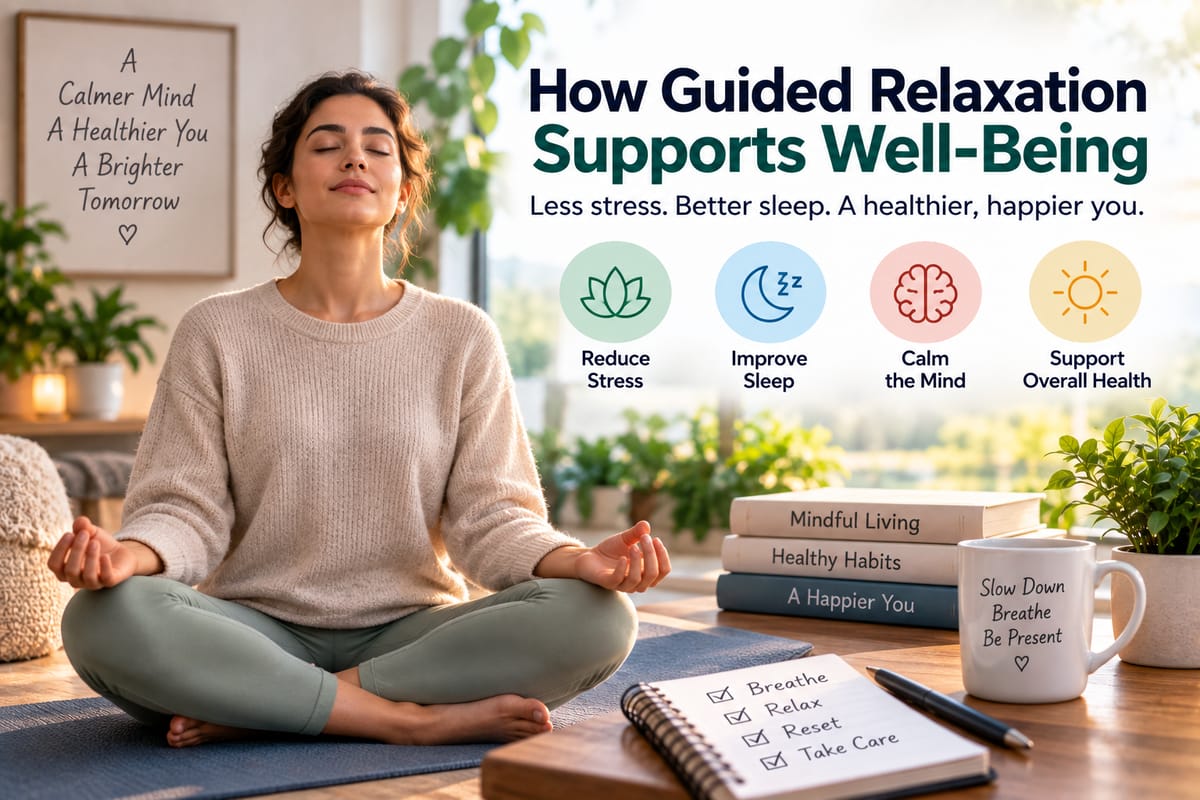
How Guided Relaxation Supports Well-Being
Modern life can make it difficult to slow down. Work responsibilities, family demands, digital notifications, financial concerns, and everyday uncertainty can keep the mind active long after the day’s main tasks are finished.
Guided relaxation offers a structured way to create periods of calm. Rather than simply telling someone to “relax,” guided relaxation uses instructions, breathing techniques, visualization, body awareness, or other methods to direct attention away from immediate stressors and toward a calmer physical and mental state.
Regular relaxation practices can become one part of a broader approach to well-being. They may support better stress management, encourage restful routines, make it easier to transition into sleep, and provide a practical way to create moments of recovery during busy days.
What Is Guided Relaxation?
Guided relaxation is a practice in which someone follows spoken or written instructions designed to promote physical and mental relaxation.
A session may involve:
- Slow, deliberate breathing
- Progressive muscle relaxation
- Guided imagery
- Body scanning
- Mindful attention
- Visualization
- Gentle stretching
- Calming sounds or music
- Instructions for releasing physical tension
Sessions can be short or relatively long. Some people use a few minutes of guided breathing during a busy day, while others use longer relaxation sessions as part of an evening routine.
The defining feature is the guidance. Instead of having to decide independently what to focus on, the person follows a sequence of instructions.
How Guided Relaxation Affects the Body
Stress can produce physical changes throughout the body. During stressful situations, the nervous system can increase alertness and prepare the body to respond to a perceived challenge.
Breathing may become faster, muscles can tense, heart rate can change, and attention may become focused on the source of stress.
Relaxation practices encourage a shift away from sustained alertness.
Slow breathing and deliberate attention can help a person become more aware of physical tension and create an opportunity to release it. The experience differs from person to person, but many relaxation exercises are designed to encourage a calmer physiological state.
Understanding the body’s response to stress can provide useful context. How Cortisol Participates in Stress Responses explains the role of cortisol in the body’s stress response.
Guided relaxation should not be viewed as a way to eliminate the body’s normal stress response. Stress itself is a normal biological process. The goal is to provide opportunities for recovery when ongoing demands make it difficult to settle down.
Breathing Is Often at the Center of Relaxation
Breathing is frequently incorporated into guided relaxation because it provides an accessible point of focus.
A simple exercise may ask someone to:
- Sit or lie comfortably.
- Notice the natural rhythm of breathing.
- Gradually slow the pace without forcing it.
- Pay attention to the sensation of inhaling and exhaling.
- Return attention to the breath whenever the mind wanders.
The objective is not necessarily to achieve a perfect breathing pattern.
Instead, concentrating on breathing can provide a simple anchor for attention and reduce the tendency to become absorbed in constantly changing thoughts.
People should avoid forcing their breath or deliberately holding it for uncomfortable periods. A comfortable, natural approach is generally more appropriate for a basic relaxation exercise.
Progressive Muscle Relaxation
Progressive muscle relaxation is another common guided technique.
It involves systematically bringing attention to different muscle groups and consciously relaxing them.
A session may move from areas such as the:
- Face
- Neck
- Shoulders
- Arms
- Hands
- Chest
- Abdomen
- Legs
- Feet
Some versions involve briefly tensing a muscle group before releasing the tension, while others focus entirely on noticing and relaxing areas that feel tight.
This technique can help people recognize how much physical tension they carry without consciously noticing it.
For someone who frequently tightens their shoulders or jaw during stressful periods, increased awareness can be particularly useful.
Guided Imagery Uses the Mind’s Attention
Guided imagery uses descriptive instructions to encourage a person to imagine a peaceful or comfortable setting.
A session might invite someone to picture:
- A quiet beach
- A forest
- A garden
- A calm lake
- A comfortable room
- Another personally meaningful peaceful environment
The exercise can involve imagining sights, sounds, textures, temperature, or other sensory details.
The purpose is not to pretend that a stressful situation does not exist. Instead, guided imagery temporarily gives attention another direction.
This can be particularly useful for people who find it difficult to concentrate on breathing alone.
Guided Relaxation and Sleep
Relaxation and sleep are closely connected because difficulty winding down can make it harder to transition from daytime activity to nighttime rest.
An evening relaxation routine may help create a consistent signal that the day is coming to an end.
For example, someone might:
- Dim the lights
- Put away work-related devices
- Sit comfortably
- Follow a short breathing exercise
- Complete a guided body scan
- Transition into bed
Relaxation should not be considered a guaranteed treatment for sleep disorders, but it can be a useful component of a healthy sleep routine.
For a broader look at the factors involved in healthy sleep, The Science of Sleep explores how sleep works and why it is important for the body and brain.
Creating a Transition Between Activities
One practical benefit of guided relaxation is that it can create a boundary between different parts of the day.
Without intentional transitions, work, school, caregiving, social activities, and digital communication can blend together.
A short relaxation session can provide a deliberate pause.
For example:
Work → Relaxation → Personal time
Or:
Exercise → Relaxation → Evening routine
These transitions can make it easier to recognize when one activity has ended and another has begun.
Guided Relaxation Can Help People Notice Stress Earlier
Many people recognize stress only after physical or emotional symptoms become obvious.
They may suddenly notice:
- Tight shoulders
- Jaw tension
- Headaches
- Restlessness
- Racing thoughts
- Irritability
- Difficulty concentrating
- Rapid or shallow breathing
Regular relaxation practice can increase awareness of these signals.
The more familiar someone becomes with their usual stress response, the easier it may be to recognize when they need a break or a change in activity.
This awareness does not mean every physical sensation is caused by stress. Persistent, severe, or unexplained symptoms should be discussed with an appropriate healthcare professional.
The Role of Consistency
Relaxation does not necessarily have to be a long activity to become useful.
A person may benefit from practicing for a few minutes at a consistent time rather than attempting a long session occasionally.
Possible times include:
- After waking
- During a work break
- After exercise
- Before an evening meal
- Before bed
- During a transition between responsibilities
The most sustainable routine is one that fits realistically into everyday life.
Guided Relaxation Can Become a Habit
A relaxation exercise can become easier to remember when it is connected to an existing routine.
For example:
After brushing my teeth at night, I will complete a five-minute relaxation exercise.
This approach uses an existing behavior as a cue for a new one.
Over time, the sequence can become more familiar and require less deliberate planning.
The behavioral principles behind this process are explored in The Science of Habits.
The goal is not to create a rigid routine that becomes another source of pressure. If a particular approach feels difficult to maintain, the routine can be simplified.
Short Sessions Can Still Be Practical
Some people avoid relaxation because they believe they need a large amount of uninterrupted time.
That is not necessarily the case.
A short session might involve:
Two-Minute Reset
- Sit comfortably.
- Relax your shoulders.
- Take several comfortable, slow breaths.
- Notice how your body feels.
- Allow your attention to settle before returning to your activity.
Five-Minute Body Scan
- Begin with your face and jaw.
- Move attention through your neck and shoulders.
- Notice your arms and hands.
- Continue toward your chest and abdomen.
- Finish with your legs and feet.
- Relax areas that feel unnecessarily tense.
Ten-Minute Evening Session
A longer session could combine breathing, progressive muscle relaxation, and guided imagery.
These are examples of general relaxation practices rather than medical treatments.
Guided Relaxation Can Complement Physical Activity
Physical activity and relaxation may appear to serve different purposes, but they can work together as parts of a broader wellness routine.
Exercise can support physical fitness and provide opportunities for movement, while relaxation can provide a deliberate period of recovery and mental unwinding.
For example, someone might finish a workout with a few minutes of gentle breathing rather than immediately moving into another demanding activity.
The important point is balance. Relaxation should complement healthy movement rather than become a substitute for regular physical activity.
Lifestyle Habits Influence Overall Well-Being
Relaxation is only one part of a larger picture.
Well-being is influenced by multiple factors, including:
- Sleep
- Nutrition
- Physical activity
- Stress management
- Social relationships
- Substance use
- Environment
- Preventive healthcare
- Daily routines
How Lifestyle Factors Influence Disease Risk provides broader context on how everyday behaviors and environmental factors can influence health.
This wider perspective is important because guided relaxation should not be presented as a solution to every health concern.
Relaxation Can Support a Healthier Relationship With Stress
Stress is not always harmful. Short-term stress can help people respond to challenges, stay alert, and complete demanding tasks.
Problems can arise when stressful demands are persistent and opportunities for recovery are limited.
Guided relaxation creates a structured opportunity to pause.
Rather than attempting to eliminate every stressful experience, the practice encourages people to develop a routine for stepping back, noticing their state, and allowing themselves time to recover.
Making Guided Relaxation Comfortable
A relaxation practice does not require a special room or expensive equipment.
A comfortable setting may include:
- A quiet chair
- A comfortable bed
- Soft lighting
- A quiet outdoor space
- Headphones
- A timer
- A guided audio session
Some people prefer complete silence, while others find gentle background sounds helpful.
Comfort matters more than creating a perfect environment.
What If the Mind Keeps Wandering?
A wandering mind is normal during relaxation.
People may suddenly think about:
- Work
- Family
- Money
- Upcoming responsibilities
- Conversations
- Tasks they forgot
- Random memories
Trying to force thoughts away can sometimes make the exercise more frustrating.
Instead, a person can simply notice that attention has wandered and gently return to the breathing, voice, physical sensation, or image being used as the focus.
The practice is not about achieving a completely empty mind.
It is about repeatedly returning attention to the present exercise.
What If Relaxation Feels Uncomfortable?
Not every relaxation technique works equally well for everyone.
Some people may find closing their eyes uncomfortable. Others may become more aware of anxious thoughts when sitting quietly.
In those situations, alternatives can include:
- Keeping the eyes open
- Focusing on the surrounding environment
- Walking slowly
- Using gentle stretching
- Listening to calming sounds
- Practicing shorter sessions
- Choosing a different guided technique
If relaxation exercises consistently increase distress or bring up difficult experiences, it may be appropriate to stop and discuss the experience with a qualified healthcare professional.
Using Guided Relaxation During a Busy Day
Relaxation does not have to be reserved for bedtime.
A brief session during the day can create a useful pause between demanding tasks.
For example, before an important meeting, a person might spend two minutes sitting quietly and breathing comfortably.
After a stressful phone call, they might step away from their desk and complete a short body scan.
During a long workday, a few minutes of deliberate relaxation may provide a clear transition before returning to the next responsibility.
These small pauses can make relaxation feel more practical than treating it as a major daily commitment.
Building a Sustainable Relaxation Routine
A simple approach can make the practice easier to maintain.
Start Small
Begin with a few minutes rather than demanding a long session.
Choose a Reliable Cue
Connect relaxation with an established routine, such as waking up or preparing for bed.
Use the Same Technique
Repeating a familiar exercise can make the process easier to remember.
Make It Convenient
Keep the necessary materials or audio resources easy to access.
Avoid Perfectionism
Missing one session does not mean the routine has failed.
Adjust When Necessary
Change the duration, timing, or technique if the original approach does not fit your life.
The purpose of a wellness routine is to support daily life rather than create another obligation that produces stress.
Guided Relaxation Is One Piece of Well-Being
Guided relaxation can provide a practical way to slow down, notice physical tension, regulate attention, and create moments of recovery during a demanding day.
Its potential value becomes clearer when it is viewed as part of a larger lifestyle rather than as a standalone solution. Adequate sleep, regular movement, nutritious food, meaningful relationships, preventive healthcare, and effective stress management all contribute to overall well-being.
A few quiet minutes may not change every source of stress, but creating a consistent opportunity to pause can make relaxation a realistic part of everyday life. Over time, a simple breathing exercise, body scan, or guided visualization can become a familiar routine that helps create more space for rest and recovery.




2 Comments
Micle harison
June 7, 2019Lorem ipsum dolor sit amet, usu ut perfecto postulant deterruisset, libris causae volutpat at est, ius id modus laoreet urbanitas. Mel ei delenit dolores.
John Doe
June 7, 2019Some consultants are employed indirectly by the client via a consultancy staffing company.