

How Opponent Analysis Affects Sports Strategy
Sports strategy is rarely built around a team’s strengths alone. Coaches and athletes must also understand the strengths, weaknesses, habits and tendencies of the opponent standing across from them.
This process, known as opponent analysis, has become an important part of preparation across many sports. Coaches study previous performances, examine statistics, review video footage and identify patterns that could influence how a team approaches an upcoming contest.
The goal is not simply to predict what an opponent will do. Effective analysis helps athletes prepare for different situations and make better decisions when the game begins.
From football and basketball to tennis, baseball and other competitive sports, opponent analysis can influence formations, tactics, player assignments, substitutions and even the psychological preparation of athletes.
What Is Opponent Analysis?
Opponent analysis is the systematic study of another team or athlete to understand how they perform and how they are likely to approach competition.
Coaches may examine areas such as:
- Offensive and defensive tendencies
- Preferred formations and playing styles
- Individual player strengths
- Common tactical patterns
- Set plays and routines
- Weaknesses under pressure
- Performance in different game situations
- Recent changes in strategy
- Physical and technical characteristics
- Historical performances against similar opponents
The information gathered through this process can then be incorporated into training and match preparation.
Opponent analysis is closely connected to the broader field of sports performance analysis, where data and observations are used to understand performance and identify opportunities for improvement.
Why Coaches Study Opponents
Every opponent presents a different challenge.
A basketball team that relies heavily on three-point shooting may require a different defensive approach from a team that prefers to attack the basket. A football team that builds patiently from the back may require a different pressing strategy from one that frequently plays long passes.
Without studying these differences, teams risk using the same approach against every opponent.
That can make tactics predictable and allow opponents to exploit weaknesses.
Opponent analysis gives coaches an opportunity to prepare specifically for the problems they expect to encounter.
Video Analysis Reveals Tactical Patterns
Video has become one of the most valuable tools for studying opponents.
Coaches can review previous matches repeatedly, slowing down important sequences and examining how players react to different situations.
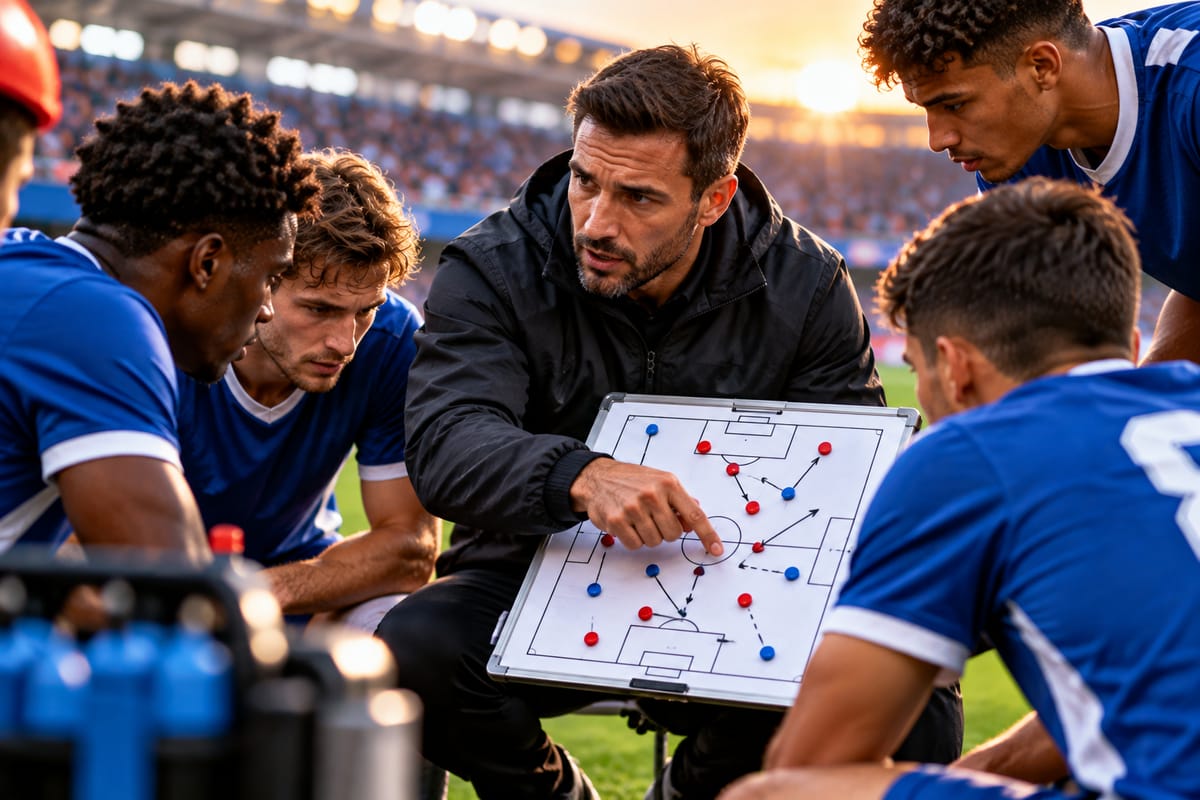
A video review might reveal that a football team consistently attacks down one side of the field or that a basketball team frequently creates scoring opportunities through a particular screen.
In tennis, analysts might identify where an opponent tends to serve under pressure or which shots they use when pulled away from the center of the court.
These observations can help coaches design realistic training exercises that recreate situations athletes are likely to encounter.
Statistics Add Another Layer of Information
Video can show how something happens, while statistics can help reveal how often it happens.
Teams can analyze shooting percentages, possession, passing accuracy, turnovers, defensive actions, scoring efficiency and numerous other performance indicators.
Modern sports analytics has expanded the amount of information available to coaches. A deeper understanding of how sports statistics and analytics measure athletic performance can help teams separate meaningful patterns from isolated events.
For example, a player might appear to be an excellent scorer based on one outstanding game. A larger sample of performances may show that the player is much less effective when closely defended.
Statistics can therefore provide context that video observations alone may not reveal.
Identifying Strengths Helps Teams Prepare
Opponent analysis is not only about finding weaknesses.
Understanding what an opponent does particularly well can be equally important.
A team may have an exceptionally strong transition attack, a dangerous set-piece routine or a player who consistently creates opportunities from difficult positions.
Knowing these strengths allows coaches to develop strategies designed to reduce their impact.
For example, a basketball team facing an elite perimeter shooter may place greater emphasis on closing out quickly. A football team facing a dangerous counterattacking opponent may be more careful about committing too many players forward.
The objective is to make the opponent’s preferred approach more difficult to execute.
Finding Weaknesses Creates Opportunities
Every competitive team has weaknesses, even if they are difficult to identify.
A team may struggle when forced to defend for long periods. Another might have difficulty dealing with aggressive pressing. An individual athlete may have a predictable response when placed under pressure.
Opponent analysis attempts to identify these vulnerabilities without assuming that every weakness will automatically produce an advantage.
Coaches must determine whether their own athletes have the ability to exploit a particular weakness.
This is where tactical planning becomes important. As discussed in how tactics create advantages in different sports, successful tactics connect available resources and player abilities with specific competitive opportunities.
Individual Matchups Can Shape Strategy
Opponent analysis often goes beyond studying entire teams.
Coaches may examine individual matchups to determine which players are likely to have the greatest influence on the contest.
In basketball, this could involve determining how a defender should handle a particular scorer. In tennis, it might mean identifying whether an opponent struggles against certain types of serves or returns.
In football, coaches may study how an opposing winger reacts when faced with an aggressive fullback.
These individual details can influence starting lineups, player roles and tactical instructions.
Opponent Analysis Influences Training
One of the most useful effects of opponent analysis occurs before competition begins.
Coaches can use their findings to shape training sessions around specific challenges.
If an opponent is known for applying intense pressure, a team can practice making quick decisions under pressure. If the opponent frequently attacks through crosses, defenders can work on positioning and aerial challenges.
This makes training more directly connected to the demands athletes are likely to face.
However, effective preparation should not become so specific that athletes lose the ability to adapt. Training still needs to develop fundamental skills and decision-making abilities that remain useful regardless of the opponent.
Strategy Must Account for Uncertainty
No analysis can perfectly predict a game.
Opponents can change tactics. Players can perform differently from their historical averages. Injuries, weather, momentum and unexpected decisions can alter the course of competition.
A coach who becomes too dependent on a single prediction may struggle when circumstances change.
For this reason, opponent analysis is most useful when it prepares athletes for several possible scenarios.
A team might develop a primary game plan along with alternative responses if the opponent changes formation, scores first or adopts a more defensive approach.
Preparation creates options rather than certainty.
Analytics Can Identify Hidden Tendencies
Modern analytical systems can reveal patterns that are difficult to notice during ordinary viewing.
For example, data may show that an athlete performs particularly well in certain game states but struggles in others. A team might also demonstrate different levels of efficiency depending on whether it has an early lead or is trying to recover from a deficit.
These details can influence strategic decisions.
Analytics may also allow coaches to compare opponents across multiple matches instead of relying on one recent performance.
The most effective approach combines statistical evidence with coaching knowledge and direct observation.
Psychological Preparation Matters Too
Opponent analysis can influence the mental side of competition.
Athletes who understand what they are likely to encounter may feel more prepared when difficult situations arise.
A player who knows that an opponent frequently changes pace, for example, can prepare mentally for those variations rather than being surprised by them.
However, excessive focus on an opponent can also create problems. Athletes may become overly concerned with what the other side is doing and lose confidence in their own abilities.
The best preparation usually balances respect for the opponent with confidence in the team’s own strengths.
Strategy Changes During Competition
Opponent analysis does not stop when the game begins.
Coaches and athletes can compare what they observe during competition with what they expected from their pregame analysis.
If an opponent is defending differently than anticipated, the team may need to adjust its approach.
This ability to adapt is especially important in sports where tactical situations can change rapidly.
A well-prepared team should therefore understand its opponent while also remaining capable of responding to new information.
Different Sports Require Different Analysis
Opponent analysis is not identical across sports.
In football, analysts may focus heavily on formations, pressing, transitions, set pieces and passing patterns.
Basketball analysis may emphasize shot selection, defensive coverage, spacing, ball screens and individual matchups.
Tennis analysis can focus on serving patterns, rally tendencies, movement and responses under pressure.
Baseball analysis may involve pitch selection, batting tendencies, defensive positioning and matchup statistics.
The principles are similar, but the specific information that matters depends on the structure and demands of the sport.
Athletic Performance Still Matters
A perfect game plan cannot compensate for poor execution.
Players need the physical conditioning, technical skills and decision-making ability required to carry out tactical instructions.
This is why opponent analysis should be considered alongside broader athletic performance principles.
Strength, speed, endurance, coordination, recovery and mental preparation can all determine whether a tactical advantage translates into actual results.
A coach may identify a weakness in an opponent, but exploiting it requires athletes capable of executing the necessary movements and decisions.
Avoiding Information Overload
Modern teams can collect enormous amounts of information about opponents.
The challenge is deciding what actually matters.
If athletes receive dozens of statistics, tactical diagrams and video clips without clear priorities, the information can become difficult to apply.
Coaches therefore need to turn analysis into simple and actionable instructions.
Instead of overwhelming players with every detail, they might identify a few key priorities:
- Where the opponent creates its biggest threats
- Which spaces should be protected
- Which situations can be exploited
- How individual matchups should be approached
- What adjustments may be required during the contest
Good analysis is not necessarily about collecting the most information. It is about turning useful information into better decisions.
Opponent Analysis Is an Ongoing Process
The most effective teams do not treat opponent analysis as a one-time activity before a major game.
Teams evolve throughout a season. Coaches change formations, players develop new skills and opponents adjust after studying previous performances.
As a result, analysts must continually update their understanding.
Recent matches may be more relevant than older ones, particularly when a team has changed its coach, personnel or tactical approach.
Continuous analysis allows teams to recognize these developments and adjust their preparation accordingly.
Turning Information Into Competitive Advantage
Opponent analysis gives sports teams a structured way to prepare for uncertainty.
By combining video, statistics, scouting, coaching experience and knowledge of their own athletes, teams can develop strategies that are better suited to specific competitive challenges.
The real advantage comes when information is converted into action. Knowing that an opponent has a particular weakness is useful, but knowing how and when to exploit it is what can make the difference.
Ultimately, opponent analysis does not eliminate unpredictability from sport. Instead, it gives athletes and coaches a stronger foundation for making decisions when competition becomes difficult.
The teams that use analysis effectively are not simply trying to know their opponents better. They are using that knowledge to prepare smarter, adapt faster and create opportunities when the game is on the line.




2 Comments
Micle harison
June 7, 2019Lorem ipsum dolor sit amet, usu ut perfecto postulant deterruisset, libris causae volutpat at est, ius id modus laoreet urbanitas. Mel ei delenit dolores.
John Doe
June 7, 2019Some consultants are employed indirectly by the client via a consultancy staffing company.