
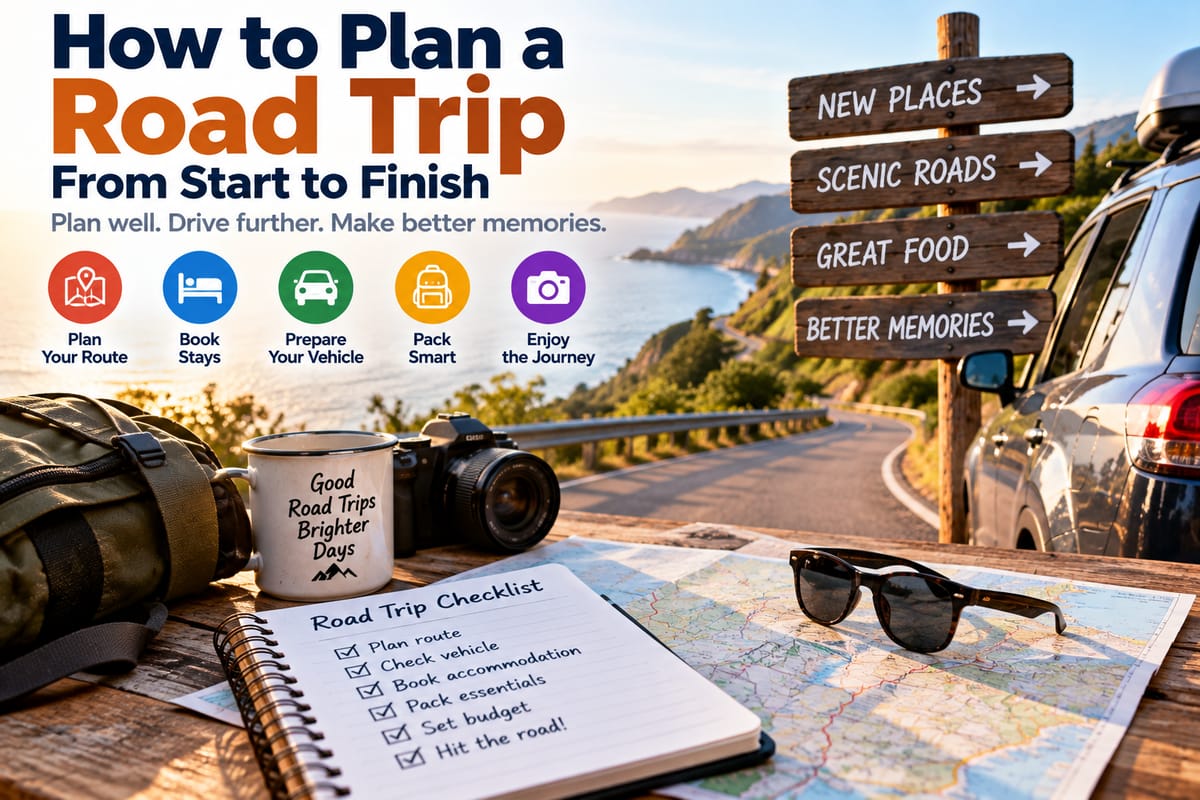
How to Plan a Road Trip From Start to Finish
A road trip can offer something that many other types of travel cannot: the freedom to decide where to stop, how long to stay, and what to explore along the way. Instead of moving directly from one destination to another, travelers can make the journey itself part of the experience.
That freedom, however, does not mean a successful road trip requires no planning. Choosing a route, estimating driving time, preparing a vehicle, booking accommodation, setting a budget, and leaving room for unexpected changes can make the difference between a relaxing journey and a stressful one.
The best road trips combine preparation with flexibility. A clear plan provides direction, while enough breathing room allows travelers to enjoy places and experiences they did not anticipate.
Start by Defining the Road Trip
Before choosing a route, determine what you want the trip to accomplish.
Some road trips are designed around reaching a particular destination. Others focus on scenic drives, national parks, historic sites, beaches, cities, food, outdoor activities, or simply getting away from everyday routines.
Ask a few basic questions:
- Where do you want to start?
- Where do you want to finish?
- What places do you want to see along the way?
- How many days can you travel?
- Who is going on the trip?
- How much driving is comfortable each day?
- What types of activities are most important?
Answering these questions creates the foundation for the rest of the planning process.
Choose the Right Trip Length
One of the most common road-trip planning mistakes is trying to cover too much ground in too little time.
A route may look manageable on a map, but actual driving involves fuel stops, meals, traffic, road conditions, breaks, construction, sightseeing, and unexpected delays.
Consider how much time you want to spend driving compared with exploring.
If reaching the destination requires several long driving days, the journey may feel more like transportation than a vacation. Adding additional overnight stops can turn long stretches of driving into opportunities to discover new places.
For broader guidance on choosing the right amount of travel time, How Long Should a Trip Be? explores the factors that can influence trip length.
Pick a Route That Matches Your Goals
Once the trip length is clear, start building the route.
A direct route is not always the most interesting option. A slightly longer road may pass through scenic landscapes, historic towns, cultural attractions, parks, or other destinations worth visiting.
At the same time, adding too many stops can create a rushed schedule.
A practical route should balance:
- Driving distance
- Road conditions
- Attractions
- Overnight locations
- Fuel availability
- Meal stops
- Rest opportunities
- Personal interests
Think of the route as the framework of the trip rather than a list of every possible attraction.
Research the Destinations Along the Way
After choosing a general route, research the places you may want to visit.
Look beyond major tourist attractions. Smaller towns, local markets, viewpoints, museums, historic areas, nature trails, restaurants, and cultural sites can sometimes become the highlights of a road trip.
However, avoid turning your research into an obligation to visit everything you find.
Create three categories:
Must-see: Experiences that are central to the trip.
Would like to see: Places worth visiting if time allows.
Optional: Interesting possibilities that can be skipped without affecting the trip.
This system makes it easier to adjust the itinerary when conditions change.
Build a Flexible Itinerary
A road trip benefits from having a plan, but the schedule should not be so rigid that there is no room for spontaneity.
For each day, establish the basic structure:
- Starting location
- Main destination
- Approximate driving time
- Planned stops
- Main activity
- Overnight location
Then leave some unscheduled time.
How to Create a Travel Itinerary That Balances Activities and Free Time provides useful context for creating schedules that leave room for both planned experiences and downtime.
Avoid Overloading Each Day
A common mistake is planning several major attractions for every day.
For example, a traveler might plan to visit a museum in the morning, hike in the afternoon, explore a historic district in the evening, and then drive several hours to the next destination.
On paper, the schedule may appear efficient. In practice, delays can quickly make it exhausting.
Instead, identify one or two major activities for each day and treat additional stops as optional.
This gives travelers the freedom to spend more time at places they enjoy without constantly watching the clock.
Check the Vehicle Before Leaving
Vehicle preparation is one of the most important parts of road-trip planning.
Before departure, check:
- Tires and tire pressure
- Brakes
- Engine oil
- Coolant
- Lights
- Battery
- Windshield wipers
- Spare tire
- Emergency equipment
- Fluid levels
If the vehicle is due for routine maintenance, complete it before the trip rather than waiting until after departure.
For longer journeys, a professional inspection can identify problems that may not be obvious during everyday driving.
Plan Fuel and Charging Stops
Fuel planning is particularly important when traveling through rural areas or unfamiliar regions.
Do not assume that another fuel station will always be nearby. Identify potential refueling locations along longer stretches of the route.
Electric-vehicle travelers should similarly plan charging stops in advance, including backup options where practical.
The goal is not necessarily to stop at every planned location but to understand where the next reliable opportunity will be.
Set a Road Trip Budget
A road trip can appear inexpensive because travelers may avoid airfare, but driving expenses can add up quickly.
A realistic budget should account for:
- Fuel or charging
- Accommodation
- Food
- Parking
- Tolls
- Vehicle maintenance
- Attractions
- Activities
- Travel insurance where appropriate
- Emergency expenses
It is also wise to keep some money available for unexpected costs.
A route that includes several paid attractions or expensive destinations may require considerably more spending than a trip centered on free outdoor activities.
Book Accommodation Strategically
Not every night needs to be planned months in advance, but accommodation should be considered carefully.
For popular destinations, major events, holidays, or busy travel periods, booking ahead can reduce the risk of limited availability.
For less crowded areas, travelers may prefer more flexibility.
When selecting an overnight stop, consider more than the room itself. Location matters because staying far outside a destination can add significant driving time the next day.
Prepare for Different Road Conditions
Road conditions can change dramatically during a road trip.
A journey may include highways, mountain roads, rural routes, urban traffic, gravel roads, or areas with limited services.
Research the major roads on the planned route and check conditions before leaving each day.
Weather can also affect driving conditions. Rain, snow, strong winds, extreme heat, fog, or storms may require route changes or additional travel time.
Building flexibility into the schedule makes it easier to respond safely when conditions change.
Pack for the Journey, Not Just the Destination
Road trips require a different packing strategy from trips where travelers spend most of their time at one location.
Useful items can include:
- Comfortable clothing
- Water
- Snacks
- Phone chargers
- Navigation equipment
- First-aid supplies
- Important medications
- Sunglasses
- Reusable bags
- Flashlights
- Emergency supplies
- Copies of important travel documents
The exact packing list should reflect the destination, season, activities, vehicle, and length of the journey.
Avoid filling the vehicle with unnecessary items, especially if luggage will need to be moved frequently between accommodations.
Prepare Navigation and Offline Options
Mobile navigation is extremely useful for road trips, but travelers should not assume they will always have a strong internet connection.
Download maps for areas where mobile coverage may be limited.
It can also help to know the general direction of the route rather than relying entirely on turn-by-turn instructions.
A physical map or another backup navigation method can be useful on remote routes.
Plan Rest Stops
Long-distance driving requires regular breaks.
Even when a driver feels capable of continuing, fatigue can gradually affect concentration and reaction time.
Plan opportunities to stop, stretch, eat, drink water, and rest.
If several people can drive, sharing driving responsibilities can reduce fatigue. If nobody else can take over, the itinerary should allow enough time for breaks and overnight rest.
The goal should be arriving safely rather than maximizing the number of miles covered each day.
Consider Travel Documents and Requirements
For domestic road trips, travelers may need identification, vehicle documents, insurance information, and other relevant paperwork.
Cross-border journeys can involve additional requirements.
Travelers planning an international road trip should research entry requirements, driving regulations, vehicle documentation, insurance requirements, and border procedures before leaving.
The International Travel Guide can provide broader planning context for trips that cross national borders.
Leave Room for Unexpected Stops
Some of the most memorable road-trip experiences are not included in the original itinerary.
A roadside viewpoint, local restaurant, small town, unexpected festival, scenic trail, or conversation with a local can change the direction of a day.
A completely rigid schedule makes these experiences difficult to enjoy.
Instead, identify the essential parts of the journey and leave some open space around them.
Create a Backup Plan
A good road-trip plan should include alternatives.
Think about what you would do if:
- Your vehicle develops a problem
- A road is closed
- Weather disrupts the route
- Accommodation becomes unavailable
- An attraction closes
- You become too tired to continue driving
- You decide to spend longer at an unexpected stop
You do not need a detailed backup itinerary for every possible problem. Simply identifying alternative routes, overnight locations, and major stops can provide useful flexibility.
This is one reason Why Flexible Travel Plans Matter is an important consideration when organizing a journey.
Make the Final Pre-Trip Checklist
A few days before departure, review the entire plan.
Confirm:
- Route and major stops
- Accommodation reservations
- Vehicle condition
- Fuel or charging options
- Weather forecasts
- Road conditions
- Travel documents
- Important phone numbers
- Navigation maps
- Emergency supplies
- Budget
- Planned activities
Avoid making major changes at the last minute unless necessary. A final review is primarily about identifying problems before they become problems on the road.
The Day Before Departure
The final day should be focused on preparation rather than frantic packing.
Charge electronic devices, organize documents, prepare snacks and water, check the vehicle, and make sure luggage is secure.
If possible, get enough sleep before the journey begins.
It is also worth checking the route one more time for closures, major disruptions, or weather-related issues.
During the Road Trip
Once the trip begins, use the itinerary as a guide rather than a strict contract.
Check progress at the end of each day. If the schedule is consistently too ambitious, remove optional stops rather than trying to make up time by driving while tired.
If a particular destination turns out to be more interesting than expected, staying longer may be worthwhile.
The ability to adjust is one of the biggest advantages of traveling by road.
Turning the Journey Into Part of the Experience
Planning a road trip from start to finish is ultimately about finding the right balance between preparation and freedom.
A good plan provides a sensible route, realistic driving days, suitable accommodation, a manageable budget, and basic preparations for unexpected problems. At the same time, it leaves enough space for rest, exploration, and spontaneous decisions.
The most successful road trips are rarely the ones that squeeze the greatest number of destinations into the shortest possible time. They are the journeys where the route itself becomes part of the adventure, allowing travelers to discover places along the way while still having a clear sense of where they are headed.





2 Comments
Micle harison
June 7, 2019Lorem ipsum dolor sit amet, usu ut perfecto postulant deterruisset, libris causae volutpat at est, ius id modus laoreet urbanitas. Mel ei delenit dolores.
John Doe
June 7, 2019Some consultants are employed indirectly by the client via a consultancy staffing company.