
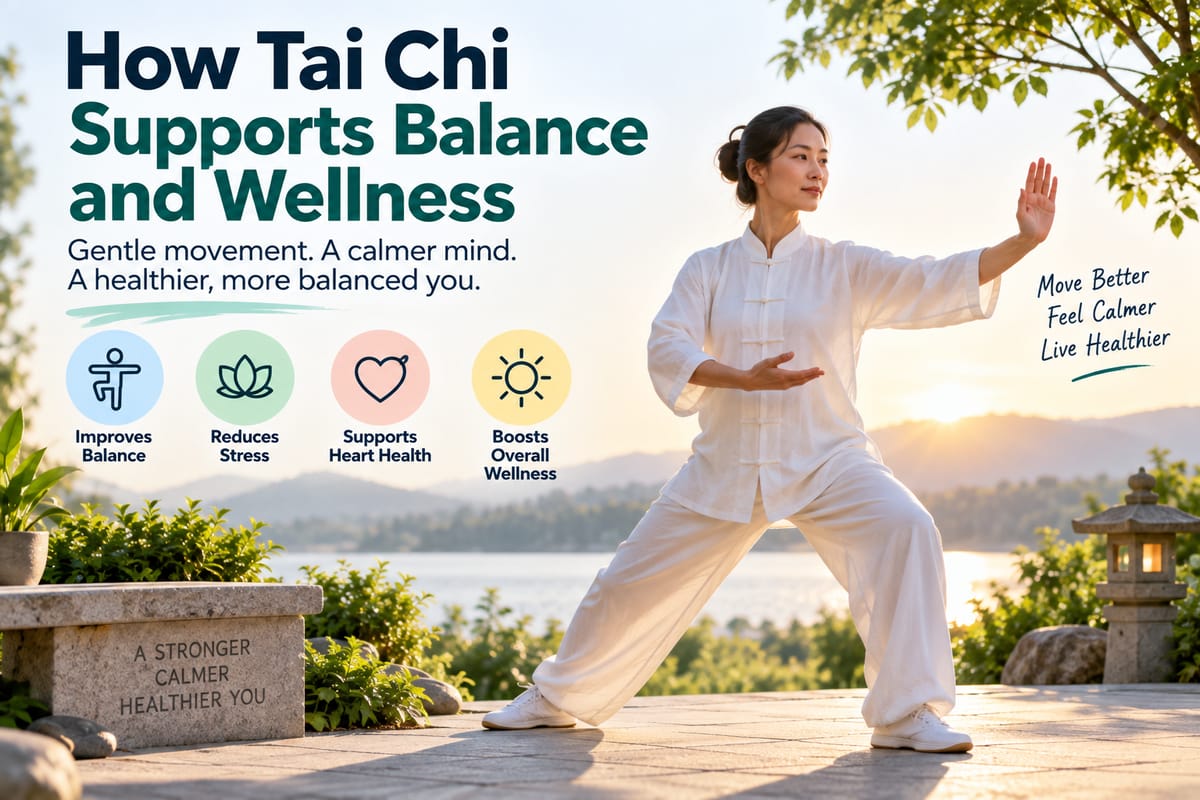
How Tai Chi Supports Balance and Wellness
Tai chi is a gentle movement practice that combines controlled physical movements, steady breathing, and focused attention. Often performed at a slow pace, it encourages people to move deliberately while maintaining awareness of their posture, balance, and surroundings.
Although tai chi has deep historical roots, it has also become part of modern approaches to physical activity and general wellness. People may practice it as a form of gentle exercise, a way to develop body awareness, or a calming activity that can be incorporated into a regular routine.
One of its most notable features is the way movement and attention work together. Rather than focusing only on strength or cardiovascular intensity, tai chi emphasizes controlled weight shifting, coordination, stability, and deliberate movement.
What Is Tai Chi?
Tai chi is a traditional Chinese movement practice involving sequences of controlled, flowing movements.
Different styles and forms exist, but many sessions involve:
- Slow, deliberate movements
- Shifting weight from one leg to another
- Controlled breathing
- Upright posture
- Gentle changes in direction
- Repeated movement patterns
- Focused attention
Some forms can be physically demanding, while others are adapted for people who prefer gentler movement.
Tai chi is sometimes described as a moving meditation because it combines physical activity with sustained attention to movement and breathing.
How Tai Chi Connects Movement and Awareness
Many forms of exercise focus primarily on physical performance. Tai chi adds another dimension by encouraging practitioners to pay attention to how their bodies move.
During a sequence, a person may focus on:
- Where their weight is positioned
- How their feet contact the ground
- The alignment of their body
- The movement of their arms
- The rhythm of their breathing
- The transition from one movement to another
This deliberate attention can make ordinary movements feel more intentional.
For people interested in combining physical activity with mental awareness, How to Choose a Mind-Body Wellness Practice provides broader guidance on selecting a practice that fits individual preferences and wellness goals.
How Tai Chi May Support Balance
Balance depends on multiple physical abilities working together. These include strength, coordination, sensory information, posture, and the ability to shift weight effectively.
Tai chi repeatedly involves controlled weight transfers and changes in body position.
A typical movement sequence may require a person to:
- Shift their weight onto one leg.
- Maintain a stable posture.
- Move the other leg or foot.
- Transfer weight gradually.
- Change direction.
- Regain a stable position.
Practicing these movements can provide opportunities to develop greater familiarity with controlled weight shifting and body positioning.
Balance can change with age, inactivity, illness, injury, or other circumstances, so people with specific concerns about falling or mobility should discuss an appropriate exercise program with a qualified healthcare professional.
Tai Chi and Lower-Body Stability
Stable movement depends partly on the ability of the legs and hips to support changes in body position.
Tai chi forms may involve repeated bends, controlled steps, weight transfers, and transitions between positions. These movements can engage muscles in the legs and lower body without requiring the rapid movements found in many higher-intensity activities.
The intensity varies considerably depending on the style, duration, and way the movements are performed.
Someone new to tai chi can generally begin with movements appropriate to their current physical abilities rather than attempting advanced forms immediately.
Developing Body Awareness
Body awareness involves recognizing where the body is positioned and how it is moving.
Tai chi provides frequent opportunities to practice this awareness because movements are performed deliberately rather than automatically.
A practitioner might notice:
- Whether their weight is centered
- Whether their knees are positioned comfortably
- How their feet are placed
- Whether their shoulders are relaxed
- How their breathing changes
- How their body responds during transitions
This type of awareness can make the practice more than simply a sequence of movements.
Tai Chi as a Form of Gentle Exercise
Exercise does not always have to involve running, heavy resistance training, or high-intensity workouts.
Physical activity exists across a wide range of intensities and formats. Exercise Explained provides broader context on what exercise is and how different forms of physical activity can contribute to overall health.
Tai chi can fit into the gentler end of the activity spectrum, although some forms and sessions can be more physically demanding.
For someone who does not enjoy conventional workouts, the slow and structured nature of tai chi may offer an alternative way to incorporate movement into everyday life.
Tai Chi and Coordination
Coordination involves controlling different parts of the body so that they work together smoothly.
Tai chi sequences can require the arms, legs, torso, and breathing to work together.
A movement might involve stepping in one direction while the arms move through a coordinated pattern and the body gradually shifts its weight.
Because the movements are typically performed slowly, practitioners have more time to pay attention to these relationships.
Over time, repeating movement patterns can provide opportunities to become more familiar with coordinated movement.
The Role of Breathing
Breathing is another important component of many tai chi practices.
Rather than treating breathing as something separate from movement, practitioners may coordinate their breathing with the pace of their movements.
Slow, controlled breathing can encourage people to pay attention to their physical state and maintain a steady rhythm during practice.
Breathing should remain comfortable. There is generally no need to force the breath or deliberately hold it for extended periods.
Tai Chi and Relaxation
The slow pace of tai chi can make it a useful addition to a relaxation-focused routine.
A person may spend several minutes moving deliberately, focusing attention on physical sensations and breathing rather than rushing through a series of tasks.
This can create a transition between periods of activity and periods of rest.
For people interested in other relaxation approaches, How Guided Relaxation Supports Well-Being explores how guided relaxation can fit into a broader approach to well-being.
Tai chi and guided relaxation are different practices, but both can involve deliberately slowing down and directing attention toward the present experience.
Tai Chi and Stress Management
Everyday stress can influence how people carry themselves and how they experience physical tension.
Some people respond to stressful situations by tightening their shoulders, breathing more quickly, or remaining physically tense for extended periods.
Tai chi creates an opportunity to practice slower movement and deliberate breathing.
The relationship between stress and the body’s physiological response is complex. How Cortisol Participates in Stress Responses provides additional background on cortisol and its role in the body’s response to stress.
Tai chi should not be viewed as a treatment for every form of stress or a replacement for professional care when someone needs it. Instead, it can be considered one possible component of a broader wellness routine.
Tai Chi Can Be Adapted to Different Abilities
One of the practical features of tai chi is that movements can often be modified.
Depending on a person’s abilities and the form being practiced, modifications may involve:
- Reducing the depth of a movement
- Slowing the pace
- Using a chair for support
- Limiting the range of motion
- Practicing individual movements rather than full sequences
- Taking breaks when needed
People with significant mobility limitations, recent injuries, balance problems, or medical conditions should seek appropriate professional guidance before beginning a new exercise program.
The goal is not to imitate an advanced practitioner. It is to practice movements that are appropriate for the individual.
Tai Chi and Older Adults
Tai chi is often associated with older-adult wellness because its controlled movements can provide opportunities to work on balance, coordination, and physical activity without requiring rapid or explosive movements.
For older adults, maintaining physical activity can be an important part of supporting mobility and independence.
However, age alone does not determine whether a particular tai chi program is appropriate.
An instructor experienced in working with older adults or people with mobility limitations can help modify movements when necessary.
Making Tai Chi Part of a Wellness Routine
A person does not need to practice tai chi for long periods to begin exploring it.
A simple routine might start with:
- Five to ten minutes of gentle movements
- A few basic weight-shifting exercises
- Slow breathing
- A short sequence practiced consistently
- Gradual increases in duration as comfortable
Consistency can be more practical than immediately attempting lengthy sessions.
Tai chi can also complement other forms of physical activity. Someone might combine it with walking, strength training, stretching, or other exercises depending on their individual needs and goals.
What to Look for in a Tai Chi Class
People who are new to tai chi may benefit from an instructor who explains movements clearly and provides appropriate modifications.
When considering a class, look for:
- Beginner-friendly instruction
- Clear demonstrations
- Reasonable pacing
- Opportunities to ask questions
- Appropriate movement modifications
- A safe practice environment
- An instructor who avoids unrealistic health promises
A good class should allow participants to progress gradually rather than making them feel pressured to perform movements beyond their current ability.
Tai Chi Does Not Have to Be Perfect
New practitioners sometimes worry about remembering every movement correctly.
Learning a sequence takes time, and it is normal to lose track of a movement or need to repeat an instruction.
The purpose of the practice is not to perform a flawless routine from the beginning.
Instead, focus on:
- Moving comfortably
- Maintaining awareness
- Practicing steadily
- Learning the basic patterns
- Paying attention to balance
- Breathing naturally
With repetition, movements can become more familiar.
Staying Safe While Practicing
Tai chi is generally gentle, but any physical activity can carry some risk, particularly when movements are unfamiliar.
To make practice more comfortable:
- Wear supportive footwear when appropriate
- Choose a clear practice area
- Avoid movements that cause pain
- Use support when necessary
- Start slowly
- Take breaks
- Stay within your comfortable range of motion
People who experience dizziness, significant pain, unusual shortness of breath, or other concerning symptoms should stop and seek appropriate medical advice.
Building a Sustainable Tai Chi Habit
The easiest way to make tai chi part of a lifestyle is to connect it with a routine that already exists.
For example, someone might practice:
- After waking up
- Before starting work
- During an afternoon break
- After a walk
- Before an evening relaxation routine
Keeping the initial sessions short can also make the habit easier to maintain.
A five-minute practice that happens regularly can provide a more realistic starting point than a demanding schedule that quickly becomes difficult to maintain.
A Balanced Approach to Tai Chi and Wellness
Tai chi brings together controlled movement, balance, coordination, breathing, and focused attention in a format that can be adapted to many different routines.
Its slow movements provide opportunities to practice weight shifting and body awareness, while its deliberate pace can make it appealing to people looking for a calmer form of physical activity.
Tai chi does not need to replace other forms of exercise or wellness practices. It can instead complement activities such as walking, strength training, stretching, mindfulness, and relaxation.
The most useful approach is to choose a level and style that fits your abilities, practice consistently, and allow the routine to develop gradually. Over time, tai chi can become one practical way to keep moving, pay closer attention to the body, and create dedicated space for physical and mental well-being.





2 Comments
Micle harison
June 7, 2019Lorem ipsum dolor sit amet, usu ut perfecto postulant deterruisset, libris causae volutpat at est, ius id modus laoreet urbanitas. Mel ei delenit dolores.
John Doe
June 7, 2019Some consultants are employed indirectly by the client via a consultancy staffing company.