
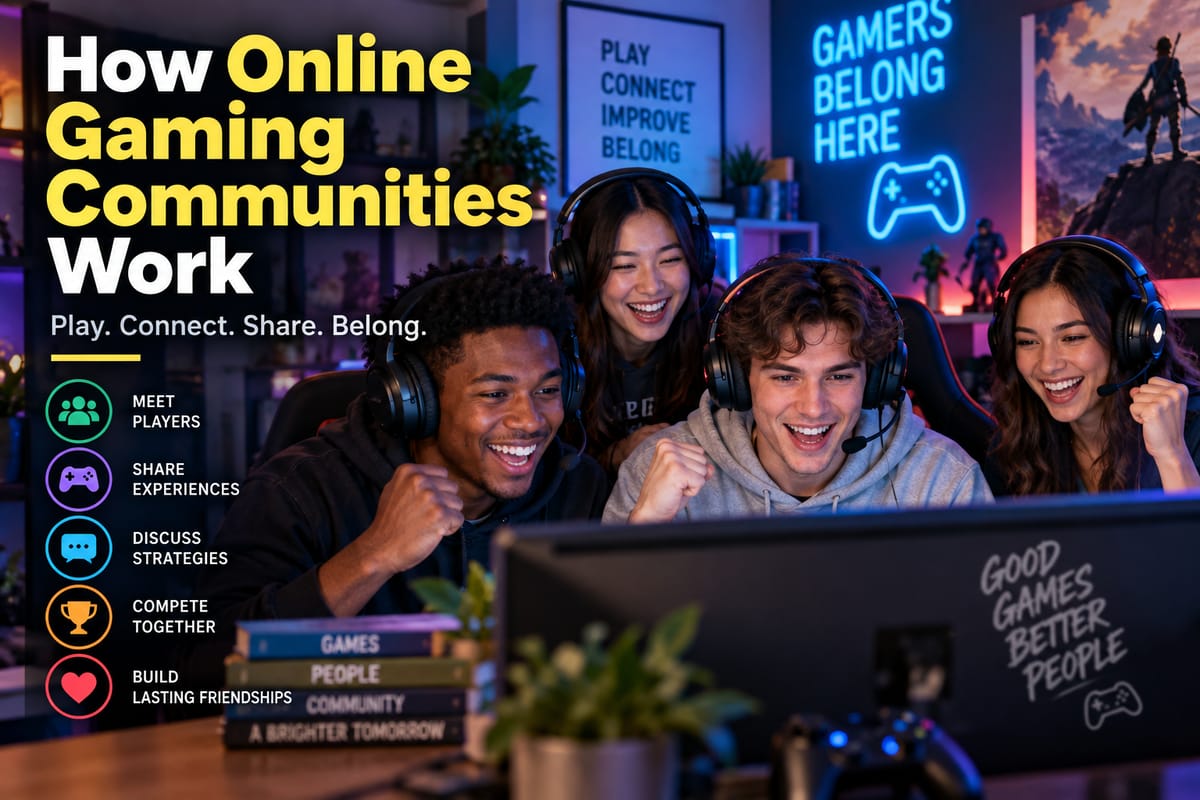
How Online Gaming Communities Work
Online gaming is no longer simply about playing a game from start to finish. For millions of players, games have become social spaces where people meet friends, form teams, exchange ideas, compete, create content and build communities around shared interests.
These communities can exist inside a game itself or across platforms such as forums, messaging services, social networks and video-streaming sites. Some are small groups of friends, while others bring together millions of players around a popular game or gaming franchise.
Understanding how these communities work helps explain why online gaming has become such an important part of modern entertainment.
What Is an Online Gaming Community?
An online gaming community is a group of people who interact around a particular game, gaming platform, genre or shared gaming interest.
The simplest example might be a group of friends who regularly play together. A much larger community could include players, developers, streamers, tournament organizers, mod creators and fans from around the world.
Communities can form around almost any type of game, including:
- Multiplayer shooters
- Role-playing games
- Strategy games
- Sports games
- Simulation games
- Sandbox and building games
- Massively multiplayer online games
- Competitive esports titles
- Cooperative adventure games
- Mobile games
The important element is not necessarily the size of the group. It is the interaction between people who share an interest in the same gaming experience.
For a broader overview of the medium, the Complete Guide to Video Games and Gaming explores how games have developed from simple electronic entertainment into a major global industry.
Games Create Shared Social Spaces
Many modern games are designed to encourage interaction.
Players may need to cooperate to complete missions, communicate during competitive matches or exchange resources. Some games allow players to create persistent characters and return to the same virtual world repeatedly.
This creates a sense of continuity.
Instead of entering a game as an isolated player, people can recognize other players, develop friendships and become part of a regular group.
Voice chat, text messaging, emotes and shared activities can make these interactions feel increasingly social.
In some games, the social experience can become nearly as important as the underlying gameplay.
Different Types of Gaming Communities
Not all gaming communities operate in the same way.
Competitive Communities
Competitive communities are built around skill, rankings and organized competition.
Players may compete individually or as teams, track their performance and participate in tournaments. Leaderboards can encourage regular participation by giving players visible goals to pursue.
Competitive gaming can eventually develop into esports communities involving professional players, coaches, commentators, organizers and fans.
Cooperative Communities
Cooperative communities focus on completing objectives together.
Players may divide responsibilities between different characters or roles. One person might focus on defense, another on healing and another on attacking.
Successful cooperation requires communication and trust, which can strengthen relationships between regular players.
Creative Communities
Some games encourage players to create their own experiences.
Building games, sandbox platforms and games with extensive modification tools can support communities of designers, artists, programmers and storytellers.
Players may share maps, characters, buildings, modifications and other creations with the wider community.
Fan Communities
Some communities exist primarily around discussion rather than direct gameplay.
Fans may analyze stories, speculate about future updates, discuss characters, share artwork or debate different aspects of a game.
These communities can remain active long after an individual game has been released.
Communication Keeps Communities Connected
Communication is one of the most important elements of online gaming.
Games can provide built-in communication systems, but players often use external services as well.
A gaming group might communicate through:
- In-game text chat
- Voice chat
- Private messaging
- Community forums
- Group chats
- Social media
- Livestream chats
- Community websites
External communication can allow relationships to continue even when players are not actively playing.
A group that starts inside a particular game may eventually become a broader social network whose members play several different games together.
Moderation Helps Communities Function
Large online communities need rules.
Without moderation, harassment, cheating, spam, scams and other disruptive behavior can make a community difficult to use.
Game developers and community administrators can establish rules covering issues such as offensive language, cheating, impersonation, harassment and inappropriate content.
Moderation can take several forms.
Automated systems may identify suspicious behavior or prohibited language. Human moderators can review reports and make decisions about individual cases. Some communities also rely heavily on volunteer moderators.
The balance can be difficult.
Too little moderation can allow harmful behavior to spread, while excessive or poorly explained moderation can frustrate legitimate members.
Effective communities generally need rules that are understandable and consistently enforced.
Community Reputation Matters
Players often develop reputations within gaming communities.
Someone who regularly helps new players may become known as a reliable teammate. A skilled competitive player may attract followers. A creative player may become recognized for building impressive content.
Reputation can influence how other community members interact with someone.
Positive reputations can create trust, while repeated disruptive behavior can lead to warnings, exclusion or bans.
This social layer is one reason online gaming communities can feel different from traditional single-player entertainment.
Developers Are Part of the Community
Game developers increasingly recognize that their relationship with players does not end when a game is released.
Many modern games receive regular updates, new content and technical improvements. Developers may communicate with players through announcements, community forums, livestreams and social media.
Player feedback can influence future updates.
Developers may monitor discussions to identify technical problems, balance concerns or requests for new features. Some games even involve community members in testing new content before wider releases.
This creates a feedback loop:
Players provide feedback → developers evaluate it → updates are released → players respond → developers continue adjusting the game.
The process can continue for years.
Updates Can Change Community Behavior
A major game update can significantly alter the dynamics of a community.
New characters, maps, equipment, rules or gameplay systems can change how players approach the game. A previously unpopular feature might become important, while an established strategy might stop working.
These changes can generate discussion and experimentation.
Players create guides, videos and tutorials explaining new strategies. Competitive communities analyze changes in detail. Casual players may simply explore the new content.
In this way, updates can give established communities new reasons to remain active.
Streaming Expands Gaming Communities
Gaming communities are no longer limited to people who own or play the same game.
Streaming platforms allow viewers to watch other people play, learn strategies and participate in conversations around gaming.
A popular streamer can become a community leader without being part of the game’s development team. Their audience may develop its own language, traditions and social norms.
Viewers can also discover games through livestreams that they might never have encountered otherwise.
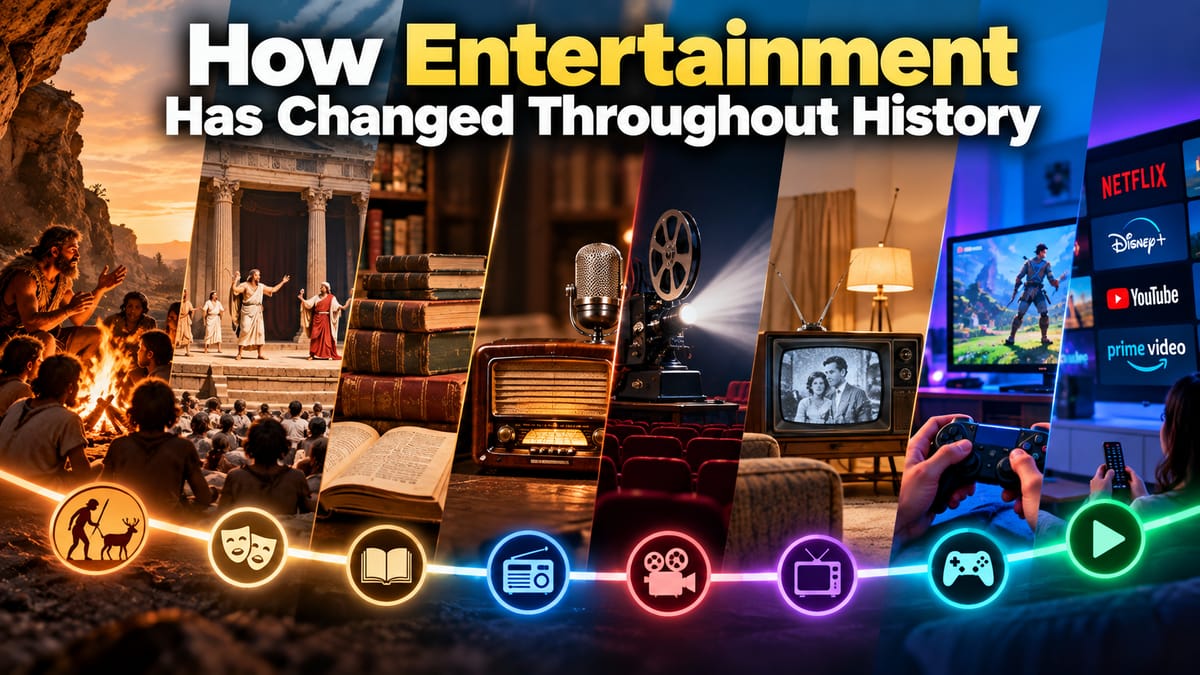
This is part of the broader Evolution of Modern Entertainment Media, in which audiences have moved from simply consuming entertainment toward participating in communities built around it.
Gaming Videos Create Another Layer of Participation
Recorded gaming content has also become an important part of community culture.
Players create:
- Walkthroughs
- Tutorials
- Reviews
- Strategy guides
- Challenge videos
- Comedy clips
- Esports analysis
- Game updates
- Commentary
- Speedrunning content
These videos can help new players learn a game while giving experienced players new strategies and ideas.
They also provide entertainment for people who may not have enough time to play themselves.
As entertainment has become increasingly digital, audiences have gained more control over what they watch and when they watch it. The broader transformation is explored in How Streaming Changed Entertainment Consumption.
Digital Distribution Makes Communities More Accessible
The way games are distributed has also helped gaming communities grow.
Digital storefronts allow players to purchase and download games without visiting a physical store. Updates can be delivered directly to devices, while online multiplayer systems can connect players across geographic boundaries.
Digital distribution also makes it easier for independent developers to reach audiences.
A small studio can release a game globally without requiring the same physical distribution network traditionally needed for boxed products.
The wider implications of this shift are covered in How Digital Distribution Works for Entertainment.
Communities Can Develop Their Own Culture
Large gaming communities often develop distinctive cultures.
Players may create slang, inside jokes, memes, traditions and unofficial rules. Certain characters, strategies or moments can become recognizable symbols within the community.
This culture can develop organically.
A phrase that begins as a joke among a small group can eventually spread throughout a much larger player base. A strategy discovered by one player can become standard practice across an entire game.
Community culture can also influence how new players understand the game.
Experienced members often teach newcomers the terminology and unwritten conventions that are difficult to learn from the game itself.
Mods and User-Created Content Strengthen Communities
Some gaming communities extend the original game through modifications and user-created content.
Mods can change graphics, gameplay mechanics, characters, maps or other aspects of a game. In some cases, communities create entirely new experiences using a game’s underlying technology.
This gives players an opportunity to become creators rather than simply consumers.
Modding communities can include programmers, artists, writers, sound designers and other contributors working together on projects.
Some successful modifications have even inspired commercial games of their own.
Gaming Communities Can Cross Cultural and Geographic Boundaries
Online games allow people from different countries and cultures to interact regularly.
A single team might include players living thousands of miles apart. They may communicate in a shared language even though their everyday lives are completely different.
This can create opportunities for cultural exchange.
Players can learn about different countries, customs and perspectives through ordinary social interactions. At the same time, cultural differences can sometimes create misunderstandings, particularly when communication is limited to text or brief voice conversations.
Good community norms can help reduce those problems.
Not Every Community Experience Is Positive
Online gaming communities can also experience serious challenges.
Toxic behavior, harassment, cheating and exclusion can discourage players from participating. Competitive environments can become particularly stressful when rankings and performance are emphasized heavily.
Anonymity can sometimes make people behave differently online than they would in person.
Developers and community administrators therefore face an ongoing challenge: keeping games competitive and engaging while maintaining an environment where people feel comfortable participating.
Players also play an important role.
Reporting abusive behavior, avoiding harassment and supporting new members can contribute to healthier communities.
Why People Keep Coming Back
The lasting appeal of gaming communities is not simply the games themselves.
People return because they develop relationships, routines and shared experiences.
A player might log in because friends are online. Another might return because they want to improve their ranking. Someone else may be interested in a new update or community event.
Over time, these motivations can overlap.
The game provides the environment, but the community provides a social reason to return.
The Future of Online Gaming Communities
Online gaming communities are likely to become increasingly interconnected with other forms of digital entertainment.
Games already overlap with livestreaming, social media, digital video, esports and creator platforms. Future gaming environments could make those connections even more seamless.
Artificial intelligence may also influence how communities operate by helping with moderation, matchmaking, translation and personalized experiences. Virtual and augmented reality could create additional ways for players to interact in shared digital environments.
At the same time, the fundamental appeal is unlikely to change.
People play together because shared experiences are more engaging than isolated ones. They compete, cooperate, create, communicate and build relationships around activities they enjoy.
That is ultimately what makes an online gaming community more than a collection of players. The technology provides the connection, the game provides the setting, and the people create the community.



2 Comments
Micle harison
June 7, 2019Lorem ipsum dolor sit amet, usu ut perfecto postulant deterruisset, libris causae volutpat at est, ius id modus laoreet urbanitas. Mel ei delenit dolores.
John Doe
June 7, 2019Some consultants are employed indirectly by the client via a consultancy staffing company.