
What Are Macronutrients and Why Do They Matter?
Every meal provides the body with more than just calories. Food supplies the nutrients the body needs to produce energy, build and repair tissues, regulate important processes, and support everyday health.
Among the most important of these nutrients are macronutrients. They are the nutrients the body needs in relatively large amounts, and they make up much of what people eat every day.
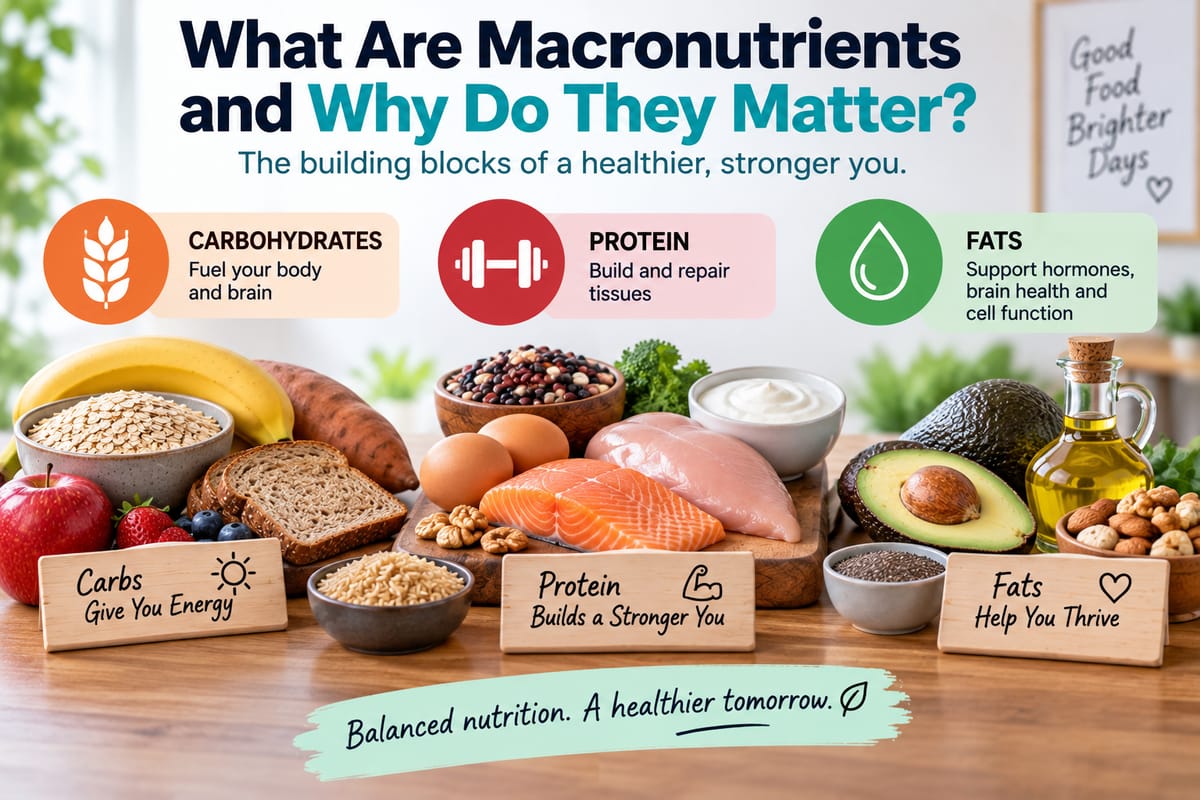
The three primary macronutrients are carbohydrates, proteins, and fats. Each plays a different role, but they work together to support energy production, muscle function, brain activity, metabolism, and many other biological processes.
Understanding macronutrients can make it easier to build balanced meals without becoming overly focused on restrictive diets or complicated nutrition rules.
For a broader look at how different nutrients work together, see The Complete Guide to Nutrition.
What Are Macronutrients?
Macronutrients are nutrients the body requires in relatively large quantities. The main macronutrients are:
- Carbohydrates
- Protein
- Fat
Alcohol can also provide substantial energy, but it is not considered an essential macronutrient because the body does not require it for normal functioning.
Macronutrients differ from micronutrients, such as vitamins and minerals, which the body generally needs in much smaller amounts.
The distinction is primarily about quantity rather than importance. Vitamins and minerals may be needed in tiny amounts, but they are still essential to numerous body processes.
Macronutrients are particularly important because carbohydrates, protein, and fat provide energy and supply materials the body uses to maintain and repair itself.
Why Do Macronutrients Matter?
Macronutrients influence almost every aspect of how the body obtains and uses energy.
Carbohydrates can provide readily available fuel, particularly during physical activity. Protein supplies amino acids needed to build and maintain tissues. Fat provides concentrated energy and plays important roles in cell structure, hormone production, and absorption of certain vitamins.
A person’s nutritional needs depend on factors such as:
- Age
- Body size
- Physical activity
- Overall health
- Pregnancy or breastfeeding
- Individual dietary patterns
- Fitness goals
- Energy requirements
This is why there is no single macronutrient ratio that is ideal for everyone.
A balanced diet is less about finding one perfect percentage and more about consuming a variety of nutrient-rich foods in appropriate amounts.
Carbohydrates: A Major Source of Energy
Carbohydrates are often discussed negatively in diet culture, but they are an important source of energy for the body.
They are found in foods such as:
- Whole grains
- Rice
- Oats
- Potatoes
- Corn
- Beans and lentils
- Fruits
- Vegetables
- Milk and some dairy products
Carbohydrates are broken down into smaller molecules during digestion. Many carbohydrates ultimately contribute glucose, which cells can use for energy.
The brain and other tissues rely heavily on glucose availability, although the body can also use other fuel sources under certain conditions.
Simple and Complex Carbohydrates
Carbohydrates can be broadly classified according to their chemical structure.
Simple carbohydrates generally contain one or two sugar units. They include sugars naturally present in foods such as fruit and milk as well as added sugars found in many processed foods.
Complex carbohydrates contain longer chains of sugar molecules. Starches and dietary fiber are important examples.
However, the simple-versus-complex distinction does not tell the whole nutritional story.
A whole piece of fruit and a sugary beverage may both contain simple sugars, but they differ substantially in fiber, water content, vitamins, minerals, and how they fit into an overall diet.
Why Fiber Matters
Fiber is a type of carbohydrate that the human digestive system does not completely break down.
It can contribute to:
- Digestive health
- Regular bowel movements
- Feelings of fullness
- Healthy gut microbial activity
- More gradual digestion of some carbohydrate-containing foods
Choosing more fiber-rich carbohydrate sources, such as vegetables, fruits, legumes, and whole grains, can be an important part of a balanced eating pattern.
Carbohydrates can also influence blood glucose levels, making carbohydrate quality and overall dietary patterns relevant to metabolic health. Learn more about this relationship in How Blood Sugar Regulation Works.
Protein: The Body’s Building and Repair Material
Protein is essential for maintaining and repairing tissues throughout the body.
It is made from smaller compounds called amino acids. The body can produce some amino acids, while others must be obtained through food.
Protein-rich foods include:
- Fish
- Meat
- Poultry
- Eggs
- Milk and other dairy products
- Beans
- Lentils
- Peas
- Soy foods
- Nuts and seeds
Protein is particularly important for muscles, but its functions extend far beyond muscle development.
The body uses proteins to make enzymes, hormones, antibodies, transport molecules, and structural components of cells and tissues.
Protein and Muscle Health
Muscle tissue is continually being broken down and rebuilt. Adequate protein intake, combined with physical activity, supports this ongoing process.
Protein becomes particularly relevant during periods when the body needs to preserve or build muscle, including resistance training, recovery from illness or injury, and certain stages of life.
Simply eating large amounts of protein does not automatically produce more muscle, however. Muscle growth also depends on factors such as resistance exercise, total energy intake, recovery, and overall nutrition.
Fat: More Than an Energy Source
Dietary fat is another essential macronutrient. Although fat contains more calories per gram than carbohydrates or protein, its role in the body extends far beyond providing energy.
Fat contributes to:
- Cell membrane structure
- Hormone-related processes
- Brain and nervous system function
- Energy storage
- Protection of organs
- Absorption of vitamins A, D, E, and K
Fat is found naturally in foods including:
- Avocados
- Nuts
- Seeds
- Olive oil
- Fatty fish
- Eggs
- Dairy products
- Meat
Different Types of Dietary Fat
Not all fats have the same characteristics.
Unsaturated fats, including monounsaturated and polyunsaturated fats, are commonly found in foods such as nuts, seeds, vegetable oils, and fish.
Saturated fats occur naturally in many animal products and some plant foods. The appropriate amount in a diet depends on the overall dietary pattern and individual health considerations.
Trans fats, particularly industrially produced trans fats, are generally considered undesirable because of their effects on cardiovascular health.
Rather than treating all dietary fat as either good or bad, it is more useful to consider the food sources and the overall pattern of eating.
How Macronutrients Provide Energy
One of the most important characteristics of macronutrients is their ability to provide energy.
Carbohydrates and protein generally provide about 4 calories per gram, while fat provides about 9 calories per gram.
This difference helps explain why relatively small amounts of fat can contribute substantial energy.
However, calorie content is only one part of nutrition.
Two foods can provide similar amounts of energy while having very different amounts of fiber, protein, vitamins, minerals, and other beneficial compounds.
This is one reason why simply counting calories does not provide a complete picture of dietary quality.
Macronutrients and Metabolism
The body constantly converts nutrients into usable energy and building materials. This collection of chemical processes is known as metabolism.
Macronutrients interact with metabolism in different ways.
Carbohydrates can be converted into glucose and used for immediate energy or stored for later use. Protein can provide amino acids for tissue maintenance and other biological functions. Fat can be stored as an energy reserve and used as fuel when needed.
These processes are influenced by hormones, physical activity, sleep, genetics, body composition, and many other factors.
For a deeper explanation, Complete Guide to Metabolic Health and Metabolism explores how the body regulates energy and metabolic processes.
Macronutrients and Blood Sugar
Carbohydrates tend to have the most direct effect on blood glucose because many are ultimately broken down into glucose during digestion.
But blood sugar regulation is not determined by carbohydrates alone.
Protein, fat, fiber, meal composition, physical activity, hormones, and individual metabolic characteristics can all influence how the body responds to food.
For example, a carbohydrate-rich food eaten alongside protein, fat, or fiber may be digested differently from a rapidly absorbed carbohydrate consumed by itself.
This is one reason why looking at the entire meal can be more useful than focusing on a single nutrient.
Macronutrients and Weight Management
Macronutrient balance can also play a role in managing body weight.
Protein and fiber, for example, can contribute to feelings of fullness. Dietary fat can make meals more energy-dense, while carbohydrate-rich foods can provide important sources of energy and fiber depending on the food choices involved.
Ultimately, body weight is influenced by numerous factors, including energy intake, energy expenditure, genetics, sleep, medications, environment, and eating behavior.
There is no universal macronutrient combination that guarantees weight loss or prevents weight gain.
For a broader explanation of the factors involved, Weight Management Explained provides additional context.
How Much of Each Macronutrient Do You Need?
There is no single macronutrient target that applies to every person.
Nutritional guidelines often provide broad ranges rather than one precise prescription. Individual needs can vary considerably depending on activity level, age, health status, dietary preferences, and goals.
An endurance athlete may require a different carbohydrate intake from someone with a sedentary lifestyle. Someone attempting to build muscle may pay particular attention to protein intake, while another person may need to prioritize a different nutritional concern.
The quality of the foods providing those macronutrients also matters.
For many people, a practical approach is to build meals around a combination of:
- A source of protein
- A carbohydrate-rich food, preferably one that provides fiber
- A source of healthy fat
- Vegetables or fruit
- Water or another appropriate beverage
This approach can provide a wide range of nutrients without requiring people to calculate every gram they eat.
Whole Foods Make Macronutrient Planning Easier
Macronutrients are found across many different foods, but nutrient-dense whole and minimally processed foods can make it easier to build balanced meals.
For example, a meal containing grilled fish, brown rice, vegetables, and avocado provides a combination of protein, carbohydrates, fat, fiber, vitamins, minerals, and other beneficial compounds.
Likewise, a meal of beans, whole grains, vegetables, and seeds can provide substantial amounts of protein, carbohydrates, fiber, and fat.
The goal does not have to be perfection at every meal. Nutritional balance can also be considered across an entire day or longer period.
Do You Need to Count Macronutrients?
Not necessarily.
Tracking macronutrients can be useful for certain people, particularly athletes or individuals following a nutrition plan designed around specific goals. But it is not essential for everyone.
Constantly measuring food can also become unnecessarily complicated for people who simply want to eat a nutritious diet.
Instead, many people can focus on broader habits:
- Eat a variety of foods.
- Include protein regularly.
- Choose plenty of vegetables and fruits.
- Include fiber-rich carbohydrates.
- Favor unsaturated sources of fat.
- Limit highly processed foods when they displace more nutritious choices.
- Pay attention to hunger and fullness.
- Drink enough fluids.
- Adjust portions according to individual needs.
These habits can support a nutritious eating pattern without requiring a food scale or tracking application.
Common Misconceptions About Macronutrients
“Carbohydrates are bad.”
Carbohydrates are not inherently unhealthy. Fruits, vegetables, beans, and whole grains all contain carbohydrates and can be important parts of a nutritious diet.
The nutritional value of a carbohydrate-containing food depends on the food itself and the broader dietary pattern.
“More protein is always better.”
Protein is essential, but consuming more does not automatically produce better health or greater muscle growth.
Protein needs vary, and overall diet quality matters as well.
“Eating fat makes you fat.”
Dietary fat is energy-dense, but eating fat does not automatically cause body-fat gain. Body weight is influenced by total energy balance and many other biological and behavioral factors.
The type and food source of dietary fat also matter.
“You have to balance every meal perfectly.”
Nutrition does not need to be perfectly calculated at every sitting.
A varied diet over time can provide the body with the nutrients it needs even when individual meals differ.
A Simple Way to Think About Macronutrients
Instead of thinking about carbohydrates, protein, and fat as competing categories, it can be more useful to view them as different parts of the same nutritional system.
Carbohydrates help provide fuel.
Protein supplies amino acids for maintenance and repair.
Fat provides concentrated energy and supports important cellular and hormonal functions.
The body needs all three, although the amount required varies from person to person.
The most useful question is therefore not simply, “Which macronutrient is best?” but rather, “How can I combine different nutrient-rich foods to meet my body’s needs?”
Why Macronutrient Balance Is Only One Part of Nutrition
Macronutrients are important, but they do not tell the entire story of a healthy diet.
The body also requires vitamins, minerals, water, fiber, and numerous other compounds found naturally in foods.
Food quality, dietary variety, meal patterns, hydration, physical activity, sleep, and overall lifestyle can all contribute to health.
Understanding macronutrients is therefore best viewed as a foundation for understanding nutrition rather than a complete diet strategy.
Once carbohydrates, protein, and fat are no longer mysterious categories on a nutrition label, it becomes easier to understand why different foods affect energy, fullness, performance, and overall well-being in different ways.
Building a Better Plate Starts With Understanding
Macronutrients may sound like a technical nutrition term, but the concept is relatively simple: carbohydrates, protein, and fat are the major nutrients the body needs in substantial amounts, and each performs important functions that support health.
Rather than eliminating one category or chasing a perfect ratio, a sustainable eating pattern generally focuses on variety, nutrient density, appropriate portions, and foods that fit an individual’s needs.
That perspective can make nutrition less about following rigid rules and more about understanding how food supports the body every day.




2 Comments
Micle harison
June 7, 2019Lorem ipsum dolor sit amet, usu ut perfecto postulant deterruisset, libris causae volutpat at est, ius id modus laoreet urbanitas. Mel ei delenit dolores.
John Doe
June 7, 2019Some consultants are employed indirectly by the client via a consultancy staffing company.