
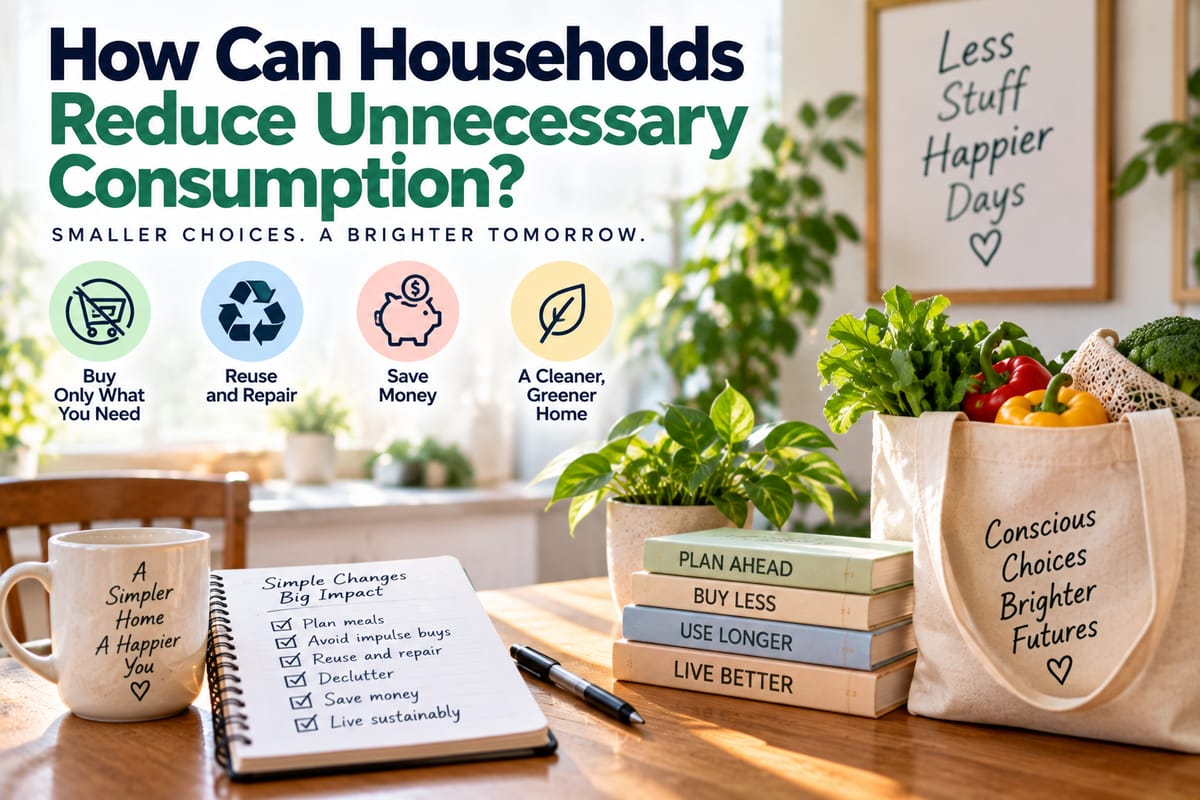
How Can Households Reduce Unnecessary Consumption?
Many households find themselves surrounded by more products, services, and purchases than they actually need. From impulse shopping and unused subscriptions to excessive food purchases and frequently replaced household items, unnecessary consumption can quietly increase expenses while creating clutter and waste.
Reducing consumption does not mean giving up everything that makes everyday life comfortable. Instead, it involves becoming more intentional about what a household buys, uses, replaces, and throws away. Small changes in everyday decisions can help families save money, reduce waste, simplify their homes, and make more sustainable choices.
Understand What Drives Unnecessary Consumption
The first step toward reducing unnecessary consumption is recognizing why it happens.
Advertising, convenience, social pressure, habits, and emotional spending can all influence purchasing decisions. Online shopping has also made it easier to buy products immediately, sometimes without considering whether they are genuinely needed.
Households may also purchase duplicates because they forget what they already own. Food can be wasted because too much was purchased, while clothing, electronics, and household goods may be replaced before they have reached the end of their useful lives.
Identifying these patterns makes it easier to change them.
Set Clear Household Priorities
A household is more likely to consume intentionally when it has a clear understanding of what matters most.
For some families, reducing spending may be the primary goal. Others may want to create a less cluttered home, reduce their environmental impact, or redirect money toward education, travel, savings, or other priorities.
Having these priorities can make purchasing decisions easier. Before buying something, household members can ask whether the purchase supports an important need or simply responds to a temporary desire.
This approach can also encourage better communication between family members, particularly when different people have different spending habits.
Create a More Thoughtful Shopping Process
One of the simplest ways to reduce unnecessary consumption is to slow down before making purchases.
Creating a shopping list can help households avoid buying items simply because they look appealing in a store or online. A waiting period can also be useful for non-essential purchases. Waiting a day or several days often provides enough time to determine whether an item is genuinely needed.
Before purchasing something, consider questions such as:
- Do we actually need this?
- Do we already own something that serves the same purpose?
- How frequently will we use it?
- Can we borrow or rent it instead?
- Is there a durable alternative?
- Will the purchase create additional costs later?
- Can we buy it second-hand?
These questions turn shopping from an automatic activity into a more deliberate decision.
Plan Food Purchases Carefully
Food is another major area where unnecessary consumption can occur.
Buying more food than a household can realistically use can lead to waste and unnecessary spending. Meal planning, checking existing supplies before shopping, and understanding portion requirements can help prevent this.
Households can also organize refrigerators, freezers, and cupboards so that older products are easier to see and use first.
Using leftovers creatively is another practical strategy. A meal prepared one day may become an ingredient for another meal rather than being discarded.
Better food planning does not have to involve complicated systems. Even a simple weekly meal plan and shopping list can significantly improve household purchasing habits.
Choose Reuse and Repair Before Replacement
Replacing an item is not always the best response when it becomes damaged or worn.
Clothing can sometimes be repaired, furniture can be refurbished, and household containers can be reused for other purposes. Electronics and appliances may also be repairable rather than immediately destined for replacement.
Learning more about how reuse and repair reduce household waste can help households recognize opportunities to extend the useful life of products they already own.
Repairing something can also change the way people think about possessions. Instead of viewing products as disposable, households begin to see them as resources that can provide value for much longer.
Embrace More Sustainable Consumption Habits
Reducing unnecessary consumption can form part of a broader approach to everyday sustainability.
A Sustainable Living Guide can help households consider how purchasing, energy use, waste management, transportation, and other everyday decisions affect their overall environmental footprint.
Sustainable consumption does not necessarily mean purchasing expensive environmentally marketed products. In many situations, the most sustainable choice is simply to buy less, use something longer, or make better use of what is already available.
This can also make sustainable living more accessible because households can focus on practical behavioral changes rather than constantly purchasing new products.
Review Subscriptions and Recurring Expenses
Unnecessary consumption is not limited to physical products.
Digital subscriptions, memberships, streaming services, software plans, delivery programs, and other recurring expenses can accumulate over time. A household may continue paying for services that are rarely used simply because the monthly charge is small.
A periodic review can help identify these expenses. Families can examine recurring payments and ask whether each service is still providing enough value to justify its cost.
Canceling unused subscriptions can reduce financial waste without requiring major lifestyle changes.
Make Household Routines Work Better
Good routines can reduce unnecessary purchasing because they make it easier to know what a household already has and what it actually needs.
For example, regularly checking cupboards can prevent duplicate purchases. Planning meals at a consistent time can reduce food waste. Periodically reviewing clothing and household goods can reveal items that need repair, redistribution, donation, or recycling.
Practical household routines that make everyday home life easier can also reduce the mental effort involved in managing everyday responsibilities.
When household systems work smoothly, people are less likely to rely on convenience purchases simply because they have forgotten what is already available.
Use Technology Without Creating More Consumption
Technology can help households become more organized, but it can also encourage unnecessary consumption if used primarily to promote constant purchasing.
Digital shopping lists, budgeting applications, inventory tools, price comparison services, and reminders can help households make more informed decisions.
Smart home technology can also help manage energy and other resources by providing information about household usage.
Learning how household technology can improve everyday home management can help families identify useful ways to apply technology without turning every household problem into an opportunity to purchase another device.
The goal should be to use technology as a management tool rather than automatically treating new technology as something the household needs.
Make Decluttering Part of the Process
Reducing future consumption becomes easier when households understand what they already own.
Regular decluttering can reveal how many items are rarely used. It can also highlight patterns, such as buying multiple versions of similar products or keeping things that no longer serve a useful purpose.
Rather than immediately replacing or adding items, households can create designated spaces for frequently used possessions and periodically review everything else.
A less cluttered home can make existing possessions easier to find, reducing the likelihood of buying replacements for items that are simply misplaced.
Focus on Quality and Longevity
Buying less does not necessarily mean always choosing the cheapest available product.
For items that will be used frequently, durability can be more important than the initial purchase price. A product that lasts several years may generate less waste and fewer replacement costs than a cheaper item that needs to be replaced repeatedly.
Households can therefore consider durability, repairability, maintenance requirements, and expected lifespan when making important purchases.
The objective is not to purchase the most expensive option. It is to consider the total value of a product rather than focusing exclusively on its initial price.
Teach Children About Responsible Consumption
Household consumption habits are also influenced by what children learn at home.
Parents and caregivers can teach children to distinguish between wants and needs, care for possessions, avoid unnecessary waste, and understand the value of repairing or reusing things.
Simple activities can make these lessons practical. Children can help plan meals, organize household supplies, repair appropriate items with supervision, or decide how unused belongings can be reused or donated.
These habits can become part of everyday life rather than being treated as occasional environmental lessons.
Make Small Changes That Last
Reducing unnecessary consumption is most effective when changes can be maintained over time.
A household does not need to completely change its lifestyle overnight. It can begin with one area, such as reducing impulse purchases, planning meals, reviewing subscriptions, repairing damaged items, or organizing existing possessions.
Once a new habit becomes normal, another area can be addressed.
The broader goal is to create a household culture in which purchases are intentional, possessions are valued, resources are used efficiently, and replacement is not automatically the first solution.
Over time, these small decisions can lead to lower household expenses, less clutter, reduced waste, and a more deliberate approach to everyday living.





2 Comments
Micle harison
June 7, 2019Lorem ipsum dolor sit amet, usu ut perfecto postulant deterruisset, libris causae volutpat at est, ius id modus laoreet urbanitas. Mel ei delenit dolores.
John Doe
June 7, 2019Some consultants are employed indirectly by the client via a consultancy staffing company.