
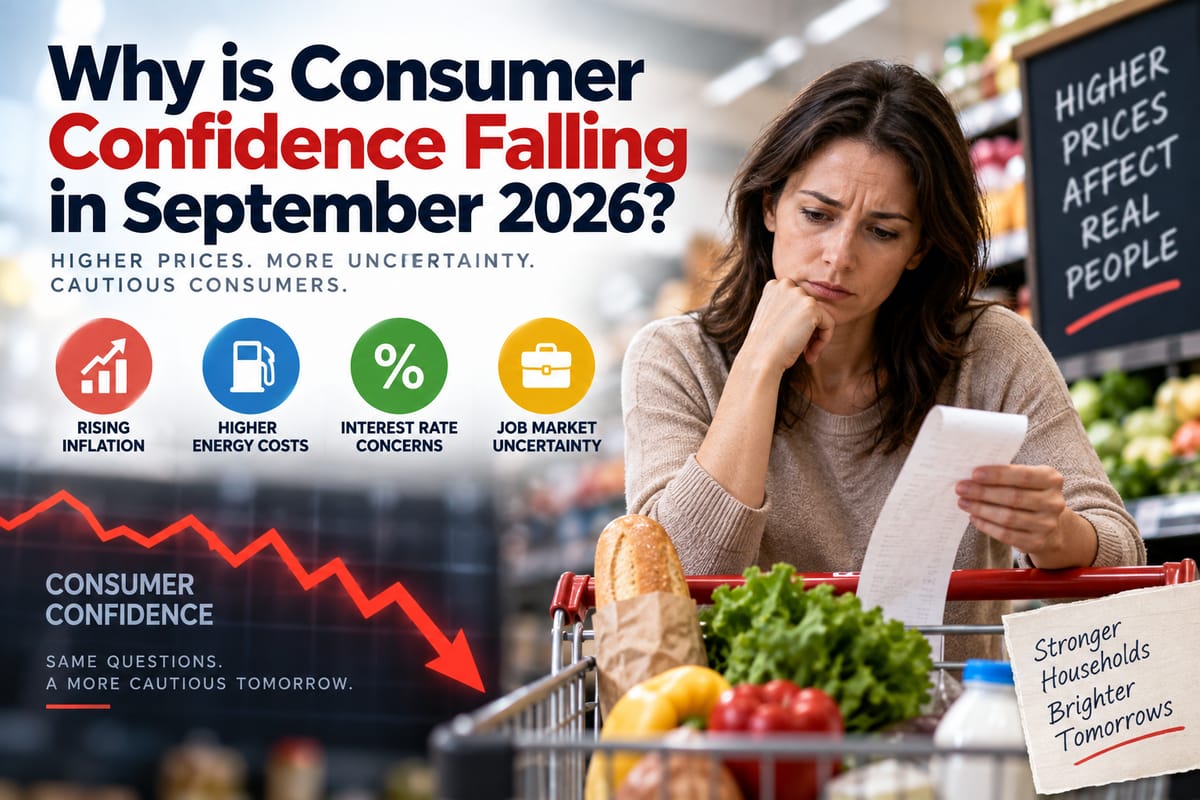
Why Is Consumer Confidence Falling in September 2026?
U.S. consumers are entering the final stretch of 2026 with a more cautious view of the economy, as inflation remains elevated, energy costs have climbed and concerns about future economic conditions weigh on household expectations.
The latest University of Michigan preliminary reading shows the Index of Consumer Sentiment falling to 47.8 in September 2026, down from 51.7 in August and 55.1 a year earlier. The decline was broad, with the Current Economic Conditions index falling to 50.9 and the Expectations index dropping to 45.8.
The Conference Board’s most recent consumer confidence reading, released in August, also showed weakness. Its index declined to 89.4 from 90.2 in July, with consumers becoming more pessimistic about the months ahead.
The two surveys measure somewhat different aspects of consumer attitudes, but together they point to a common theme: households are becoming less comfortable with the economic outlook.
Inflation Is Still Shaping Household Expectations
One of the biggest reasons confidence remains under pressure is that prices continue to rise.
The U.S. Bureau of Labor Statistics reported that the Consumer Price Index increased 0.4% in August, while prices were up 3.4% over the previous 12 months. Core inflation, which excludes food and energy, increased 2.4% over the year.
For consumers, the experience of inflation is not limited to the headline number.
Gasoline prices rose 3.9% in August and were up 27.4% from a year earlier. The overall energy index increased 16.3% over the same period. Shelter prices also continued to rise, increasing 3% over the year.
Those increases can have an outsized psychological effect because households encounter fuel, housing and other essential expenses regularly.
This helps explain why inflation can affect confidence even when the economy continues to grow. Consumers may feel that their budgets are under pressure even if some broader economic indicators remain relatively stable.
For households trying to understand the connection between rising prices and everyday financial decisions, How Inflation Is Affecting Household Budgets provides useful context.
Consumers Are Worried About the Future
The September University of Michigan data are particularly notable because the decline was larger in expectations than in assessments of current conditions.
The Expectations Index fell 11.1% from August to September, while the Current Economic Conditions index declined 1.9%.
That difference matters.
Consumer confidence is influenced not only by what people are experiencing today but also by what they think will happen next. A household may be employed and able to pay its bills while still becoming more cautious if it expects higher prices, weaker job opportunities or more difficult financial conditions in the months ahead.
The Conference Board’s August survey showed a similar pattern. The Present Situation Index actually increased by 6.8 points to 121.2, while the Expectations Index fell 5.8 points to 68.2.
In other words, consumers’ assessment of current conditions was not deteriorating in the same way as their outlook.
That suggests much of the weakness is about uncertainty over what comes next rather than a uniform deterioration in households’ current circumstances.
Higher Energy Costs Are Adding Pressure
Energy has become an important part of the consumer confidence story.
August CPI data showed gasoline prices increasing sharply during the month, while energy prices were substantially higher than a year earlier.
Higher fuel costs can spread through household budgets in several ways.
Drivers pay more at the pump, but transportation costs can also affect the prices of goods and services because businesses have to move products, operate vehicles and maintain supply chains.
That means an increase in energy costs can create a broader perception that everyday life is becoming more expensive.
For households already working with limited financial flexibility, even relatively small increases in recurring expenses can change spending decisions.
Interest Rates Are Another Source of Uncertainty
Interest rates are also influencing how consumers view their finances.
On September 16, the Federal Reserve raised its federal funds target range by a quarter percentage point to 3.75% to 4%, citing elevated inflation and the need to support a return toward its 2% inflation objective.
Higher interest rates can benefit savers by increasing returns on certain deposits, but they can also make borrowing more expensive.
Consumers carrying credit-card balances, financing vehicles, buying homes or taking out other loans may feel the impact through higher borrowing costs.
That creates a complicated environment for households. Someone with substantial savings may benefit from higher deposit yields, while another household with significant debt may face higher monthly interest expenses.
Understanding these relationships is part of understanding The Global Economy Explained, particularly the way monetary policy can affect households and businesses.
The Labor Market Is Being Watched Closely
Employment remains another major factor behind consumer confidence.
The August employment report showed that U.S. nonfarm payroll employment increased by 162,000 and the unemployment rate remained at 4.1%.
That does not indicate a sudden collapse in employment.
However, consumer sentiment can weaken before major changes appear in headline unemployment figures. People can become concerned about job security, hiring conditions, wages or future opportunities even while the unemployment rate remains relatively stable.
The Conference Board’s August survey specifically found that expectations surrounding future income, business conditions and labor-market conditions had become more pessimistic.
For consumers, confidence therefore depends on more than whether they currently have a job. Expectations about the durability and quality of employment also matter.
The Economy Is Sending Mixed Signals
One reason the September confidence readings are difficult to interpret is that the broader U.S. economy is not showing a single, consistent direction.
The Federal Reserve said in September that economic activity was expanding at a solid pace, domestic spending remained resilient, productivity growth was strong and capital investment was robust.
At the same time, the Conference Board’s Leading Economic Index declined 0.1% in August after rising 0.2% in July. The six-month change through August was slightly negative.
These indicators can coexist.
Economic activity can remain positive while consumers become more cautious about the future. Confidence is a measure of expectations and perceptions, not a direct measurement of economic output.
That distinction is important when interpreting the latest numbers.
Why Consumer Sentiment Can Fall Before Spending Does
A decline in confidence does not automatically mean consumers will immediately stop spending.
Households have bills to pay, groceries to purchase and services they continue to need regardless of how optimistic they feel about the economy.
However, weaker confidence can influence discretionary decisions.
Consumers may postpone major purchases, reduce restaurant visits, delay vacations, search more aggressively for discounts or increase their savings.
Businesses watch these changes closely because consumer spending represents a major component of economic activity.
If households become consistently more cautious, companies may eventually respond by adjusting hiring, investment, inventories and pricing strategies.
That relationship makes consumer confidence an important indicator even though it does not perfectly predict future economic activity.
Businesses Are Paying Attention Too
Companies have their own reasons to monitor consumer sentiment.
When households feel financially secure, they may be more willing to spend on products and services that are not strictly necessary. When confidence falls, consumers may become more selective.
That can influence everything from retail sales and travel to restaurants, entertainment and large household purchases.
Businesses may respond by emphasizing promotions, changing product offerings or focusing more heavily on retaining existing customers.
The broader relationship between consumer demand and corporate performance is explored in how businesses grow revenue, customers, operations and market share.
Household Budgets Are Becoming More Important
For individual consumers, the practical response to weaker confidence is often less about predicting the economy and more about strengthening household finances.
A household with a detailed budget may have more room to adjust when fuel, housing or food costs increase.
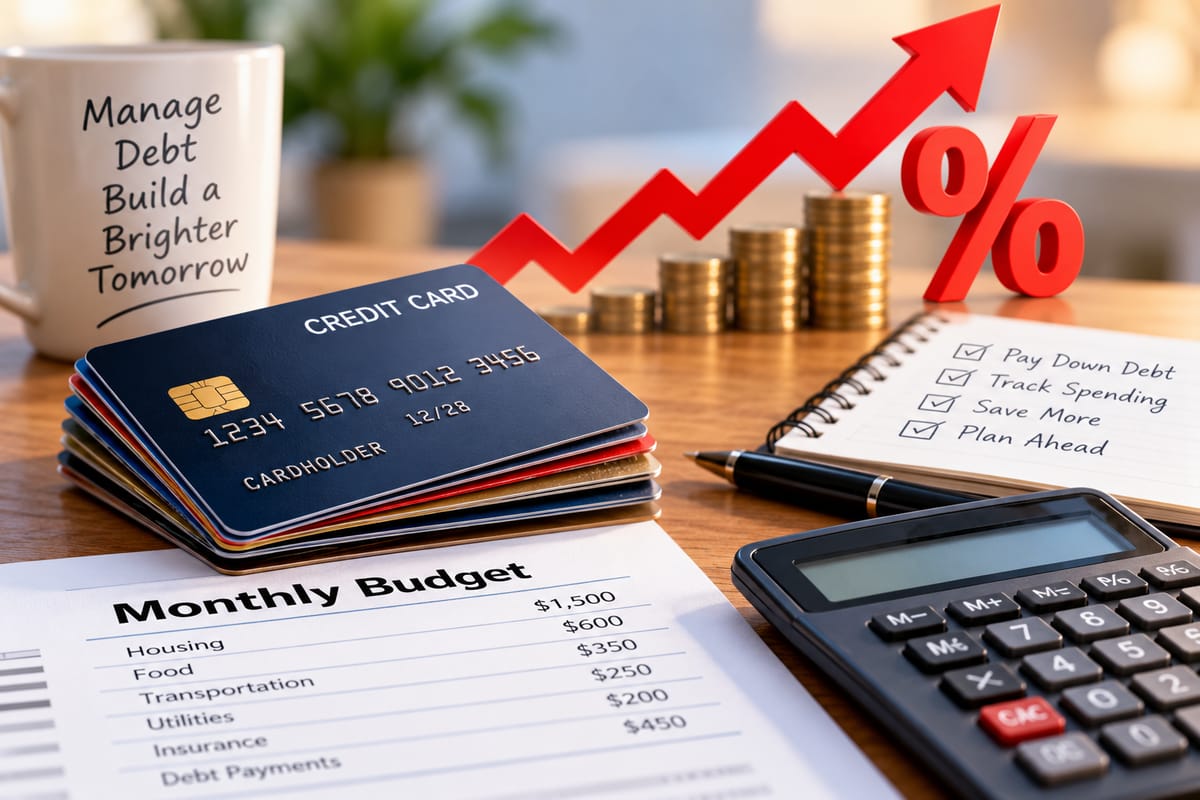
That could mean reviewing recurring subscriptions, reducing unnecessary expenses, building an emergency fund or directing additional money toward high-interest debt.
It can also mean separating essential spending from discretionary purchases.
When economic conditions feel uncertain, having a clearer picture of monthly cash flow can reduce the need to make financial decisions reactively.
Savings May Become More Attractive
Weaker consumer confidence can also encourage households to keep more money in savings.
That does not necessarily mean consumers are abandoning spending altogether. Instead, they may be creating a larger financial cushion because they are less certain about what lies ahead.
Higher interest rates can make cash savings more attractive than they were during periods of very low rates, although households still need to consider inflation and their longer-term financial goals.
The September confidence decline therefore has an interesting relationship with household saving behavior: consumers may feel less optimistic while simultaneously becoming more financially cautious.
What the September Numbers Really Show
The September 2026 data do not point to a single cause behind weaker consumer confidence.
Instead, several pressures are overlapping.
Inflation remains above the Federal Reserve’s 2% goal, gasoline and energy costs have risen sharply, interest rates remain relatively high, and consumers have become more cautious about future economic and labor-market conditions.
At the same time, employment remains relatively stable and the Federal Reserve says economic activity is expanding at a solid pace.
That combination explains why the confidence numbers should not automatically be interpreted as proof that the economy is entering a downturn.
Instead, the September readings show that households are becoming more cautious about the future even while several important measures of current economic activity remain resilient.
For consumers, that makes the next few months particularly important. Inflation, energy prices, employment conditions, interest rates and household spending will all help determine whether today’s caution remains temporary or becomes a more persistent feature of consumer behavior.




2 Comments
Micle harison
June 7, 2019Lorem ipsum dolor sit amet, usu ut perfecto postulant deterruisset, libris causae volutpat at est, ius id modus laoreet urbanitas. Mel ei delenit dolores.
John Doe
June 7, 2019Some consultants are employed indirectly by the client via a consultancy staffing company.