
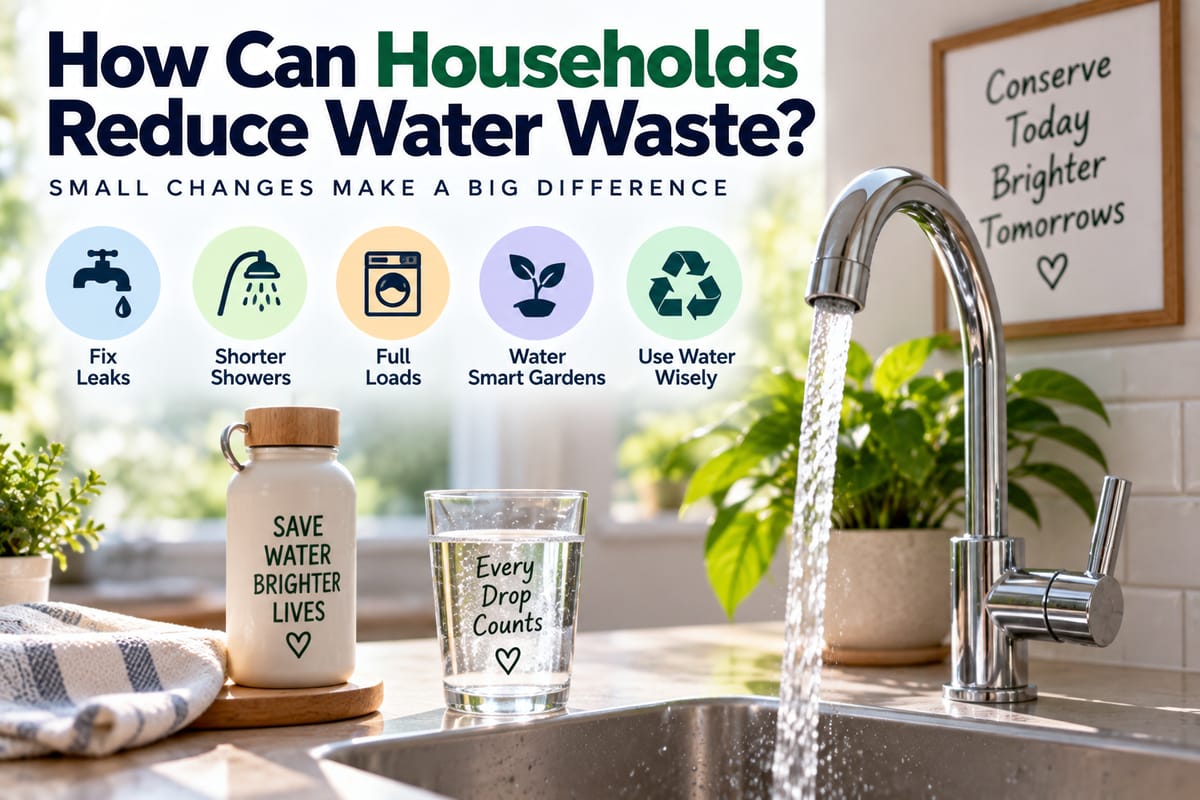
How Can Households Reduce Water Waste?
Water is one of the most important resources in any household, yet a significant amount can be wasted through leaks, inefficient appliances, unnecessary outdoor use, and everyday habits.
Reducing household water waste does not necessarily require major renovations. Small changes in how water is used, combined with regular maintenance and more efficient fixtures, can significantly reduce unnecessary consumption.
Saving water can also lower household utility bills, protect local water supplies, reduce energy use associated with heating and pumping water, and encourage more sustainable living.
Why Reducing Water Waste Matters
Fresh water may seem abundant when a tap is turned on, but usable freshwater is limited and unevenly distributed around the world.
Households depend on water for drinking, cooking, cleaning, bathing, laundry, gardening, and sanitation. When water is used inefficiently, additional resources may be required to collect, treat, pump, heat, and distribute it.
Understanding the broader water cycle provides useful context. How Earth’s Freshwater Systems Work explains how freshwater moves through natural systems and why accessible freshwater resources are important.
Reducing unnecessary household consumption is one practical way to use this resource more responsibly.
Fix Household Water Leaks
Leaks are among the easiest sources of water waste to overlook.
A dripping faucet may appear insignificant, but a leak that continues throughout the day and night can waste substantial amounts of water over time. Larger leaks from toilets, pipes, washing machines, or outdoor fixtures can waste considerably more.
Households should periodically check:
- Faucets and showerheads
- Toilets
- Under-sink plumbing
- Washing machine connections
- Dishwashers
- Outdoor taps
- Irrigation systems
- Water heaters
- Visible pipes
A sudden or unexplained increase in water usage can also be a sign of a hidden leak.
Repairing leaks promptly can prevent water waste while also reducing the possibility of moisture damage to the home.
Make Toilets More Water Efficient
Toilets can account for a substantial share of indoor household water use.
Older toilets may use considerably more water per flush than newer high-efficiency models. Replacing an inefficient toilet can therefore reduce consumption over the long term.
Even when replacing the toilet is not practical, households can make sure the existing system is operating correctly.
A toilet that continues running after flushing may have a faulty flapper, fill valve, or another component. Because the leak can be continuous, even a relatively small problem can result in significant water loss.
Reduce Water Use While Showering
Showers can consume considerable amounts of water, particularly when people take long showers or use older high-flow showerheads.
A few simple changes can make a difference:
- Take shorter showers.
- Turn the water off while applying soap or shampoo when practical.
- Install an efficient showerhead.
- Repair dripping shower fixtures.
- Avoid letting the water run unnecessarily while waiting for the desired temperature.
These habits can reduce both water and energy consumption when hot water is involved.
Turn Off the Tap When It Is Not Needed
One of the simplest ways to reduce water waste is to avoid leaving taps running unnecessarily.
For example, when brushing teeth, people can turn off the faucet while brushing rather than allowing water to flow continuously.
The same principle applies when shaving, washing dishes, preparing food, or performing other household activities.
The amount saved during one activity may seem small, but repeated every day across an entire household, these changes can add up.
Use Washing Machines Efficiently
Washing machines can consume substantial amounts of water, particularly older models.
Households can reduce unnecessary consumption by running laundry loads when there is enough clothing to use the machine efficiently rather than repeatedly washing small loads.
Modern high-efficiency washing machines can also use less water than older models.
When replacing an appliance, water efficiency should therefore be considered alongside purchase price, energy efficiency, capacity, and expected lifespan.
Use Dishwashers Efficiently
Dishwashers can also be used more efficiently.
Running a dishwasher only when it is sufficiently full can reduce the number of cycles required. However, overloading the machine can prevent dishes from being cleaned properly and may result in additional washing.
Households should follow the manufacturer’s recommendations for loading and cycle selection.
Pre-rinsing dishes under running water can also use unnecessary amounts of water. Scraping food into a waste or compost container before loading dishes may be sufficient in many cases.
Improve Kitchen Water Habits
The kitchen provides numerous opportunities to reduce water waste.
Instead of allowing water to run continuously while washing vegetables, people can use a basin or partially fill the sink.
When preparing food, water used for rinsing certain fruits and vegetables can sometimes be collected for appropriate non-potable uses, such as watering plants, provided it does not contain harmful cleaning products or other contaminants.
It is also useful to repair dripping kitchen faucets quickly because they can leak continuously for days or weeks.
Manage Outdoor Water Use Carefully
Outdoor water use can become a major source of household consumption, particularly in warm or dry conditions.
Gardens, lawns, landscaping, and outdoor cleaning may require substantial quantities of water.
Households can reduce waste by:
- Watering plants during cooler parts of the day.
- Using targeted irrigation rather than unnecessarily watering surrounding surfaces.
- Checking hoses and outdoor connections for leaks.
- Using mulch to help soil retain moisture.
- Selecting plants suited to the local climate.
- Avoiding excessive lawn watering.
- Adjusting irrigation after rainfall.
Watering during cooler periods can reduce losses from evaporation.
Collect Rainwater Where Appropriate
Rainwater harvesting can provide an alternative source of water for certain household activities.
Depending on local regulations and the design of the collection system, rainwater can potentially be collected from roofs and stored for uses such as garden irrigation or other non-potable purposes.
A properly designed system should keep collected water separate from drinking-water supplies unless it has been appropriately treated and is legally approved for potable use.
Rainwater harvesting can be particularly useful in areas where seasonal rainfall provides opportunities to store water for later outdoor use.
Choose Plants That Match the Local Climate
Landscaping choices can have a major influence on outdoor water consumption.
Plants that are naturally suited to local weather and soil conditions may require less supplemental irrigation than plants that need large amounts of water to thrive.
Native and drought-tolerant plants can often be useful choices, although the best options depend on the local climate and ecosystem.
Grouping plants according to their water needs can also make irrigation more efficient.
Improve Soil Moisture Retention
Watering a garden does not necessarily mean all of the water reaches plant roots.
Some water can evaporate from exposed soil or run off before it is absorbed.
Mulching can help reduce evaporation and keep soil moisture available for longer. Organic materials such as suitable compost or mulch can also contribute to healthier soil conditions over time.
Improving soil structure can further help landscapes retain water.
Use Drip Irrigation for Targeted Watering
Traditional sprinklers can distribute water over large areas, including locations where it is not needed.
Drip irrigation delivers water more directly to the soil around plants. When properly designed and maintained, it can reduce unnecessary watering of paths, patios, and other surfaces.
Irrigation systems should still be inspected regularly because damaged or poorly positioned emitters can waste water.
Automatic irrigation controllers should also be adjusted according to seasonal conditions rather than running on the same schedule throughout the year.
Avoid Using Drinking Water for Every Outdoor Task
Potable water does not always need to be used for every outdoor activity.
Where local regulations and safety conditions permit, households may be able to use rainwater or other suitable non-potable sources for activities such as watering gardens.
However, water from potentially contaminated sources should not be used on edible crops or for household purposes without appropriate treatment and safety precautions.
The objective is to match the quality of the water source to the intended use without creating health risks.
Reduce Water Waste During Cleaning
Cleaning can involve more water than necessary when hoses or taps are left running.
For example, sweeping driveways and patios before washing them can remove dry dirt without using water. When water is needed, using a bucket or controlled spray can sometimes provide better control than allowing a hose to run continuously.
Households should also avoid using excessive water when cleaning outdoor surfaces simply because it is convenient.
Small changes in cleaning routines can reduce consumption without compromising cleanliness.
Maintain Plumbing Systems
Good plumbing maintenance is an important part of household water management.
A small leak can become a much larger problem if a pipe fails or a damaged connection remains unnoticed.
Households should pay attention to:
- Unusual sounds from pipes
- Damp spots
- Water stains
- Low or fluctuating water pressure
- Persistent dripping
- Unexpected increases in water bills
- Wet areas around appliances
- Water pooling where it should not
More comprehensive strategies are covered in the Complete Guide to Home Water Management, which provides a broader framework for managing water use and household systems.
Monitor Household Water Consumption
People often cannot reduce what they cannot see.
Monitoring water consumption can help households understand where the largest amounts of water are being used.
If a home has a water meter, residents can periodically record readings and compare them over time.
Unexpected changes can provide an early warning of leaks or changes in consumption.
Some homes may also use smart water monitoring devices that provide more detailed information about usage patterns.
The goal is not necessarily to monitor every drop but to identify unusual or avoidable consumption.
Teach the Whole Household About Water Conservation
Water-saving efforts work better when everyone in the home understands the goal.
Children can learn to turn off taps, take reasonable showers, and report leaks. Adults can make efficient appliance use and plumbing maintenance part of their regular routines.
Simple household rules can help establish consistent habits, such as turning off taps when they are not needed and checking that outdoor hoses are not left running.
When conservation becomes part of normal household behavior, it requires less conscious effort over time.
Reuse Water When It Is Safe
Some household water can potentially be reused for appropriate purposes rather than immediately discarded.
For example, certain relatively clean water from food preparation may be suitable for outdoor plants, depending on what it contains.
However, water containing detergents, chemicals, pathogens, or other contaminants should not automatically be reused.
Greywater systems can also collect water from selected household sources for specific non-potable applications, but these systems need to be designed and managed properly.
Safety and local regulations should always take priority when considering water reuse.
Reduce Food Waste and Its Water Footprint
Water consumption is not limited to the water that comes directly from a household tap.
Food production requires water for growing crops, raising animals, processing products, and transporting food through supply chains.
When food is thrown away, the water and other resources used to produce that food are also effectively wasted.
Reducing unnecessary food waste can therefore contribute to broader resource conservation.
Households can plan meals, store food appropriately, use leftovers, and purchase quantities that are more likely to be consumed.
Water conservation is closely connected to other forms of responsible resource use, which is one reason the Sustainable Living Guide takes a broader approach to everyday environmental choices.
Manage Household Waste Responsibly
Water can also become contaminated by substances that households dispose of improperly.
Paints, oils, chemicals, medicines, cleaning products, and other materials should not be poured down drains simply because doing so seems convenient.
These substances can enter wastewater systems or the environment and may require additional treatment.
Proper household waste management helps protect water quality and reduces the burden placed on treatment systems.
For more information about responsible disposal and the movement of household waste, see How Household Waste Management Works.
Replace Inefficient Fixtures
When faucets, toilets, showerheads, or appliances reach the end of their useful life, replacing them with water-efficient alternatives can reduce consumption.
Water-efficient fixtures are designed to provide the required function while using less water.
When choosing replacements, households should consider:
- Water consumption
- Product quality
- Expected lifespan
- Maintenance requirements
- Installation costs
- Compatibility with existing plumbing
- Availability of replacement parts
The cheapest product is not always the most economical choice over its full lifespan.
Be Careful With Swimming Pools and Spas
Swimming pools and spas can lose water through evaporation, splashing, leaks, and maintenance activities.
Pool covers can help reduce evaporation when a pool is not being used. Regular inspections can also help identify leaks before significant amounts of water are lost.
Water levels should be maintained according to the equipment manufacturer’s recommendations rather than routinely adding more water without investigating unexplained losses.
Consider Water Efficiency When Renovating
Home renovations provide an opportunity to improve water efficiency.
A bathroom renovation, for example, could include efficient toilets, faucets, and showerheads. A kitchen renovation could incorporate efficient appliances and plumbing fixtures.
Outdoor landscaping projects can incorporate climate-appropriate plants, improved soil management, and efficient irrigation.
Considering water consumption during the planning stage can be more convenient and cost-effective than replacing fixtures later.
Small Changes Can Add Up
Household water conservation does not depend on one dramatic action.
A leaking faucet repaired promptly, a shorter shower, a full laundry load, efficient garden watering, and a properly maintained toilet may each save a relatively modest amount of water.
But when these actions are repeated every day and combined across an entire household, the savings can become significant.
The most effective approach is often a combination of efficient equipment, regular maintenance, thoughtful habits, and awareness of how water is being used.
Building a More Water-Efficient Home
Reducing household water waste is ultimately about using water where it is needed and avoiding unnecessary losses.
Fixing leaks, choosing efficient fixtures, monitoring consumption, managing gardens carefully, reusing suitable water, and reducing waste can all contribute to more responsible household water use.
These changes can benefit more than the household itself. Using water efficiently reduces pressure on local supplies and can also reduce the energy and infrastructure resources required to treat and deliver water.
A water-efficient home does not have to be complicated. In many cases, it begins with simple habits: notice where water is being wasted, fix problems promptly, and make each use of this essential resource count.



2 Comments
Micle harison
June 7, 2019Lorem ipsum dolor sit amet, usu ut perfecto postulant deterruisset, libris causae volutpat at est, ius id modus laoreet urbanitas. Mel ei delenit dolores.
John Doe
June 7, 2019Some consultants are employed indirectly by the client via a consultancy staffing company.