
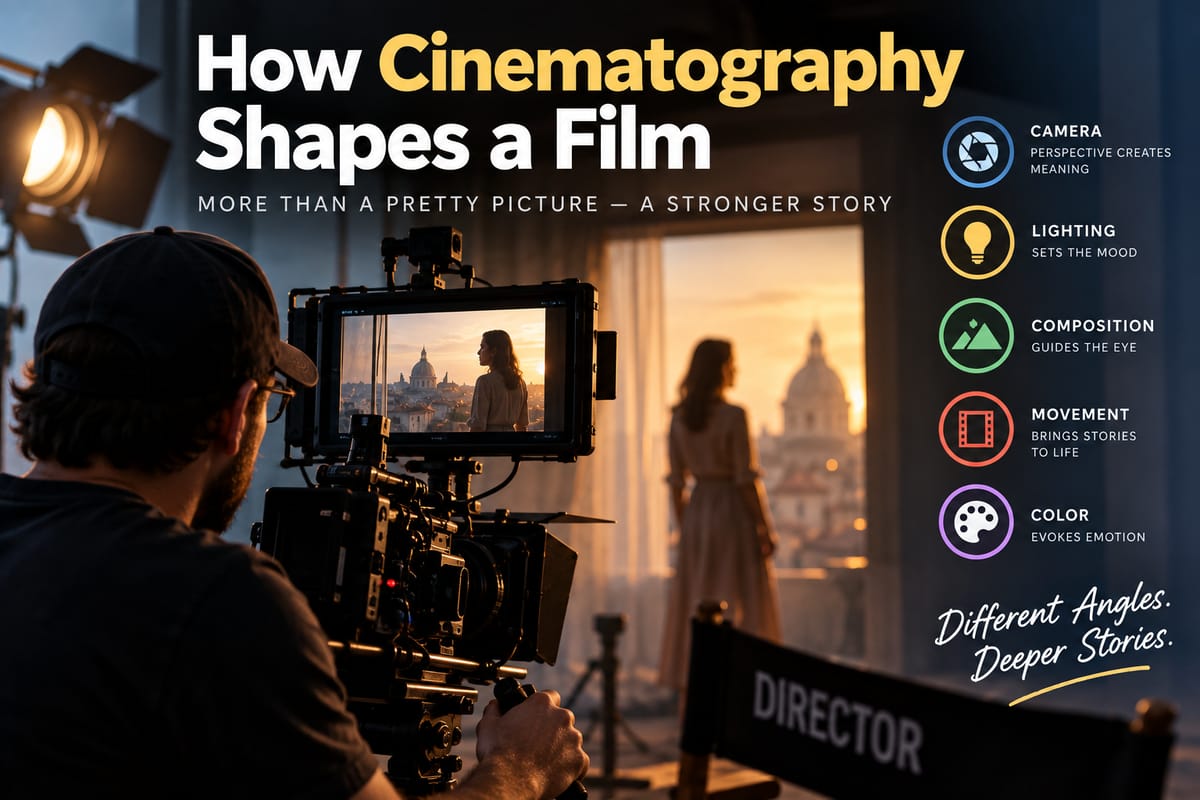
How Cinematography Shapes a Film
A film can have a compelling story, talented actors and an impressive script, but the way that story is photographed can dramatically change how audiences experience it. Cinematography is the visual language of filmmaking, using cameras, lighting, composition, movement, lenses and color to shape what viewers see and how they feel about it.
Two directors could film the same scene with identical dialogue and performances yet create completely different experiences simply by changing the cinematography.
A close-up can make a character’s expression feel intimate. A wide shot can make that same character appear isolated. Low lighting can create tension, while bright natural light can make a scene feel open and optimistic.
Understanding these choices is an important part of The Complete Guide to Filmmaking because cinematography connects technical filmmaking decisions with storytelling.
What Is Cinematography?
Cinematography is the art and craft of creating the visual images used in a movie or other filmed production.
The cinematographer, often called the director of photography or DP, works closely with the director to determine how scenes should look. This can involve decisions about:
- Camera placement
- Lens selection
- Lighting
- Exposure
- Framing
- Camera movement
- Color
- Depth of field
- Aspect ratio
- Visual composition
These choices are not simply about making a movie look attractive. They can communicate information that dialogue never directly states.
A character standing alone in a huge landscape may appear vulnerable. A tightly framed face may reveal emotional pressure. A camera moving rapidly through a crowded environment can make a sequence feel chaotic.
Cinematography therefore operates as a storytelling tool.
Camera Angles Change the Way Audiences See Characters
Camera angles can influence how viewers perceive people and events on screen.
A low-angle shot, in which the camera looks upward toward a character, can make that person appear powerful, imposing or dominant. A high-angle shot can have the opposite effect, making a character appear vulnerable or diminished.
An eye-level shot usually creates a more natural perspective because it resembles the way people commonly observe one another.
Directors can also deliberately break these expectations. A character who initially appears powerful might suddenly be filmed from an unusual angle as their circumstances change.
These visual shifts allow cinematography to reinforce developments in a story without requiring additional dialogue.
Shot Size Controls Emotional Distance
The distance between the camera and its subject is another important storytelling decision.
A close-up places attention on details such as a character’s eyes or facial expression. It can make an emotional moment feel personal and immediate.
A medium shot generally provides more information about body language and the surrounding environment while maintaining a connection with the character.
A wide shot shows much more of the setting. It can establish where a scene takes place, reveal relationships between characters or emphasize the scale of an environment.
The choice between these shots affects how much information the audience receives and how emotionally close they feel to the characters.
Composition Directs the Audience’s Attention
Every frame contains multiple visual elements. Cinematographers use composition to determine how those elements are arranged.
Lines, shapes, colors, light and objects can all draw attention toward a particular part of the image.
For example, a doorway might frame a character in the center of the image. A road might lead the viewer’s eye toward a distant figure. Strong contrasts between light and shadow can make one object immediately noticeable.
Composition can also communicate relationships.
Two characters placed close together may appear connected, while a large amount of empty space between them can suggest emotional or physical separation.
Lighting Creates Mood
Lighting is one of cinematography’s most powerful tools.
A brightly illuminated room can feel welcoming, energetic or exposed. A scene dominated by shadows can create mystery, anxiety or danger.
Cinematographers can work with natural light, artificial sources or carefully controlled combinations of both.
Common lighting decisions include:
- Direction of the light
- Intensity
- Color temperature
- Contrast
- Shadow placement
- Light diffusion
- Practical lights within the scene
Lighting can also evolve throughout a film.
A character might begin a story in soft, warm lighting and gradually appear in darker or harsher environments as their circumstances change. The audience may not consciously identify every lighting decision, but the visual transformation can still influence how the story feels.
Lenses Influence Perspective
The camera lens affects more than how much of a scene fits into the frame.
Wide-angle lenses can exaggerate spatial relationships and make environments appear larger. They can be useful for landscapes, architecture and scenes in which the surroundings are important.
Telephoto lenses compress visual space and can make distant objects appear closer together. They can also isolate subjects from their surroundings.
Portrait-oriented focal lengths may create a more natural-looking perspective for close character work.
Lens selection can therefore become part of a film’s visual identity.
A director and cinematographer might deliberately use different lenses for different characters, locations or stages of a story.
Camera Movement Adds Energy
A stationary camera can make a scene feel controlled, observational or restrained.
Moving the camera can create a very different effect.
A tracking shot can follow a character as they move through a location. A pan moves horizontally across a scene, while a tilt moves vertically. Handheld cinematography can introduce instability and immediacy.
More elaborate movements can turn the camera itself into an active storytelling device.
A slow movement toward a character may gradually increase tension. A rapid movement can create urgency. A long, uninterrupted shot can immerse viewers in an unfolding sequence.
Camera movement is particularly powerful when it reflects what is happening emotionally.
Color Gives a Film Its Visual Identity
Color can establish atmosphere, distinguish locations and reinforce themes.
Warm colors such as orange, red and yellow can create feelings of warmth, excitement or danger depending on context. Cooler blues and greens can produce a sense of calm, distance or unease.
Some films use restrained palettes, while others embrace highly saturated colors.
Color can also help divide a story into different periods or environments. A filmmaker might use one visual palette for a character’s ordinary life and another for a dream sequence or alternate reality.
These decisions contribute to a film’s overall visual consistency.
Depth of Field Controls What Viewers Notice
Depth of field describes how much of an image appears acceptably sharp.
With a shallow depth of field, the subject can remain sharply focused while the background becomes blurred. This can isolate a character and reduce distractions.
A deeper depth of field keeps more of the scene in focus, allowing viewers to examine several elements simultaneously.
Neither approach is inherently better. The appropriate choice depends on what the filmmaker wants the audience to notice.
A shallow focus shot may emphasize an intimate conversation, while deep focus can allow important actions to occur in different parts of the frame.
Cinematography Helps Define Film Genres
Different genres often develop recognizable visual conventions.
Horror films may use darkness, unusual framing, restricted visibility and strong contrasts to create uncertainty. Action movies frequently rely on dynamic movement, dramatic compositions and carefully choreographed camera work.
Romantic films may emphasize warm lighting, intimate framing and visually pleasing environments, while science-fiction productions can use distinctive production design, color palettes and expansive compositions to establish unfamiliar worlds.
These conventions are one reason How Film Genres Shape Movie Experiences is closely connected to understanding cinematography.
However, filmmakers can also deliberately break genre conventions. A horror film might use bright daylight to make danger feel unexpected, while a comedy could use unusually dramatic lighting for humorous effect.
Cinematography Works With Production Design
The camera does not operate independently of everything else on screen.
Sets, costumes, props, architecture and locations all contribute to the visual composition.
A cinematographer has to consider how these elements interact with lighting, camera movement and framing.
A carefully designed room may communicate a character’s personality before the character says a word. The camera can then emphasize particular details within that environment.
This collaboration between cinematography and production design helps create a cohesive world.
Editing Completes the Visual Language
Cinematography creates individual shots, but editing determines how those shots work together.
A series of rapid cuts can create energy and urgency. Longer shots can encourage audiences to observe a scene more carefully.
The relationship between shots can also create meaning.
A close-up of a character looking toward something can be followed by a shot revealing what they see. The audience then understands the connection between the two images.
Cinematography and editing therefore work together to control visual rhythm and storytelling.
This relationship becomes especially important when considering How Movies Are Made From Start to Finish, because the final image on screen is the result of numerous interconnected stages of production and post-production.
Great Cinematography Can Tell Stories Without Dialogue
Some of the most memorable cinematic moments communicate primarily through images.
A character looking through a window, an empty chair after someone has left, a long shot showing two people moving apart or a sudden change in lighting can convey information without anyone explaining what is happening.
This is one of cinematography’s greatest strengths.
Film is fundamentally a visual medium, and audiences can interpret composition, movement, color and lighting almost instantly.
The most effective cinematography does not necessarily draw attention to itself. Instead, it makes the story feel clearer, more emotional and more immersive.
Technology Continues to Expand Cinematic Possibilities
The visual tools available to filmmakers have changed significantly over time.
Digital cameras have transformed production workflows, while computer-generated imagery has made it possible to create environments and characters that would have been difficult or impossible to capture practically.
Virtual production technologies now allow filmmakers to combine physical sets with computer-generated environments during filming.
At the same time, modern digital tools make professional-looking images more accessible to independent filmmakers.
These changes are part of the larger Evolution of Modern Entertainment Media, which has continually expanded the ways stories can be produced and experienced.
Technology, however, does not replace visual storytelling fundamentals. Composition, lighting, perspective and movement remain important regardless of whether a scene is captured on traditional film, a digital cinema camera or a virtual production stage.
Why Cinematography Matters to the Movie Experience
Cinematography shapes what audiences see, where they look and how they emotionally experience a story.
It can make a familiar location feel threatening, transform an ordinary conversation into an intimate moment or make a fictional world feel believable.
The strongest cinematography supports the story rather than existing purely for decoration. Every camera position, lens, lighting setup and movement can contribute to the characters, atmosphere and themes of a film.
That is why cinematography remains one of the defining elements of filmmaking. A movie is not simply a sequence of events captured by a camera—it is a carefully constructed visual experience in which how a story is shown can be just as important as the story itself.




2 Comments
Micle harison
June 7, 2019Lorem ipsum dolor sit amet, usu ut perfecto postulant deterruisset, libris causae volutpat at est, ius id modus laoreet urbanitas. Mel ei delenit dolores.
John Doe
June 7, 2019Some consultants are employed indirectly by the client via a consultancy staffing company.