
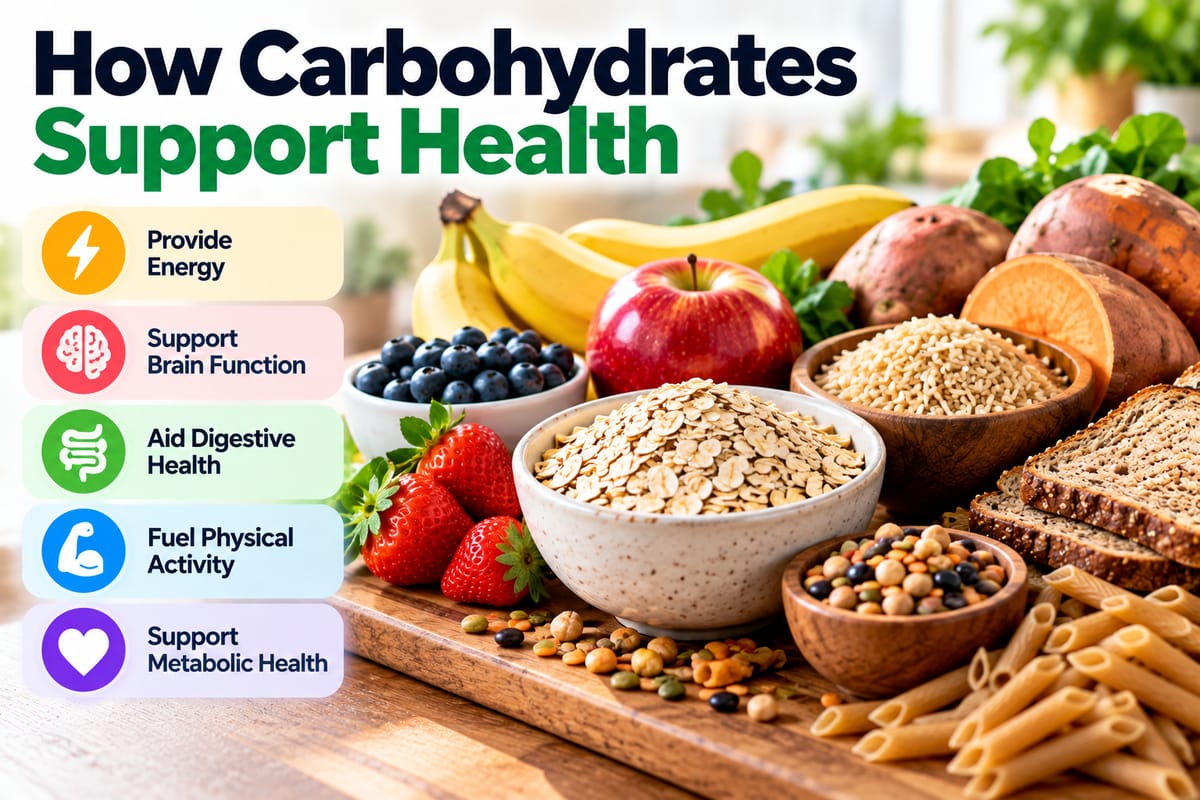
How Carbohydrates Support Health
Carbohydrates are one of the body’s primary sources of energy, yet they are often discussed as though they are automatically unhealthy. In reality, carbohydrates are a broad group of nutrients found in foods ranging from fruits and vegetables to whole grains, beans, dairy products, and highly processed sweets.
The health effects of carbohydrates depend on factors such as the type of carbohydrate, the amount consumed, the food it comes from, and the overall dietary pattern.
Carbohydrates provide energy for everyday activities, support physical performance, contribute fiber to the diet, and help supply important vitamins, minerals, and other beneficial compounds when they come from nutrient-rich foods. They also interact closely with blood glucose regulation and metabolism.
Understanding these roles can make it easier to distinguish between the different types of carbohydrate-containing foods and build a balanced approach to nutrition.
What Are Carbohydrates?
Carbohydrates are one of the three major macronutrients, alongside protein and fat.
They are found naturally in many foods, including:
- Fruits
- Vegetables
- Whole grains
- Beans
- Lentils
- Milk and yogurt
- Nuts and seeds in smaller amounts
Carbohydrates are also present in foods that contain added sugars or refined starches, such as many baked goods, sweets, sugary beverages, and packaged snacks.
A broader explanation of carbohydrates and the other major macronutrients can be found in What Are Macronutrients and Why Do They Matter?.
The Main Types of Carbohydrates
Carbohydrates are commonly divided into sugars, starches, and fiber.
Sugars
Sugars are relatively simple carbohydrates.
They occur naturally in foods such as:
- Fruits
- Milk
- Some vegetables
Sugars can also be added to foods and drinks during processing or preparation.
The source of the sugar matters because foods containing naturally occurring sugars may also provide fiber, protein, vitamins, minerals, and other nutrients.
Starches
Starches are more complex carbohydrate structures.
They are found in foods such as:
- Potatoes
- Corn
- Rice
- Oats
- Wheat
- Beans
- Lentils
Starchy foods can be an important source of energy and nutrients, particularly when they are minimally processed or consumed as part of balanced meals.
Fiber
Fiber is a type of carbohydrate that the body does not fully digest.
It can support:
- Digestive health
- Regular bowel movements
- Satiety
- Healthy blood glucose regulation
- A healthy gut environment
Fiber occurs naturally in plant foods such as vegetables, fruits, whole grains, legumes, nuts, and seeds.
Carbohydrates Provide Energy
One of the most important functions of carbohydrates is supplying energy.
During digestion, many carbohydrates are broken down into glucose and other simple sugars. Glucose can then be used by cells as an energy source.
This is particularly important for tissues with substantial energy requirements.
The brain relies heavily on glucose under ordinary dietary conditions, while muscles can use carbohydrate-derived energy during physical activity.
This makes carbohydrates an important part of an overall energy-producing diet.
Carbohydrates and Physical Activity
Muscles can use carbohydrate-derived energy during exercise.
During higher-intensity physical activity, carbohydrates can be especially useful because the body can make energy from carbohydrate relatively quickly.
The body also stores carbohydrate in the form of glycogen, primarily in the muscles and liver.
Muscle glycogen can be used during physical activity, while liver glycogen helps support blood glucose levels between meals and during periods when food is not being consumed.
This is one reason athletes and highly active people often pay particular attention to carbohydrate intake.
Glycogen Acts as an Energy Reserve
The body does not simply use every carbohydrate immediately after it is consumed.
Some glucose can be stored as glycogen.
The liver stores glycogen that can help maintain blood glucose between meals. Muscles store glycogen that can be used locally during physical activity.
When carbohydrate intake and energy expenditure change, the body adjusts how these stores are used and replenished.
This ability to store and release carbohydrate helps provide a flexible source of energy.
Carbohydrates and the Brain
The brain has substantial energy requirements.
Glucose is an important fuel for the brain under normal dietary conditions.
This does not mean that eating more sugar automatically improves mental performance. Rather, it demonstrates why the body has sophisticated systems for maintaining an adequate supply of glucose in the bloodstream.
The brain’s energy needs are one reason blood glucose regulation is carefully controlled.
How Blood Glucose Is Regulated
After carbohydrate-containing food is digested, glucose can enter the bloodstream.
The body responds by regulating how that glucose is used, stored, and transported into cells.
Insulin is one of the major hormones involved in this process.
After a meal, insulin helps facilitate glucose uptake into certain tissues and supports the storage of excess glucose.
Other hormones also participate in maintaining blood glucose when levels fall.
The underlying process is explained in greater detail in How Blood Sugar Regulation Works.
Not All Carbohydrates Affect the Body in the Same Way
The body responds differently to different carbohydrate-containing foods.
Factors that can influence the response include:
- Type of carbohydrate
- Fiber content
- Degree of processing
- Portion size
- Food texture
- Presence of protein or fat
- Individual metabolism
- Physical activity
- Overall meal composition
For example, a whole apple and a sugar-sweetened beverage both contain carbohydrates, but they differ substantially in fiber, water content, micronutrients, and how they are consumed.
This is why looking only at the number of carbohydrate grams does not provide a complete picture of nutritional quality.
Whole Grains Provide More Than Carbohydrates
Whole grains can provide carbohydrates alongside several other nutrients.
Depending on the grain, they may contribute:
- Fiber
- Protein
- B vitamins
- Minerals
- Plant compounds
Examples include:
- Oats
- Brown rice
- Whole-grain wheat
- Barley
- Quinoa
- Whole-grain corn
Choosing whole grains more frequently can be one way to increase the nutritional value of carbohydrate-containing meals.
Fruits Provide Carbohydrates Alongside Other Nutrients
Fruit contains naturally occurring sugars, but it also provides other components that contribute to its nutritional value.
Depending on the fruit, these may include:
- Fiber
- Vitamin C
- Potassium
- Folate
- Water
- Various plant compounds
This illustrates why carbohydrates should not be evaluated independently of the food that contains them.
An orange is not nutritionally equivalent to a sugary beverage simply because both contain carbohydrates.
Vegetables Can Be Important Carbohydrate Sources
Some vegetables contain substantial amounts of carbohydrate, particularly starchy vegetables.
Examples include:
- Potatoes
- Sweet potatoes
- Corn
- Peas
- Winter squash
Other vegetables contain relatively little carbohydrate while providing fiber, vitamins, minerals, and other compounds.
A varied diet can include both starchy and non-starchy vegetables.
Legumes Combine Carbohydrates and Protein
Beans, lentils, and other legumes are particularly useful because they provide several nutrients at the same time.
They can supply:
- Carbohydrates
- Fiber
- Plant protein
- Minerals
- Various plant compounds
Their combination of carbohydrate, protein, and fiber can make them a filling component of balanced meals.
Carbohydrates and Digestive Health
Fiber is one of the most important ways carbohydrate-containing foods can support digestive health.
Certain types of fiber add bulk to stool and help support regular bowel movements.
Other types can be fermented by microorganisms in the large intestine.
This produces compounds that interact with the gut environment and may contribute to intestinal health.
Because fiber comes primarily from plant foods, increasing the variety of vegetables, fruits, legumes, whole grains, nuts, and seeds can help diversify fiber intake.
Carbohydrates and Metabolic Health
Metabolism involves the interconnected processes through which the body converts nutrients into energy, stores energy, builds and maintains tissues, and regulates numerous physiological functions.
Carbohydrate metabolism is therefore closely connected with broader metabolic health.
Factors such as:
- Physical activity
- Sleep
- Dietary quality
- Body composition
- Hormonal regulation
- Energy balance
can all influence metabolic function.
The relationship is explored more broadly in the Complete Guide to Metabolic Health and Metabolism.
Carbohydrates Can Support a Balanced Diet
A balanced diet does not need to eliminate an entire macronutrient category.
Carbohydrate-containing foods can provide:
- Energy
- Fiber
- Vitamins
- Minerals
- Plant compounds
The nutritional value depends heavily on the food source.
For example, a meal containing beans, vegetables, and whole grains provides a substantially different nutritional combination from a meal dominated by refined carbohydrates and added sugars.
This is why dietary patterns are often more informative than focusing on one nutrient in isolation.
The broader principles of building a nutritionally balanced eating pattern are discussed in The Complete Guide to Nutrition.
Simple Versus Complex Carbohydrates
Carbohydrates are sometimes described as “simple” or “complex.”
Simple carbohydrates generally have smaller molecular structures, while complex carbohydrates include longer chains of sugar molecules.
However, this distinction alone does not tell the whole nutritional story.
A food’s fiber content, degree of processing, nutrient density, and overall composition can be more informative when evaluating its place in a healthy diet.
For example, fruit contains simple sugars but also provides fiber, water, vitamins, minerals, and plant compounds.
Added Sugars Are Different From Naturally Occurring Sugars
Added sugars are incorporated into foods or drinks during manufacturing, preparation, or processing.
Examples can include sugars added to:
- Soft drinks
- Desserts
- Sweetened cereals
- Sauces
- Baked goods
- Sweetened beverages
Naturally occurring sugars are present in foods such as fruits and milk.
The distinction is important because foods containing naturally occurring sugars may also provide substantial amounts of other nutrients.
Refined Carbohydrates Can Be Part of the Diet
Refined grains and other refined carbohydrate foods are not automatically forbidden foods.
Refining can change the structure and nutritional composition of a grain, particularly by removing parts of the grain kernel.
Some refined grain products are also fortified with selected nutrients.
The overall diet matters, including the balance between refined and whole-food carbohydrate sources.
Portion Size Still Matters
Even nutritious carbohydrate sources contribute energy.
Eating large quantities of any energy-containing food can increase total energy intake.
Portion needs vary depending on factors such as:
- Age
- Body size
- Activity level
- Energy expenditure
- Individual goals
- Overall dietary pattern
The appropriate amount of carbohydrate is therefore not identical for everyone.
Carbohydrates Can Work With Protein and Fat
Meals often contain multiple macronutrients.
Combining carbohydrate-containing foods with protein, healthy fats, and fiber-rich foods can create meals that provide a broader range of nutrients.
For example:
Oatmeal + berries + nuts
provides carbohydrates along with fiber, protein, fats, vitamins, minerals, and other compounds.
Another example is:
Beans + brown rice + vegetables + avocado
which combines carbohydrates with plant protein, fiber, fats, and micronutrients.
The interaction among macronutrients is one reason balanced meals can be more useful than focusing excessively on a single nutrient.
Carbohydrate Needs Can Change With Activity
Someone who is physically active may have different carbohydrate requirements from someone with a largely sedentary lifestyle.
Exercise can increase the amount of carbohydrate used as fuel and can reduce muscle glycogen stores.
Regular activity can therefore influence how the body uses and stores carbohydrate.
This does not mean every active person needs a high-carbohydrate diet. Individual requirements depend on the type, duration, and intensity of activity as well as total energy needs.
Hydration and Carbohydrate-Rich Foods
Some carbohydrate-rich foods contain substantial amounts of water.
Fruits and vegetables, for example, can contribute to overall fluid intake while providing carbohydrates and other nutrients.
Hydration itself is regulated through several physiological mechanisms, so carbohydrate intake should not be viewed as a substitute for adequate fluid consumption.
Carbohydrates and Satiety
Not all carbohydrate-containing foods have the same effect on fullness.
Foods that contain fiber and water generally have greater physical volume and can contribute to satiety.
Whole grains, legumes, fruits, and vegetables can therefore be useful components of meals designed to be filling and nutritionally rich.
Highly refined foods may be easier to consume quickly and in large quantities, particularly when they are energy-dense.
Again, the specific food and overall meal matter more than the word “carbohydrate” alone.
Choosing Better Carbohydrate Sources
A practical approach is to emphasize carbohydrate-containing foods that also provide valuable nutrients.
Examples include:
- Fruits
- Vegetables
- Beans
- Lentils
- Whole grains
- Potatoes and other minimally processed starchy vegetables
- Plain dairy products
- Nuts and seeds
It can also be helpful to limit reliance on foods that provide large amounts of added sugar with relatively little nutritional value.
This approach focuses on what foods contribute rather than simply labeling carbohydrates as good or bad.
Reading Food Labels
For packaged foods, nutrition labels can help identify the type and quantity of carbohydrates present.
Useful information may include:
- Total carbohydrate
- Dietary fiber
- Total sugars
- Added sugars
- Serving size
- Calories
- Protein
Ingredient lists can also reveal whether a product contains whole grains, added sugars, or other ingredients that are relevant to its nutritional profile.
Carbohydrates and Individual Health Needs
People have different nutritional requirements.
Certain health conditions, medications, activity levels, and dietary preferences can influence how carbohydrate intake should be approached.
Someone managing a medical condition involving blood glucose, for example, may receive individualized guidance from a healthcare professional about carbohydrate intake and meal planning.
General nutrition principles should not replace personalized medical advice when a specific health condition is involved.
Common Misconceptions About Carbohydrates
Several common claims about carbohydrates oversimplify their role in health.
“All Carbohydrates Are Bad”
This ignores the nutritional differences between fruits, legumes, whole grains, vegetables, sugary drinks, and highly refined foods.
“Carbohydrates Automatically Cause Weight Gain”
Body weight is influenced by overall energy balance and many other factors. Carbohydrates themselves are not uniquely responsible for weight gain.
“You Need to Avoid Carbohydrates to Be Healthy”
Carbohydrates can provide energy, fiber, vitamins, minerals, and other useful nutrients.
“Fruit Is Unhealthy Because It Contains Sugar”
Fruit contains naturally occurring sugars along with fiber, water, vitamins, minerals, and plant compounds.
These distinctions demonstrate why broad labels can obscure more useful nutritional information.
A Practical Way to Include Carbohydrates
Rather than focusing on eliminating carbohydrates, consider building meals around a variety of nutrient-rich foods.
A simple meal structure might include:
1. A carbohydrate-rich whole or minimally processed food
Such as whole grains, beans, potatoes, or fruit.
2. A protein source
Such as fish, eggs, dairy, beans, lentils, poultry, or another protein-rich food.
3. Vegetables or fruit
To increase fiber, vitamins, minerals, and other nutrients.
4. A source of healthy fats
Such as nuts, seeds, avocado, or certain plant oils.
This flexible approach allows carbohydrates to contribute to meals without becoming the sole focus of the diet.
Why Food Quality Matters More Than a Single Nutrient
Carbohydrates are neither inherently beneficial nor harmful.
Their effects depend on their source, quantity, processing, fiber content, and place within the overall diet.
A diet built around fruits, vegetables, legumes, whole grains, and other nutrient-rich foods can include substantial amounts of carbohydrates while providing a broad range of essential nutrients.
At the same time, frequently consuming large amounts of highly refined carbohydrate foods and added sugars can make it harder to maintain a balanced nutritional pattern.
The distinction is therefore not simply about eating more or fewer carbohydrates. It is about understanding the foods that provide them.
Making Carbohydrates Part of a Healthy Eating Pattern
Carbohydrates play several important roles in the body. They provide readily available energy, replenish glycogen stores, contribute dietary fiber, support physical activity, and can deliver vitamins, minerals, and beneficial plant compounds when obtained from nutrient-rich foods.
Rather than treating carbohydrates as a single category of “healthy” or “unhealthy” foods, it is more useful to consider their source and nutritional context.
Fruits, vegetables, legumes, whole grains, and other minimally processed carbohydrate-containing foods can fit naturally into a balanced diet. Refined and highly sweetened foods can also be considered within the broader context of frequency, portion size, and overall dietary quality.
Understanding how carbohydrates interact with energy metabolism and blood glucose regulation makes it easier to move beyond simplistic nutrition rules and focus on building an eating pattern that provides the body with the nutrients and energy it needs.





2 Comments
Micle harison
June 7, 2019Lorem ipsum dolor sit amet, usu ut perfecto postulant deterruisset, libris causae volutpat at est, ius id modus laoreet urbanitas. Mel ei delenit dolores.
John Doe
June 7, 2019Some consultants are employed indirectly by the client via a consultancy staffing company.