
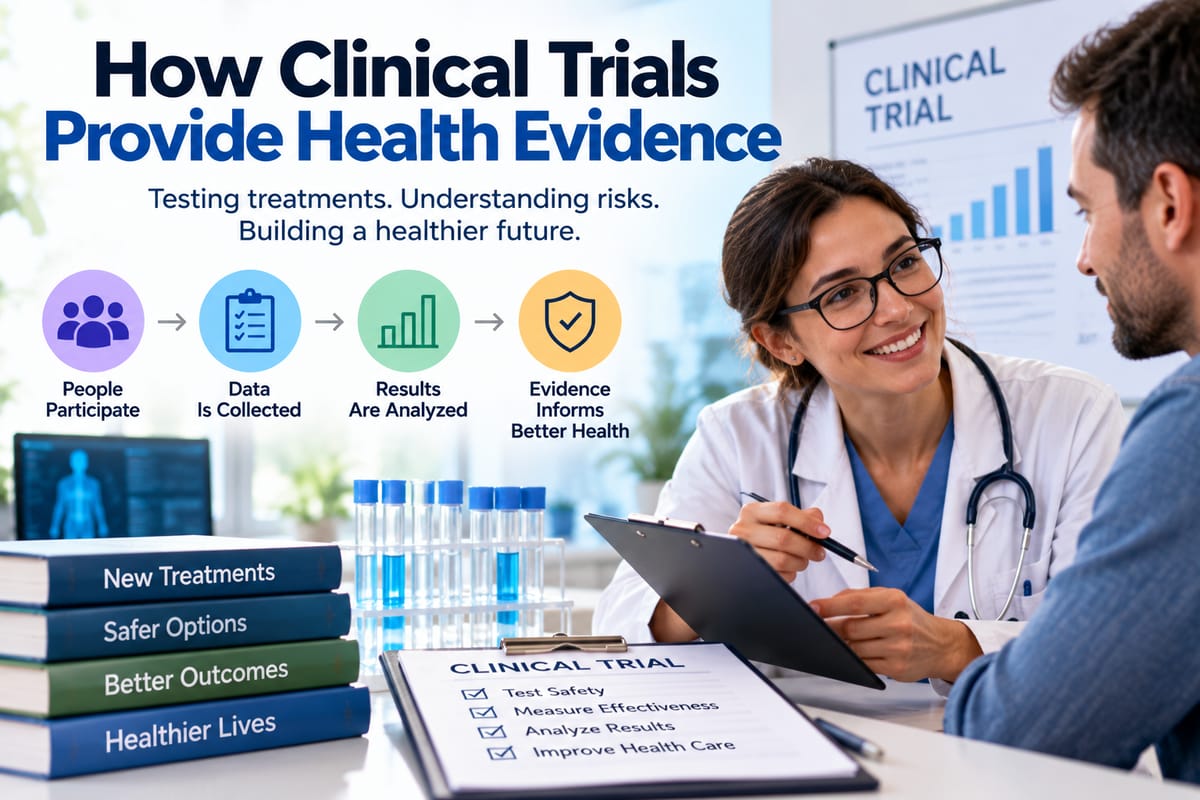
How Clinical Trials Provide Health Evidence
Medical decisions often depend on evidence. Before a new treatment becomes widely used, researchers need to understand whether it works, how well it works, what risks it may carry, and how its benefits compare with existing options.
Clinical trials are one of the most important tools used to answer these questions. They allow researchers to study treatments and other health interventions under carefully planned conditions and collect information from participants in a structured way.
Clinical trials do not provide every answer on their own. Their results become more useful when considered alongside laboratory research, observational studies, previous evidence, clinical experience, and information about individual patients. Still, well-designed trials can provide important evidence about whether a medical intervention produces a particular outcome.
What Is a Clinical Trial?
A clinical trial is a research study involving people that is designed to evaluate a health-related intervention.
The intervention might be:
- A medication
- A vaccine
- A medical device
- A surgical procedure
- A behavioral intervention
- A diagnostic approach
- A dietary strategy
- A form of rehabilitation
- A digital health intervention
Researchers establish a study plan before collecting data. This protocol typically describes who can participate, what will be studied, how outcomes will be measured, how participants will be monitored, and how the resulting information will be analyzed.
The goal is to answer a specific research question rather than simply observe what happens.
Why Clinical Trials Are Important
Medical treatments can have complicated effects.
An intervention may help some people but not others. It may improve one outcome while producing side effects. It may work well for a particular condition but offer little benefit for another.
Clinical trials provide a structured way to investigate these possibilities.
For example, researchers evaluating a new treatment might want to determine:
- Does the treatment improve symptoms?
- How quickly does it work?
- How long do benefits last?
- What side effects occur?
- How frequently do those side effects occur?
- Does the treatment work better than an existing option?
- Which groups of participants respond differently?
- What dose or treatment schedule is appropriate?
The answers can contribute to the larger body of evidence used to evaluate healthcare interventions.
How Clinical Trials Fit Into the Scientific Process
Clinical trials are part of a broader process of scientific investigation.
Researchers often begin with questions generated by previous studies, laboratory findings, observations, or unmet medical needs. They then develop hypotheses that can be investigated using appropriate research methods.
Understanding the broader scientific method and how science works helps explain why clinical research is generally designed around testable questions rather than assumptions.
A simplified research process might look like:
Question → Hypothesis → Study Design → Data Collection → Analysis → Interpretation → Further Research
The process can be repeated as new evidence becomes available.
A single clinical trial therefore rarely represents the end of scientific investigation. Its results can raise new questions or encourage additional research.
The Different Phases of Clinical Trials
Many studies evaluating new medicines are conducted through several phases.
Phase 1
Early-stage trials generally focus heavily on safety, tolerability, dosage, and how the intervention behaves in the human body.
These studies often involve relatively small numbers of participants.
Researchers may examine questions such as:
- How is the intervention absorbed?
- How long does it remain in the body?
- What dose can be tolerated?
- What side effects appear?
The exact design can vary depending on the intervention and research question.
Phase 2
Phase 2 studies generally gather more information about whether an intervention appears to work for people with the condition being studied.
Researchers continue monitoring safety while examining effectiveness and appropriate dosing.
These trials may involve more participants than early Phase 1 studies.
Phase 3
Phase 3 trials are often larger and designed to provide more comprehensive evidence about effectiveness and safety.
Researchers may compare the intervention with a placebo, an existing treatment, or another control condition, depending on the study.
The resulting evidence can contribute significantly to decisions about whether an intervention should be authorized or adopted.
Phase 4
Research can continue after a treatment becomes available.
Post-authorization or post-marketing studies can provide additional information about longer-term effects, uncommon side effects, real-world use, and populations that may not have been extensively represented in earlier trials.
This continuing research is important because some effects may only become apparent after an intervention has been used by much larger and more diverse populations.
Why Researchers Use Control Groups
A control group can help researchers determine whether observed outcomes are associated with the intervention being studied.
For example, suppose participants receiving a new treatment report improvement.
Without a comparison group, it can be difficult to know whether the improvement resulted from the treatment, natural changes in the condition, expectations, other treatments, or other factors.
A control group provides another set of observations against which results can be compared.
Depending on the research question, the comparison might involve:
- A placebo
- An existing treatment
- Standard care
- No intervention
- Another dose or treatment strategy
The appropriate comparison depends on what researchers are trying to determine.
Randomization Helps Reduce Bias
In a randomized clinical trial, participants are assigned to study groups using a process based on chance rather than allowing researchers or participants to choose their group.
Randomization can help distribute various characteristics across groups.
For example, factors such as age, underlying health conditions, and other characteristics could influence outcomes. Random assignment helps reduce the likelihood that these factors systematically differ between groups.
It does not guarantee that groups will be identical, particularly in smaller studies, but it can strengthen the study design.
Why Blinding Can Matter
Researchers may also use blinding to reduce the influence of expectations on study results.
In a blinded study, one or more groups involved in the research may not know which intervention a participant is receiving.
For example, participants may not know whether they are receiving the experimental treatment or a placebo. In some designs, researchers assessing outcomes may also be unaware of group assignments.
Blinding is particularly useful when expectations could influence how outcomes are reported or assessed.
Not every clinical trial can be blinded. Some interventions, such as certain surgical procedures or behavioral programs, may make blinding difficult or impossible.
What Researchers Measure
Clinical trials need clearly defined outcomes.
These can include measures such as:
- Changes in symptoms
- Blood pressure
- Blood glucose
- Laboratory measurements
- Disease progression
- Hospitalizations
- Physical function
- Quality of life
- Survival
- Side effects
Researchers may distinguish between primary outcomes and secondary outcomes.
The primary outcome is generally the main result the study is designed to evaluate. Secondary outcomes can provide additional information.
Defining outcomes in advance helps researchers maintain a clear focus when analyzing the data.
Statistical Analysis Helps Interpret Results
Clinical trials produce data that researchers analyze statistically.
Statistics can help determine whether observed differences between groups are large enough to provide evidence that they are unlikely to be explained simply by random variation.
Researchers may report measures such as:
- Effect sizes
- Confidence intervals
- Risk ratios
- Relative risks
- Absolute risks
- Rates of adverse events
- Statistical significance
These measures provide different types of information.
For example, a treatment may produce a statistically detectable difference that is relatively small in practical terms. Conversely, an outcome may appear important but be difficult to interpret confidently if the study includes too few participants.
This is why looking beyond a single statistical value is important when evaluating clinical research.
Relative Risk and Absolute Risk Tell Different Stories
Risk measurements can sometimes be presented in ways that make an intervention appear more or less impressive than it actually is.
Consider a simplified example.
Suppose a particular outcome occurs in 2 out of 100 people in one group and 1 out of 100 people in another.
The relative reduction is 50%, but the absolute difference is 1 percentage point.
Both numbers describe the same data, but they communicate different perspectives.
Understanding these distinctions can help people interpret health evidence more accurately.
Clinical Trials Also Study Safety
Effectiveness is only one part of evaluating a treatment.
Researchers also monitor adverse events and other safety outcomes.
A clinical trial may record:
- Common side effects
- Serious adverse events
- Changes in laboratory results
- Participants who discontinue treatment
- Hospitalizations
- Unexpected medical problems
Researchers compare safety information between study groups when appropriate.
However, rare adverse effects can be difficult to identify in relatively small trials. This is one reason safety monitoring can continue after a treatment reaches wider use.
Participant Selection Affects the Evidence
Clinical trials have eligibility criteria.
Researchers may specify who can participate based on factors such as:
- Age
- Diagnosis
- Disease severity
- Previous treatment
- Other medical conditions
- Medications
- Laboratory results
These criteria help researchers create a study population appropriate for the research question.
However, they can also affect how broadly the findings apply.
A treatment studied primarily in one population may require additional research to understand how it performs in other populations.
Clinical Trials Do Not Always Represent Everyday Healthcare
Research conditions can differ from real-world healthcare.
Clinical trials may involve:
- Frequent follow-up visits
- Highly selected participants
- Strict treatment schedules
- Specialized medical teams
- Intensive monitoring
- Resources that are not available in every healthcare setting
These conditions can be valuable for answering specific research questions, but they may differ from ordinary clinical practice.
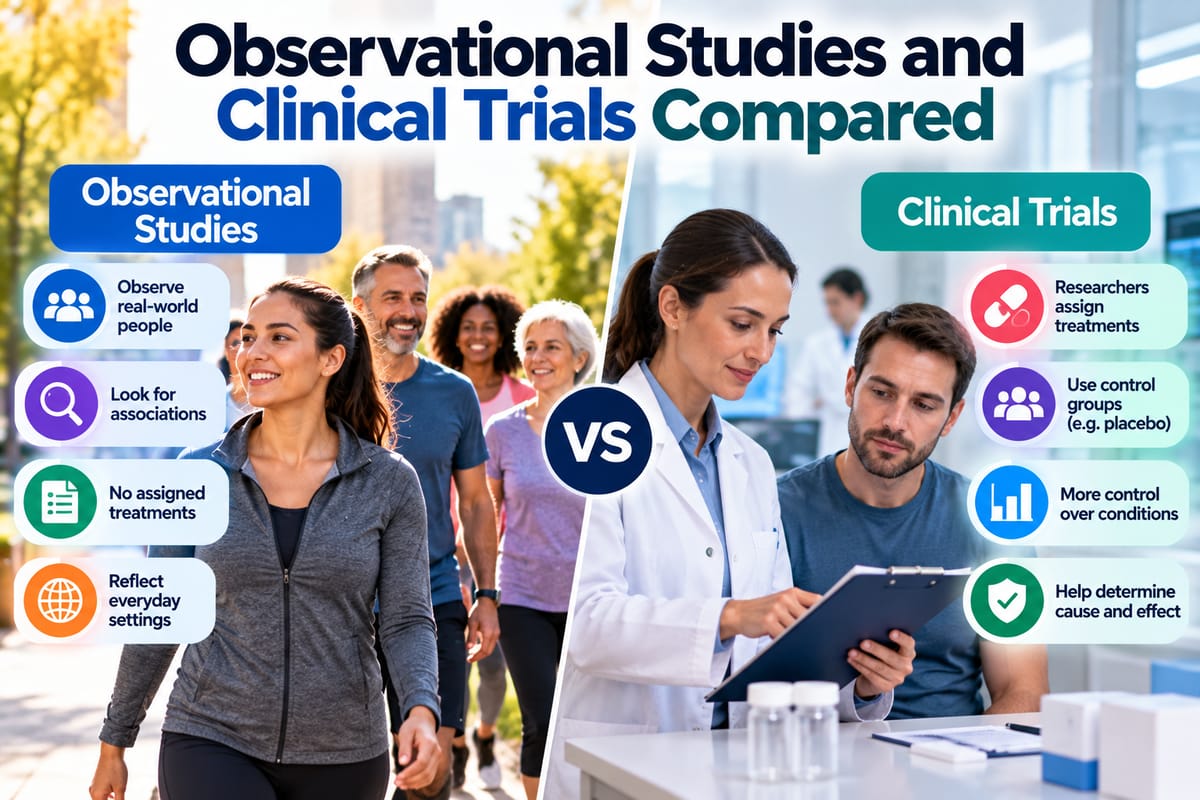
This is why evidence from clinical trials is often considered alongside observational and real-world data.
What Makes a Clinical Trial More Informative?
Study quality depends on many factors.
Important considerations include:
- A clearly defined research question
- An appropriate study design
- Suitable participant selection
- Adequate sample size
- Appropriate comparison groups
- Reliable outcome measurements
- Proper randomization when applicable
- Appropriate blinding when possible
- Transparent statistical analysis
- Careful reporting of limitations
- Appropriate monitoring of participant safety
A large study is not automatically a high-quality study, and a small study is not automatically useless.
Researchers and readers need to consider how well the design answers the particular question being asked.
Why One Clinical Trial Is Rarely Enough
Scientific evidence becomes stronger when findings can be examined across multiple studies.
A single trial may produce an unexpected result. Researchers may then conduct additional studies to determine whether the finding can be reproduced.
Other researchers may investigate the same question using different populations, doses, methods, or settings.
If several well-designed studies produce consistent findings, confidence in the evidence can increase.
If studies produce conflicting results, researchers need to investigate possible explanations.
Differences could arise from:
- Participant characteristics
- Study design
- Treatment doses
- Outcome definitions
- Sample sizes
- Follow-up periods
- Differences in adherence
- Random variation
Conflicting evidence does not necessarily mean that research is useless. It can indicate that a question requires further investigation.
From Clinical Evidence to Health Recommendations
Clinical trial results do not automatically become health advice.
Evidence usually needs to be evaluated alongside findings from other research.
Researchers, clinicians, public health organizations, and guideline developers may consider:
- The quality of available studies
- Consistency of results
- Magnitude of benefits
- Potential harms
- Quality of evidence
- Patient preferences
- Costs and resources
- Applicability to different populations
The process of translating research into practical guidance is explored in how scientific evidence is used to develop reliable health recommendations.
This distinction matters because scientific evidence and individual medical decisions are related but not identical.
Health Literacy Helps People Interpret Evidence
Research findings can be difficult to understand when they are presented using technical terminology.
Health literacy can help people evaluate information and ask more useful questions.
How health literacy helps people make informed health decisions explains why understanding health information is an important part of making informed choices.
When reading about a clinical trial, useful questions include:
- Who participated in the study?
- How large was the study?
- What was the comparison group?
- What outcome did researchers measure?
- How large was the observed effect?
- What risks were reported?
- How long were participants followed?
- What limitations did researchers identify?
- Do other studies show similar results?
These questions can provide more context than focusing solely on a headline.
Clinical Research Can Inform More Than Treatment Decisions
Clinical trials can investigate many aspects of health beyond whether a medication works.
Researchers may study interventions related to:
- Disease prevention
- Vaccination
- Screening
- Rehabilitation
- Mental and behavioral health
- Nutrition
- Physical activity
- Medical devices
- Surgical procedures
- Health education
Research can therefore contribute to a broader understanding of how different interventions affect health outcomes.
For example, research related to how cognitive health can be supported may draw on evidence from multiple research approaches, including clinical studies.
Understanding the Limitations of Clinical Trials
Clinical trials are powerful research tools, but they have limitations.
A study may have:
- A relatively small sample
- A short follow-up period
- Strict eligibility criteria
- A narrow geographic population
- Limited representation of certain groups
- Dropouts during the study
- Measurement limitations
- Funding or logistical constraints
Researchers generally discuss these limitations when reporting their findings.
Readers should consider them rather than assuming that every clinical trial provides an answer that applies equally to every person.
How Clinical Trials Strengthen Health Knowledge
Clinical trials provide a structured way to investigate whether health interventions produce meaningful effects and what risks may accompany them.
Their value comes from careful study design, systematic data collection, appropriate comparisons, statistical analysis, and transparent interpretation.
The strongest understanding of a health question usually develops through an accumulation of evidence rather than a single study. Clinical trials contribute an important part of that process by testing interventions in people under defined conditions.
For readers, understanding how trials work makes it easier to interpret medical claims, distinguish evidence from speculation, and ask informed questions about health information.
From Research Findings to Better Health Understanding
Clinical trials are one part of a much larger evidence ecosystem. Their findings can help researchers determine whether an intervention works, identify potential risks, compare approaches, and generate questions for future research.
At the same time, every study needs to be interpreted within its design, population, results, and limitations.
That broader perspective is what allows clinical research to contribute meaningfully to health knowledge. Rather than treating a single study as a final answer, evidence can be viewed as an evolving body of knowledge that becomes clearer as researchers test ideas, compare findings, reproduce results, and continue investigating unanswered questions.



2 Comments
Micle harison
June 7, 2019Lorem ipsum dolor sit amet, usu ut perfecto postulant deterruisset, libris causae volutpat at est, ius id modus laoreet urbanitas. Mel ei delenit dolores.
John Doe
June 7, 2019Some consultants are employed indirectly by the client via a consultancy staffing company.