
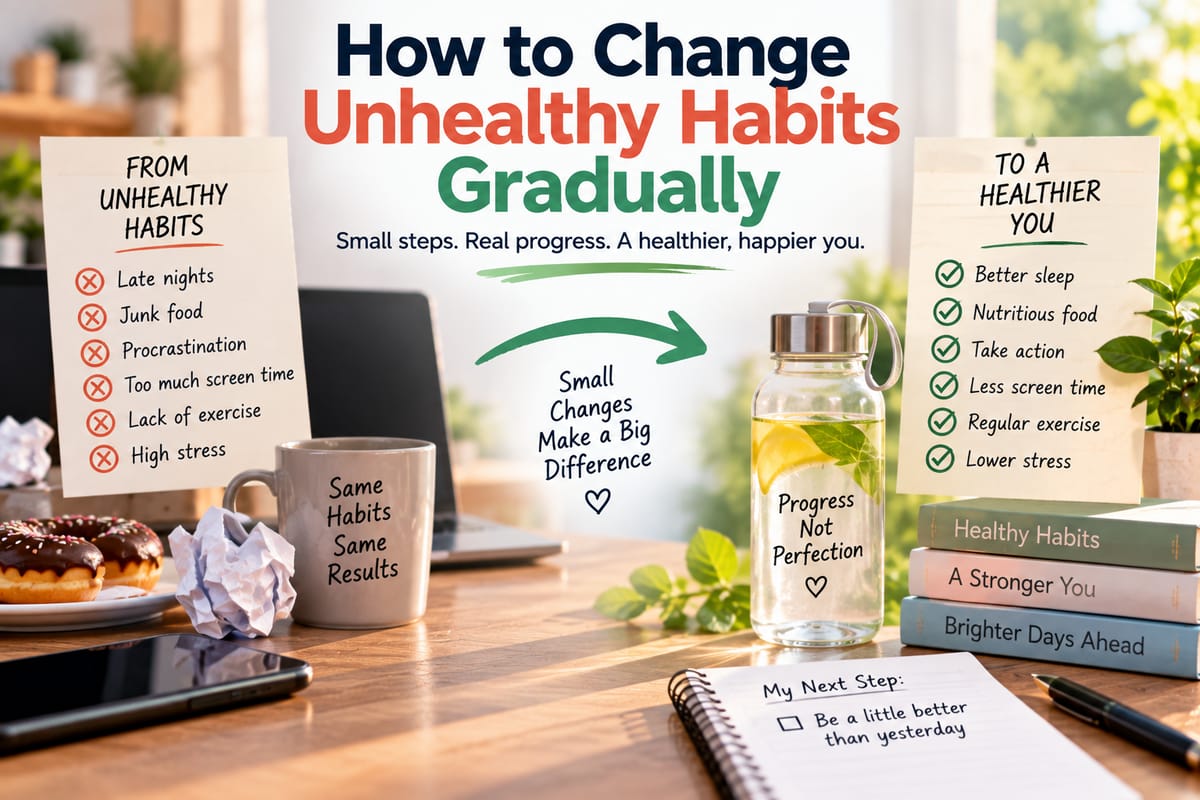
How to Change Unhealthy Habits Gradually
Changing an unhealthy habit rarely happens overnight. Whether it involves eating patterns, excessive screen time, poor sleep routines, inactivity, or constantly putting off important tasks, habits tend to become deeply connected to everyday routines and environments.
That is why trying to eliminate an unwanted behavior all at once can feel overwhelming. A more sustainable approach is to make gradual changes that fit into daily life. Small adjustments can reduce resistance, build confidence, and create healthier patterns without requiring a complete lifestyle overhaul.
Understanding how habits work is an important starting point. The science of habits helps explain why certain behaviors become automatic and why changing them often requires more than simply deciding to stop.
Why Unhealthy Habits Become Difficult to Change
Habits develop through repetition. When a behavior repeatedly occurs in response to a particular situation or cue, the brain becomes increasingly efficient at performing it.
A typical habit involves several connected elements:
- A cue: Something triggers the behavior.
- A routine: The person performs a particular action.
- A reward: The behavior provides some form of satisfaction or relief.
- Repetition: The cycle occurs repeatedly until the behavior becomes increasingly automatic.
For example, someone might feel stressed after work, reach for an unhealthy snack, experience temporary comfort, and eventually begin associating stress with eating that particular food.
The behavior may continue even when the person understands that it is not supporting their long-term goals.
This is one reason habit change should focus not only on stopping a behavior but also on understanding what triggers it and what purpose it serves.
Start With One Habit at a Time
Trying to change several unhealthy habits simultaneously can create unnecessary pressure.
Instead, choose one behavior that would make a meaningful difference if improved. This could be:
- Going to bed more consistently
- Drinking more water
- Reducing sugary snacks
- Spending less time scrolling on a phone
- Taking regular walks
- Eating more balanced meals
- Reducing unnecessary procrastination
- Creating a more consistent morning routine
Starting with one habit makes it easier to identify what works and what does not.
Once the new behavior becomes more established, another change can be introduced. This creates a gradual process rather than turning lifestyle improvement into an exhausting checklist.
Make the First Change Small
One of the most useful principles of gradual habit change is to make the first step almost effortless.
Someone who rarely exercises does not necessarily need to begin with an hour-long workout every day. A five- or ten-minute walk may be a more realistic starting point.
Likewise, someone trying to improve their diet does not have to completely redesign every meal. Replacing one regularly consumed unhealthy item with a more nutritious alternative can be a practical first step.
Small actions matter because consistency is often more important than intensity when establishing a new routine.
A useful progression might look like this:
- Choose a small behavior.
- Repeat it consistently.
- Make it part of an existing routine.
- Increase the difficulty gradually.
- Adjust when obstacles appear.
The goal is to make healthier behavior increasingly normal rather than constantly requiring exceptional motivation.
Identify the Trigger Behind the Habit
Before changing an unhealthy habit, pay attention to when it happens.
Ask questions such as:
- What usually happens immediately beforehand?
- Where am I when the behavior occurs?
- Who am I with?
- What time of day is it?
- What am I feeling?
- Am I tired, bored, stressed, hungry, or distracted?
- What do I get from performing the behavior?
These questions can reveal patterns that are easy to overlook.
For example, someone may discover that they snack excessively not because they are physically hungry, but because they routinely work near the kitchen when they are stressed.
Once the trigger becomes clear, changing the environment or replacing the response can become much easier.
Replace the Behavior Instead of Simply Removing It
An unhealthy habit often serves a purpose, even when the behavior itself is undesirable.
Someone may use television or social media to relax. Another person may eat certain foods when stressed. Someone else may procrastinate because avoiding a difficult task temporarily reduces discomfort.
Simply removing the behavior can leave a gap.
A better strategy is often to find a healthier alternative that provides a similar benefit.
For example:
| Existing habit | Possible replacement |
|---|---|
| Stress eating | Short walk, breathing exercise, or planned snack |
| Excessive scrolling | Reading, stretching, or listening to music |
| Staying up unnecessarily late | Relaxing bedtime routine |
| Sitting for long periods | Brief movement breaks |
| Impulsive purchases | Waiting 24 hours before buying |
| Procrastinating | Working on the task for five minutes |
The replacement does not have to be perfect. It simply needs to provide a realistic alternative to the old pattern.
Understand How Rewards Reinforce Repeated Behaviors
Rewards are an important part of habit formation because they can make a behavior more likely to happen again.
A reward does not necessarily have to be something substantial. It can be the feeling of relief after completing a task, enjoyment from an activity, social recognition, or simply the satisfaction of checking something off a list.
This is why healthier habits can become easier to maintain when they produce some immediate sense of satisfaction.
For example, after taking a walk, someone might enjoy listening to their favorite music. After completing a workout, they might appreciate having time to relax. After preparing a healthy meal, they might recognize the convenience of having food ready for later.
The immediate experience can help support repetition while the longer-term benefits gradually become more noticeable.
Change Your Environment
Willpower is not the only factor involved in habit change. The environment surrounding a person can make certain behaviors easier or harder to perform.
Small environmental changes can reduce exposure to triggers.
Examples include:
- Keeping healthier foods easily accessible
- Moving distracting apps away from the phone’s home screen
- Keeping exercise equipment visible
- Preparing meals ahead of time
- Leaving the bedroom primarily for sleep
- Turning off unnecessary notifications
- Keeping tempting items out of immediate reach
The principle is simple: make healthier behaviors easier and unwanted behaviors less convenient.
Even a small amount of additional effort can interrupt an automatic response and create an opportunity to make a different choice.
Connect New Habits to Existing Routines
A new habit can be easier to remember when it is attached to something that already happens regularly.
This approach is sometimes called habit stacking.
For example:
- After brushing your teeth, spend two minutes stretching.
- After making your morning coffee, drink a glass of water.
- After lunch, take a short walk.
- After finishing work, prepare tomorrow’s meals.
- Before getting into bed, put your phone away.
The existing routine acts as a reminder for the new behavior.
Over time, the new action can become associated with the established routine, reducing the need to consciously remember it.
Use Gradual Progress Rather Than Perfection
One missed day does not erase previous progress.
People sometimes abandon a healthier routine after making one mistake because they interpret the setback as failure. This can create an unnecessary cycle of giving up and restarting.
Instead, treat setbacks as information.
If a new habit repeatedly fails on busy weekdays, the solution may be to make it smaller or move it to a different time. If an evening routine consistently breaks down, another part of the day might provide a better opportunity.
Progress can include:
- Doing the behavior more frequently
- Reducing the intensity of the unhealthy behavior
- Recovering more quickly after setbacks
- Recognizing triggers earlier
- Making healthier choices easier
- Building greater consistency over time
The objective is sustainable improvement rather than a perfect record.
Use Personal Values to Strengthen Motivation
Habits are often easier to maintain when they connect with something personally meaningful.
For example, someone may want to become more active because they value independence and mobility. Another person may want better sleep because they value being present and productive during the day.
Understanding how to identify personal values and use them to make better life decisions can help connect everyday behaviors with broader priorities.
Instead of thinking only about what you want to stop doing, consider what kind of life you are trying to build.
That shift can make habit change feel less like punishment and more like an expression of personal priorities.
Build a Lifestyle That Supports the Change
A healthy habit becomes easier to maintain when it fits naturally into everyday life.
This means looking beyond the individual behavior and considering the routines surrounding it.
Someone trying to eat better may need to consider grocery shopping, meal preparation, work schedules, and household routines. Someone trying to sleep better may need to look at evening activities, screen use, caffeine consumption, and bedroom conditions.
This broader approach is closely related to how intentional living can improve everyday life and personal priorities.
The objective is not to create an idealized lifestyle that requires constant effort. It is to make everyday choices more consistent with the priorities a person wants to maintain.
Track Progress Without Becoming Obsessed With Numbers
Tracking can make gradual change visible.
Depending on the habit, this could involve:
- Checking off days on a calendar
- Recording walks or workouts
- Keeping a simple food journal
- Tracking bedtime and wake-up times
- Recording how often a particular behavior occurs
- Writing down triggers and responses
The tracking system should be simple enough to maintain.
The purpose is not to judge every decision. It is to identify patterns and recognize improvement.
For some habits, qualitative observations can be just as useful as numbers. Noticing that you have more energy, fewer cravings, better concentration, or greater consistency can provide valuable feedback.
Expect Motivation to Change
Motivation naturally fluctuates.
There may be days when a healthier choice feels easy and others when the old habit feels much more appealing. Designing routines that depend entirely on feeling motivated can therefore make change fragile.
Practical systems can help compensate for changing motivation.
For example, rather than deciding every morning whether to exercise, a person could establish a regular time for walking. Rather than deciding each evening what to eat, they could prepare several healthy options in advance.
The more a behavior becomes part of a routine, the less it has to depend on a momentary burst of motivation.
Avoid Making the Change Too Restrictive
Extreme restrictions can sometimes make habits harder to sustain.
A person who tries to eliminate every enjoyable food, never miss a workout, or maintain a completely rigid schedule may create unnecessary pressure.
A more flexible approach allows room for normal life.
Healthy habit change can include:
- Occasional treats
- Rest days
- Social activities
- Schedule changes
- Less productive days
- Adjustments when circumstances change
Flexibility does not mean abandoning goals. It can make those goals easier to maintain over the long term.
Give the New Habit Time to Become Familiar
There is no universal number of days required for a habit to become automatic.
The amount of time varies depending on the behavior, the person, the environment, and how consistently the action is repeated.
Rather than focusing on an arbitrary deadline, pay attention to whether the behavior is becoming easier and requiring less conscious effort.
A new habit may initially require reminders and deliberate planning. Eventually, it can become a more natural part of the daily routine.
That transition is a useful sign that repetition is doing its work.
When an Unhealthy Habit Is Difficult to Change
Some habits are connected to complicated emotional, social, or physical factors. In these situations, simply trying harder may not address the underlying issue.
If a behavior is causing significant distress, interfering with everyday life, or feels difficult to control despite repeated attempts to change it, professional support may be appropriate.
A qualified healthcare or mental health professional can help identify contributing factors and develop an approach suited to the individual’s circumstances.
Seeking support does not mean that gradual habit change has failed. It can be part of building a healthier and more sustainable process.
Turn Small Changes Into Lasting Routines
Changing an unhealthy habit gradually is ultimately about creating a process that can survive ordinary life.
Start with one behavior. Identify its triggers. Make the healthier alternative easy to perform. Connect it with an existing routine. Give yourself useful rewards, adjust the environment, and allow room for setbacks.
Most importantly, focus on repetition rather than perfection.
A single healthier decision may seem insignificant, but repeated decisions can gradually reshape daily routines. When those routines become easier, healthier choices can begin to feel less like deliberate effort and more like a normal part of everyday life.





2 Comments
Micle harison
June 7, 2019Lorem ipsum dolor sit amet, usu ut perfecto postulant deterruisset, libris causae volutpat at est, ius id modus laoreet urbanitas. Mel ei delenit dolores.
John Doe
June 7, 2019Some consultants are employed indirectly by the client via a consultancy staffing company.