
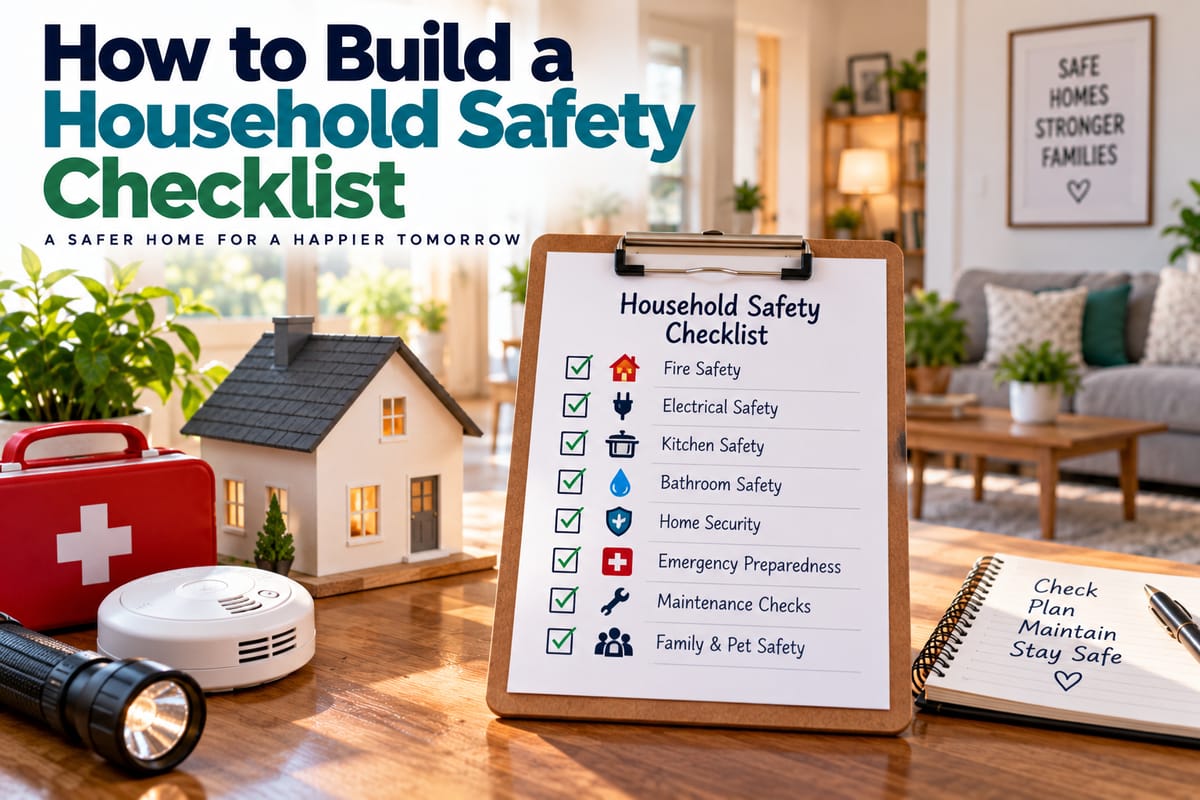
How to Build a Household Safety Checklist
A household safety checklist can turn a long list of potential risks into a practical system for keeping a home safer. Instead of relying on memory, households can use a checklist to regularly inspect important areas, identify problems early, and make sure essential safety tasks are not overlooked.
Homes change over time. Appliances age, electrical equipment gets replaced, children grow, furniture moves, and new devices or household products are introduced. A safety checklist should therefore be treated as a living document rather than something that is completed once and forgotten.
The most useful checklist is simple enough to use regularly while covering the areas that matter most.
Start With the Main Safety Areas
Before creating individual checklist items, divide the home into broad safety categories.
A household checklist can include:
- Fire safety
- Electrical safety
- Kitchen safety
- Bathroom safety
- Child safety
- Medication and chemical storage
- Structural and maintenance issues
- Emergency preparedness
- Security and privacy
- Outdoor areas
- Heating, cooling, and ventilation
- Household appliances
Organizing the checklist into categories makes it easier to identify gaps and prevents one area from receiving all the attention.
A broader The Complete Guide to Healthy Home Living can also provide useful context for understanding how safety fits into the wider goal of maintaining a healthy and comfortable home.
Identify Hazards Room by Room
A room-by-room inspection can make the process more practical.
Walk through the home and look for conditions that could cause injury, damage, fire, poisoning, or other problems.
For example, a living room inspection might include electrical cords, unstable furniture, heating equipment, windows, and walkways.
A kitchen inspection could focus on cooking appliances, sharp objects, cleaning products, electrical equipment, and fire risks.
Bathrooms may require attention to wet floors, electrical devices, medicines, and slip hazards.
This approach helps turn general safety concerns into specific items that can be checked.
Include Common Household Hazards
Some risks appear in many different types of homes.
These can include:
- Slippery floors
- Loose rugs
- Damaged electrical cords
- Overloaded outlets
- Unsecured furniture
- Blocked exits
- Poorly stored cleaning products
- Accessible medicines
- Unattended cooking equipment
- Broken steps or handrails
- Inadequate lighting
Knowing What Are Common Household Hazards? can help households build a checklist that addresses ordinary risks rather than focusing only on rare emergencies.
Check Smoke and Fire Safety Equipment
Fire safety should be one of the core sections of a household checklist.
Depending on the home and local requirements, the checklist may include checking smoke alarms, carbon monoxide alarms where appropriate, fire extinguishers, and accessible escape routes.
Alarms should be tested according to their manufacturer’s instructions, and batteries or units should be replaced when required.
Fire extinguishers should also be stored where household members can access them safely and understand their intended use.
A checklist can record the date each item was inspected so that maintenance does not depend entirely on memory.
Review Emergency Exits
Every household should understand how people can leave the home during an emergency.
Check that doors and other designated exits can be opened when necessary and that important pathways are not blocked by furniture, storage boxes, or other objects.
Households with multiple floors should consider how occupants would leave safely if their normal route became inaccessible.
Emergency planning should account for children, older adults, people with disabilities, and pets where relevant.
Inspect Electrical Safety
Electrical problems can create risks ranging from equipment damage to fires and electric shock.
A household checklist can include looking for:
- Frayed or damaged cords
- Loose plugs
- Overloaded power strips
- Unusual heat around outlets
- Sparks or burning smells
- Improperly placed extension cords
- Electrical equipment used near water
Problems that require electrical expertise should be handled by an appropriately qualified professional rather than through improvised repairs.
Make the Kitchen Part of the Safety Routine
Kitchens combine heat, electricity, sharp objects, water, and potentially hazardous substances.
Regular checks can include ensuring that cooking equipment is functioning properly, handles are positioned safely, knives are stored appropriately, and cleaning products are kept away from food.
Cooking should also receive particular attention because unattended cooking can create significant fire risks.
A checklist can include a simple reminder to turn off appliances and cooking equipment after use when appropriate.
Review Medicine and Chemical Storage
Medicines, cleaning products, pesticides, and other household chemicals should be stored in ways that reduce accidental exposure.
The appropriate storage method depends on the substance and the household. Products should generally remain in their original containers with labels intact, and children and pets should not have inappropriate access to them.
A checklist can include checking cabinets and storage areas for expired products, damaged containers, missing labels, or items that have been left within easy reach.
Disposal should follow applicable local guidance rather than simply placing every unwanted chemical or medication in ordinary household waste.
Check Floors, Stairs, and Walkways
Falls are a common household safety concern.
Regularly inspect floors and walking areas for loose rugs, clutter, uneven surfaces, damaged flooring, or poor lighting.
Stairs should be kept clear, and handrails should be secure.
Night lighting can also be useful in areas where household members regularly move after dark.
These checks are particularly important for households with young children, older adults, or anyone who has difficulty with balance or mobility.
Secure Furniture and Other Heavy Objects
Furniture can create serious risks if it tips over.
Tall shelves, cabinets, televisions, and other heavy objects may need to be secured appropriately, particularly in homes with young children.
The manufacturer’s instructions should be followed when installing anti-tip devices or other safety equipment.
A checklist can include periodically checking whether previously secured furniture remains stable after rearranging a room or moving equipment.
Include Bathroom Safety
Bathrooms combine water, hard surfaces, electrical devices, and potentially slippery floors.
A safety inspection can include:
- Checking for leaks
- Keeping electrical devices away from water
- Inspecting bath and shower surfaces
- Ensuring adequate lighting
- Keeping medicines stored appropriately
- Checking that floors are not excessively slippery
- Inspecting grab bars or other installed safety equipment
Small maintenance problems should be addressed before they develop into larger hazards.
Review Outdoor Areas
Household safety should not stop at the front door.
Outdoor areas can contain their own risks, including uneven walkways, damaged steps, poor lighting, tools, chemicals, standing water, and unstable structures.
Check entrances, driveways, balconies, patios, gardens, storage areas, and other spaces used by household members.
Outdoor equipment should also be stored appropriately when it is not being used.
Include Home Security and Privacy
Physical safety is only one part of protecting a household.
Security and privacy can also be included in the checklist. Doors and windows should be checked for appropriate locks, while sensitive documents and personal information should be stored securely.
Digital devices and smart-home equipment also deserve attention because connected technology can introduce privacy considerations.
Households can periodically review How to Improve Privacy in Your Home for practical ways to think about privacy alongside traditional home security.
Prepare for Power and Utility Problems
A household checklist can also cover basic utility-related risks.
Depending on the home, this might include checking:
- Water leaks
- Gas or fuel equipment
- Heating systems
- Cooling systems
- Backup lighting
- Emergency power equipment
- Water shutoff access
- Main electrical panel access
Household members should know where important shutoff controls are located and understand when professional assistance is necessary.
Create an Emergency Contact Section
A safety checklist becomes more useful when important information is easy to find.
Consider keeping a current list of relevant emergency contacts, service providers, medical contacts, utility companies, and trusted household contacts.
The exact information will vary by household and location.
The list should be stored somewhere accessible to appropriate household members, particularly if an emergency occurs when one person is away.
Build a Home Emergency Kit
A household checklist can include a periodic review of emergency supplies.
Depending on household needs, an emergency kit may contain items such as:
- Flashlights
- Spare batteries
- First-aid supplies
- Drinking water
- Essential medications
- Basic food supplies
- Battery-powered or alternative communication equipment
- Important documents or copies
- Basic hygiene supplies
The contents should reflect the household’s circumstances and the types of emergencies that are reasonably possible in the area.
A more detailed approach is available in How to Prepare for Home Emergencies.
Consider the Needs of Everyone in the Home
A checklist should not assume that every household member faces the same risks.
Young children may require additional protection around stairs, windows, chemicals, medicines, and electrical outlets.
Older adults may benefit from additional attention to lighting, flooring, stairs, and bathroom safety.
People with disabilities may have specific accessibility and emergency evacuation requirements.
Pets may also require consideration when storing chemicals, securing outdoor areas, and preparing for emergencies.
The checklist should therefore reflect the actual people and animals living in the home.
Assign Responsibility for Safety Tasks
A checklist works better when someone is responsible for completing each task.
For larger households, responsibilities can be shared.
One person might check emergency equipment, another might inspect household supplies, and another might review outdoor areas.
For recurring tasks, the checklist can include a date and a person’s initials or name.
This creates accountability and makes it easier to determine whether an inspection has actually been completed.
Decide How Often to Review the Checklist
Not every safety item needs to be checked every day.
A practical schedule might include:
Weekly checks
- Walkways and stairs
- Kitchen safety
- Visible electrical problems
- Emergency exits
Monthly checks
- Smoke and carbon monoxide alarms
- First-aid supplies
- Emergency equipment
- Medicine and chemical storage
- Outdoor hazards
Periodic checks
- Appliances
- Heating and cooling equipment
- Structural issues
- Security systems
- Emergency plans
- Furniture anchors
The appropriate frequency depends on the household, equipment, local requirements, and manufacturer’s recommendations.
Update the Checklist When the Home Changes
A safety checklist should change as the household changes.
Renovations, new appliances, children, pets, older household members, new electronics, or changes in mobility can introduce new safety considerations.
After a major change, walk through the home again and determine whether the checklist still covers the most relevant risks.
This prevents an old checklist from creating a false sense of security.
Keep the Checklist Simple Enough to Use
A safety checklist that is hundreds of items long may become difficult to maintain.
The objective is not to document every conceivable risk. It is to create a practical system that helps household members identify meaningful problems and address them consistently.
Use clear language and specific actions.
For example, instead of writing “Check kitchen,” write:
- Check cooking appliances for visible damage.
- Keep combustible materials away from heat sources.
- Confirm cleaning products are stored appropriately.
- Check that exits and walkways remain clear.
Specific instructions make the checklist easier to complete.
Turn Safety Into a Household Habit
A safety checklist works best when it becomes part of ordinary home maintenance.
Rather than waiting for an accident or emergency to reveal a problem, households can regularly look for hazards, maintain equipment, update emergency plans, and correct small issues before they become larger ones.
The process does not have to be complicated. A clear room-by-room inspection, combined with regular reviews of fire safety, electrical systems, storage, emergency supplies, security, and household conditions, can create a practical foundation for safer living.
The most effective checklist is one that the household actually uses. By keeping it realistic, updating it when circumstances change, and assigning responsibility for important tasks, safety can become a normal part of managing the home rather than an occasional afterthought.





2 Comments
Micle harison
June 7, 2019Lorem ipsum dolor sit amet, usu ut perfecto postulant deterruisset, libris causae volutpat at est, ius id modus laoreet urbanitas. Mel ei delenit dolores.
John Doe
June 7, 2019Some consultants are employed indirectly by the client via a consultancy staffing company.