
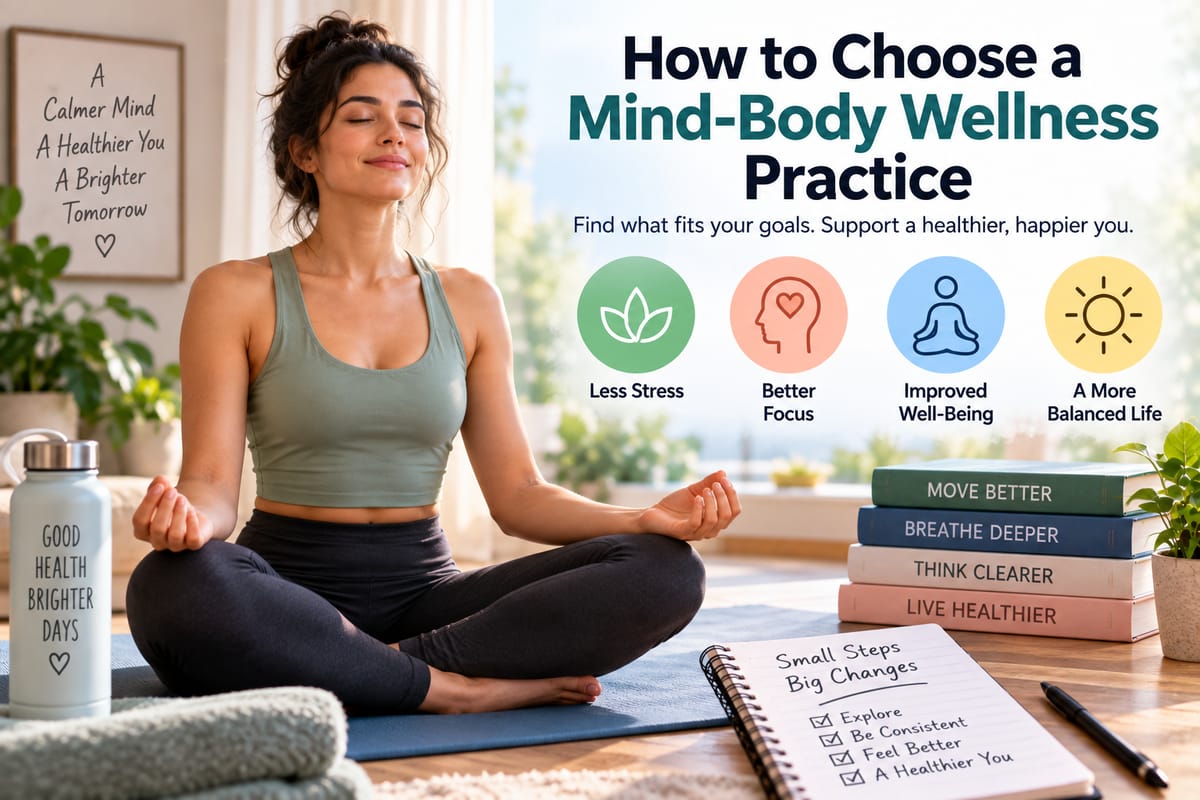
How to Choose a Mind-Body Wellness Practice
Mind-body wellness practices have become increasingly popular as people look for practical ways to support their physical health, manage everyday stress, and build greater awareness of how thoughts, emotions, and bodily sensations interact.
From meditation and yoga to breathing exercises, tai chi, progressive muscle relaxation, and guided relaxation, there are many approaches to choose from. The challenge is not necessarily finding a practice. It is finding one that fits your needs, preferences, lifestyle, and comfort level well enough to become a sustainable part of your routine.
Choosing a mind-body wellness practice does not have to mean committing to the most popular method or following a complicated program. A better approach is to understand what different practices involve, identify what you want to get from them, and start with something realistic.
What Is a Mind-Body Wellness Practice?
A mind-body wellness practice is an activity that intentionally connects mental attention with physical sensations, movement, breathing, relaxation, or bodily awareness.
These practices vary considerably. Some are primarily movement-based, while others involve stillness, concentration, breathing, or reflection.
Common examples include:
- Meditation
- Mindfulness exercises
- Yoga
- Tai chi
- Qigong
- Breathing exercises
- Progressive muscle relaxation
- Guided relaxation
- Body-scan exercises
- Gentle stretching
- Journaling combined with relaxation or mindfulness
- Visualization exercises
The purpose can also vary. Someone may use a practice to create a calmer daily routine, become more aware of stress, improve relaxation, support healthy habits, or simply create dedicated time away from constant stimulation.
For a broader look at practical wellness habits, The Complete Guide to Evidence-Based Self-Care can help put individual practices into the context of a larger self-care routine.
Start With Your Main Wellness Goal
The best place to begin is with the reason you want to try a mind-body practice.
Different approaches may appeal to people with different goals. For example, someone primarily interested in becoming more aware of their thoughts may prefer mindfulness, while someone who wants movement and relaxation may enjoy yoga or tai chi.
Consider whether your main goal is to:
- Develop greater present-moment awareness
- Create a regular relaxation routine
- Manage everyday stress
- Become more aware of physical tension
- Incorporate gentle movement into your day
- Create time for reflection
- Improve your ability to pause and reset
- Support emotional well-being
- Build a consistent wellness habit
Your goal does not need to be complicated. Even something as simple as wanting 10 quiet minutes each day can provide a useful starting point.
Consider How You Prefer to Practice
Personal preference matters because a practice is more likely to become a habit when you actually enjoy doing it.
Some people are comfortable sitting quietly and focusing on their breathing. Others find prolonged stillness difficult and prefer movement-based activities.
Think about which environment feels most natural to you.
If You Prefer Quiet and Stillness
Meditation, breathing exercises, body scans, and guided relaxation may be appealing.
These practices can often be performed in a relatively small space and may require little equipment.
If You Prefer Movement
Yoga, tai chi, qigong, and mindful stretching provide opportunities to combine physical movement with attention and breathing.
Movement-based practices may also feel more engaging for people who find traditional seated meditation difficult.
If You Prefer Structured Guidance
A guided meditation, class, instructor-led session, or recorded relaxation exercise can provide structure.
Having someone explain what to do can make it easier to get started, particularly when an unfamiliar practice initially feels confusing.
If You Prefer Independent Practice
Some techniques can be learned relatively simply and practiced without a class or instructor.
This can make them convenient for people with unpredictable schedules or limited access to wellness facilities.
Think About Your Available Time
A wellness practice does not have to consume a large portion of your day.
One of the most important questions is whether the practice fits realistically into your existing schedule.
Before choosing a method, consider:
- How much time can you consistently set aside?
- Are mornings or evenings easier?
- Would you rather practice at home or somewhere else?
- Do you prefer short daily sessions or longer sessions several times a week?
- Can you practice alone, or do you need external structure?
A 10-minute practice that you regularly complete may be more useful to your routine than a 60-minute practice that you repeatedly postpone.
Starting small can also make it easier to determine whether a particular approach works for you before making a larger commitment.
Explore Mindfulness if You Want Greater Awareness
Mindfulness focuses on deliberately paying attention to the present moment, often while noticing thoughts, emotions, sensations, or surroundings without immediately reacting to them.
It can be practiced formally through meditation or incorporated into ordinary activities such as eating, walking, breathing, or completing routine tasks.
If this approach interests you, Complete Guide to Mindfulness and Present-Moment Awareness provides a broader introduction to the principles behind mindfulness and how present-moment awareness can become part of everyday life.
Mindfulness may appeal particularly to people who want their wellness practice to emphasize awareness rather than physical exercise.
Consider Stress Management Needs
Stress can affect how people experience both their minds and bodies. During stressful periods, some people notice muscle tension, changes in breathing, restlessness, difficulty concentrating, or a heightened sense of physical discomfort.
A mind-body practice can provide a structured opportunity to pause and deliberately shift attention away from constant demands.
If stress management is your primary reason for exploring these practices, The Complete Guide to Stress Management offers a wider framework for understanding stress and developing healthier ways of responding to it.
Possible practices to explore include:
- Slow breathing exercises
- Progressive muscle relaxation
- Guided relaxation
- Mindfulness meditation
- Gentle yoga
- Tai chi
- Body-awareness exercises
The right choice depends on what feels comfortable and sustainable for you.
Pay Attention to Emotional Well-Being
Mind-body practices can also create dedicated time to notice emotions and reflect on how you are feeling.
For some people, the value is simply having a regular pause in an otherwise busy day. For others, practices involving breathing, meditation, movement, or reflection may become part of a broader approach to emotional wellness.
The Complete Guide to Emotional Well-Being provides additional context on maintaining emotional well-being and developing habits that support a healthier relationship with everyday experiences.
It is important, however, to recognize the difference between a general wellness practice and professional mental health care. A relaxation or mindfulness exercise should not be treated as a substitute for professional support when someone is experiencing significant or persistent emotional difficulties.
Think About Physical Comfort
A practice should be physically appropriate for you.
Some activities involve sitting on the floor, holding positions, standing for periods of time, or performing repeated movements. Others can be adapted to a chair or practiced while lying down.
Before beginning a new activity, consider:
- Whether the movements feel comfortable
- Whether the required positions suit your abilities
- Whether you need modifications
- Whether an instructor can provide appropriate guidance
- Whether the practice can be performed safely in your available space
There is no requirement to perform a practice exactly like someone else. Modifications can make many activities more accessible.
If a movement causes significant pain, dizziness, or other concerning symptoms, stop the activity and seek appropriate professional guidance.
Decide Whether You Want a Spiritual or Secular Approach
Some mind-body traditions have historical or spiritual dimensions, while modern versions may be taught primarily as wellness activities.
People have different preferences in this area.
Before joining a class or program, consider whether you are looking for:
- A purely secular wellness activity
- A traditional practice with cultural or spiritual context
- A combination of physical movement and meditation
- A relaxation-focused program
- A reflective practice
- A community-oriented experience
Understanding the approach beforehand can help prevent a mismatch between your expectations and the experience.
Evaluate the Instructor or Program
If you decide to attend a class or work with an instructor, consider the quality and suitability of the program.
Look for clear explanations, reasonable expectations, appropriate modifications, and an environment where participants are encouraged to listen to their bodies.
Be cautious of programs that make sweeping promises or suggest that one practice can solve every health problem.
A responsible wellness instructor should recognize individual differences and avoid presenting general wellness techniques as guaranteed treatments for medical conditions.
You should also feel comfortable asking questions about:
- The instructor’s training
- What a typical session involves
- Whether beginners are welcome
- Available modifications
- The expected level of physical activity
- What equipment is required
- Whether the practice has any restrictions or precautions
Be Skeptical of Extraordinary Claims
Mind-body wellness has become a large industry, and not every claim made about a particular practice is equally well supported.
Marketing may sometimes promise dramatic physical, emotional, or psychological results from a single technique.
A more practical approach is to look for reasonable claims and consider whether the practice fits your personal goals.
Useful questions include:
- What exactly is the practice intended to do?
- What does participation involve?
- Is the program transparent about its limitations?
- Does it encourage realistic expectations?
- Is there pressure to purchase expensive products or memberships?
- Are health claims presented responsibly?
Evidence-based decision-making can help distinguish a potentially useful wellness habit from a program built primarily around exaggerated promises.
Consider Cost and Accessibility
Some mind-body practices require little or no financial investment.
Walking meditation, basic breathing exercises, simple mindfulness exercises, and certain forms of stretching can be practiced with minimal equipment.
Other approaches may involve:
- Studio memberships
- Classes
- Private instructors
- Specialized equipment
- Retreats
- Subscription-based programs
- Mobile applications
Cost should be considered alongside convenience. A low-cost practice that requires an inconvenient commute may be difficult to maintain, while a slightly more expensive option that fits naturally into your routine may be easier to sustain.
You do not necessarily need an expensive program to establish a meaningful wellness routine.
Test a Practice Before Making a Long-Term Commitment
You do not have to decide immediately that a particular practice will become a permanent part of your lifestyle.
Instead, treat your first few sessions as an experiment.
Try a practice several times and pay attention to:
- How comfortable it feels
- Whether you enjoy the experience
- Whether it fits your schedule
- Whether you look forward to practicing
- Whether the instructions are easy to follow
- Whether you can realistically continue it
- Whether the practice aligns with your original goal
It is perfectly reasonable to try one approach and discover that another suits you better.
Build a Practice That Is Easy to Repeat
Consistency is easier when the behavior is connected to an existing routine.
For example, you might practice breathing exercises after waking up, meditate during a quiet lunch break, stretch after work, or perform a short relaxation exercise before bedtime.
A simple routine might look like this:
| Habit | Example |
|---|---|
| Choose a time | 10 minutes after waking |
| Choose a location | Quiet area at home |
| Choose one activity | Mindful breathing |
| Keep the session manageable | Start with 5–10 minutes |
| Track consistency | Mark completed sessions |
| Adjust when necessary | Shorten or move the session when schedules change |
The objective is not perfection. The objective is creating a routine that can survive ordinary life.
Know When to Change Your Approach
A practice that does not suit you does not necessarily mean you have failed.
You may discover that sitting meditation makes you restless, that a particular class moves too quickly, or that a practice requiring a lot of equipment is inconvenient.
Those observations are useful.
You can change:
- The type of practice
- The duration
- The frequency
- The time of day
- The environment
- The instructor
- The level of physical intensity
The most suitable practice is often the one that balances your goals, preferences, physical comfort, schedule, and willingness to continue.
Creating a Mind-Body Routine That Fits Real Life
Choosing a mind-body wellness practice is ultimately less about finding a universally perfect technique and more about finding an approach that fits your circumstances.
Start with your goal, consider how you prefer to practice, assess your available time, and pay attention to physical and emotional comfort. Look for realistic guidance, be cautious about extraordinary claims, and give yourself permission to experiment with different approaches.
A sustainable practice does not need to be complicated. Whether it involves a few minutes of mindful breathing, gentle movement, meditation, or guided relaxation, the most practical starting point is one that feels accessible enough to become part of everyday life.





2 Comments
Micle harison
June 7, 2019Lorem ipsum dolor sit amet, usu ut perfecto postulant deterruisset, libris causae volutpat at est, ius id modus laoreet urbanitas. Mel ei delenit dolores.
John Doe
June 7, 2019Some consultants are employed indirectly by the client via a consultancy staffing company.