
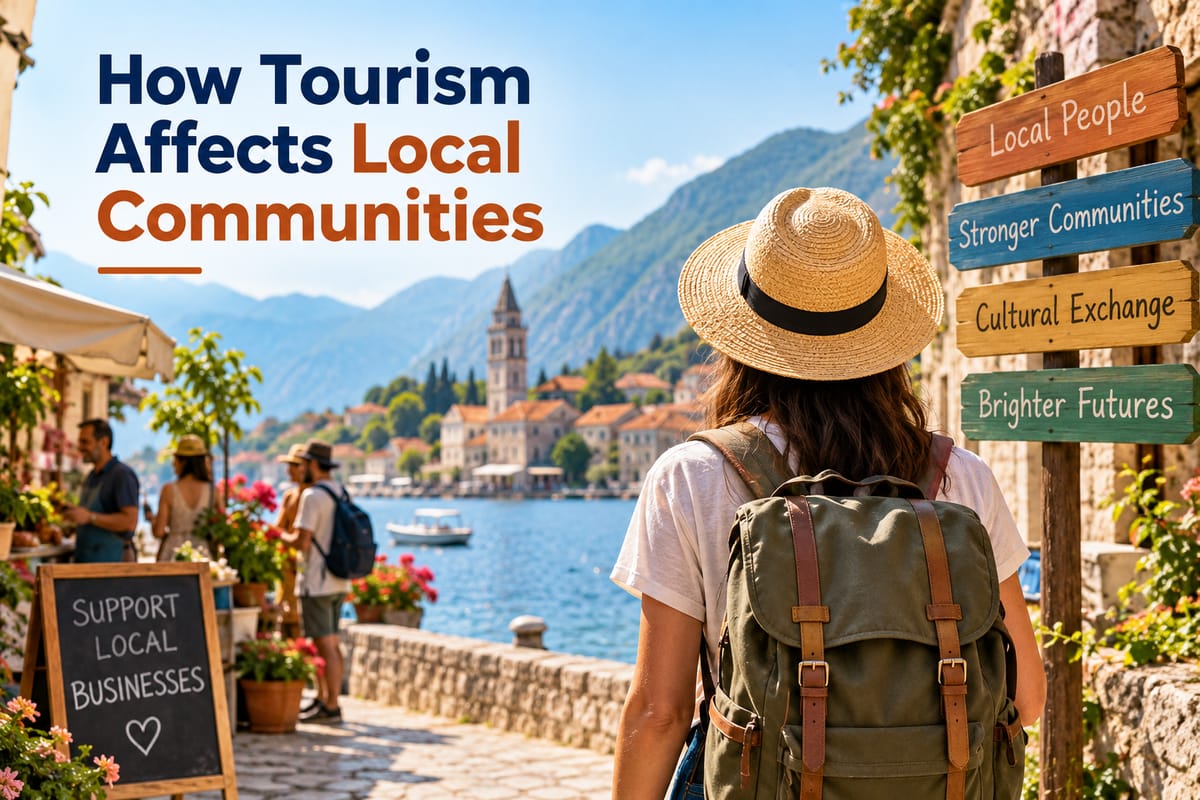
**How Tourism Affects Local Communities
Tourism can transform a local community in ways that extend far beyond hotels, restaurants, and popular attractions. When visitors arrive, they bring spending, demand for services, cultural curiosity, and opportunities for local businesses. At the same time, a rapid increase in tourism can put pressure on housing, infrastructure, natural resources, public spaces, and cultural traditions.
The effects are rarely entirely positive or negative. Tourism can create jobs and strengthen local economies while also increasing living costs or changing the character of a neighborhood. Much depends on how tourism is planned, who receives the economic benefits, how natural and cultural resources are managed, and how closely visitors engage with the communities they visit.
Understanding these effects is important for travelers, residents, businesses, and policymakers who want tourism to contribute to places rather than simply consume them.
How Tourism Supports Local Economies
One of the most visible effects of tourism is increased economic activity. Visitors spend money on accommodation, transportation, food, entertainment, shopping, tours, entrance fees, and other services. That spending can circulate through the local economy and support businesses that might otherwise have fewer customers.
Hotels and restaurants may employ local workers, while tour operators may hire guides, drivers, cooks, photographers, and activity specialists. Small businesses can also benefit when visitors purchase locally made products, eat at independent restaurants, or participate in community-based experiences.
The economic impact can extend beyond businesses that interact directly with tourists. A hotel, for example, may purchase food from local farmers, cleaning supplies from local suppliers, or maintenance services from nearby contractors. This creates additional economic connections throughout the community.
However, the size of these benefits depends on how much tourism revenue remains within the destination. If hotels, tour companies, retailers, or other businesses are owned primarily by outside investors, a significant portion of tourism spending may leave the local economy.
This makes local ownership, employment, entrepreneurship, and supply chains important factors in determining whether tourism produces broad economic benefits.
Tourism and Employment Opportunities
Tourism can create employment opportunities for people with a wide range of skills and educational backgrounds. Jobs may include hospitality workers, tour guides, drivers, chefs, event staff, conservation workers, translators, artisans, and managers.
For some communities, tourism also creates opportunities for small-scale entrepreneurship. Residents may establish guesthouses, restaurants, craft businesses, cultural tours, transportation services, or recreational activities aimed at visitors.
Seasonality can complicate this picture. Destinations that experience strong visitor demand during only a few months of the year may have temporary employment rather than stable, year-round jobs. Workers can also face fluctuations in income when tourism declines because of economic downturns, extreme weather, transportation disruptions, or other events.
As a result, tourism employment can be valuable without necessarily providing the same economic security as diversified local employment.
How Tourism Changes Local Businesses
The arrival of visitors can encourage businesses to adapt their products and services to new customers. A town may develop restaurants featuring regional cuisine, shops selling locally produced goods, or guided experiences that introduce visitors to local traditions.
Tourism can therefore stimulate innovation and give entrepreneurs new markets.
At the same time, businesses may increasingly prioritize visitors over residents. Restaurants might adjust prices or menus toward tourist demand, while retail areas can become dominated by souvenirs and visitor-oriented services. In heavily visited destinations, this can change the range of goods and services available to people who live there.
The balance depends partly on the scale and type of tourism. Smaller, locally integrated tourism businesses may have a different effect from large developments designed primarily around high visitor volumes.
Tourism Can Strengthen Cultural Awareness
Travel gives visitors opportunities to encounter languages, traditions, food, architecture, music, art, and historical practices that differ from their own experiences.
When managed thoughtfully, this interaction can encourage greater appreciation for local culture. Communities may also gain new incentives to preserve traditions that could otherwise receive less attention.
Travelers interested in these experiences can explore the principles discussed in the Cultural Travel: Complete Guide to Meaningful Experiences, particularly the importance of approaching cultural experiences with curiosity and respect.
Tourism can also create platforms for local artists, performers, craftspeople, historians, and cultural organizations. Museums, heritage sites, festivals, and community events may attract visitors while creating opportunities for residents to share their knowledge.
But cultural tourism requires care. Traditions can become commercialized when performances or practices are modified primarily to satisfy visitor expectations. Communities may also disagree about which aspects of their culture should be presented publicly and how they should be represented.
Local participation is therefore essential when tourism involves cultural heritage.
The Importance of History and Heritage
Historic buildings, archaeological sites, monuments, traditional neighborhoods, and cultural landscapes can become important tourism resources. Their popularity can generate revenue that supports preservation and maintenance.
Tourism can consequently help demonstrate the economic and social value of protecting historic places.
The relationship between tourism and heritage is explored further in How History and Heritage Shape Travel Destinations. Understanding that relationship helps explain why destinations often develop tourism around historical identity rather than treating heritage simply as a backdrop for sightseeing.
Yet increased visitation can also damage fragile heritage sites. Heavy foot traffic, inappropriate development, pollution, and poorly managed renovations can gradually undermine the very resources that attract visitors.
Successful heritage tourism therefore requires limits, maintenance, education, and long-term preservation strategies.
Tourism and Community Infrastructure
Tourism can encourage investment in roads, airports, public transportation, sanitation systems, telecommunications, parks, and other infrastructure.
Infrastructure improvements can benefit residents as well as visitors. Better transportation, for example, may make it easier for people to reach schools, workplaces, healthcare facilities, or markets.
Tourism revenue can also contribute to public services where local authorities collect taxes, entrance fees, permits, or other tourism-related revenues.
However, infrastructure can become strained when visitor numbers grow faster than a destination’s capacity. Roads may become congested, waste systems may face higher demand, and water or electricity supplies may come under pressure.
The challenge is ensuring that infrastructure development serves the long-term needs of residents rather than focusing exclusively on visitor convenience.
Housing and the Cost of Living
In popular destinations, tourism can affect the availability and price of housing.
Properties may be converted from long-term residential use into short-term accommodation. In areas with strong visitor demand, property owners may have incentives to serve tourists rather than long-term residents.
The consequences vary considerably between destinations, but housing pressure can become an important community issue when tourism grows rapidly alongside limited housing supply.
Higher demand can also affect prices for food, transportation, entertainment, and other services. Increased economic activity may benefit people whose incomes rise alongside tourism, while residents who do not participate directly in the tourism economy may experience the additional costs without receiving comparable benefits.
This is one reason tourism planning increasingly considers residents’ quality of life alongside visitor numbers and spending.
Tourism and Local Identity
Tourism can influence how a community sees and presents itself.
A destination may become known for a particular cuisine, landscape, festival, craft tradition, architectural style, or historical identity. Increased attention can encourage residents to preserve and celebrate these characteristics.
But external demand can also shape local identity. Businesses may emphasize aspects of a community that appeal to tourists while less visible parts of local life receive less attention.
There can be a difference between authentic community expression and a tourism product designed specifically for consumption. Maintaining local control over representation can help communities determine how their identity is presented.
Environmental Effects on Communities
Tourism depends heavily on the natural environment in many destinations. Beaches, forests, mountains, wildlife areas, rivers, and other ecosystems attract visitors and support activities such as hiking, diving, wildlife viewing, boating, and nature tours.
These activities can provide income that gives communities an economic reason to protect natural resources.
At the same time, excessive tourism can produce waste, pollution, habitat disturbance, water consumption, and other environmental pressures. Construction associated with hotels, roads, attractions, and other facilities can also alter landscapes.
The type of tourism activity matters. Visitors participating in carefully managed experiences may have a different environmental impact from large-scale, high-density tourism.
A broader look at this issue can be found in How Travel Activities Shape Destination Experiences, which highlights how the activities travelers choose can influence the character of the places they visit.
Community Participation Matters
Tourism tends to have stronger local connections when residents have meaningful opportunities to participate in decisions about development.
Community participation can involve consultations, local business ownership, employment programs, cultural organizations, conservation groups, or partnerships between residents and tourism operators.
Without local participation, major tourism projects can sometimes produce economic benefits while leaving residents with limited influence over land use, development priorities, or cultural representation.
Giving communities a role in tourism planning can help identify concerns that may not be visible from the perspective of investors or visitors.
It can also help destinations develop tourism products that reflect local interests rather than relying entirely on external expectations.
Responsible Travel Begins With Understanding
Travelers also influence the communities they visit through their spending and behavior. Choosing locally owned businesses, respecting cultural practices, following environmental rules, and learning about local history can affect where tourism money goes and how visitors interact with residents.
Planning international trips also requires awareness of differences in customs, infrastructure, laws, and social expectations. A useful starting point is an International Travel Guide for understanding some of the practical considerations involved in traveling across borders.
Responsible tourism does not necessarily mean avoiding popular destinations altogether. It can mean being more conscious about timing, spending, transportation, activities, waste, and interactions with local people.
Even small decisions can contribute to broader patterns when large numbers of travelers make them.
Finding a Sustainable Balance
Tourism presents communities with both opportunities and challenges. It can diversify local economies, create employment, support businesses, encourage cultural preservation, and generate investment in infrastructure. It can also contribute to housing pressure, overcrowding, environmental damage, rising prices, and changes in local identity when growth is poorly managed.
The central question is therefore not simply how many tourists a destination can attract. It is how tourism can be structured so that the economic, cultural, and environmental benefits are shared while its costs remain manageable.
For communities, that can mean strengthening local ownership, involving residents in planning, protecting cultural and natural resources, and investing tourism revenues strategically. For travelers, it can mean looking beyond major attractions and considering how their choices affect the people and places they encounter.
When residents have a meaningful voice in tourism and visitors approach destinations with greater awareness, tourism can become more closely connected to the long-term interests of the communities that make those destinations worth visiting in the first place.




2 Comments
Micle harison
June 7, 2019Lorem ipsum dolor sit amet, usu ut perfecto postulant deterruisset, libris causae volutpat at est, ius id modus laoreet urbanitas. Mel ei delenit dolores.
John Doe
June 7, 2019Some consultants are employed indirectly by the client via a consultancy staffing company.