
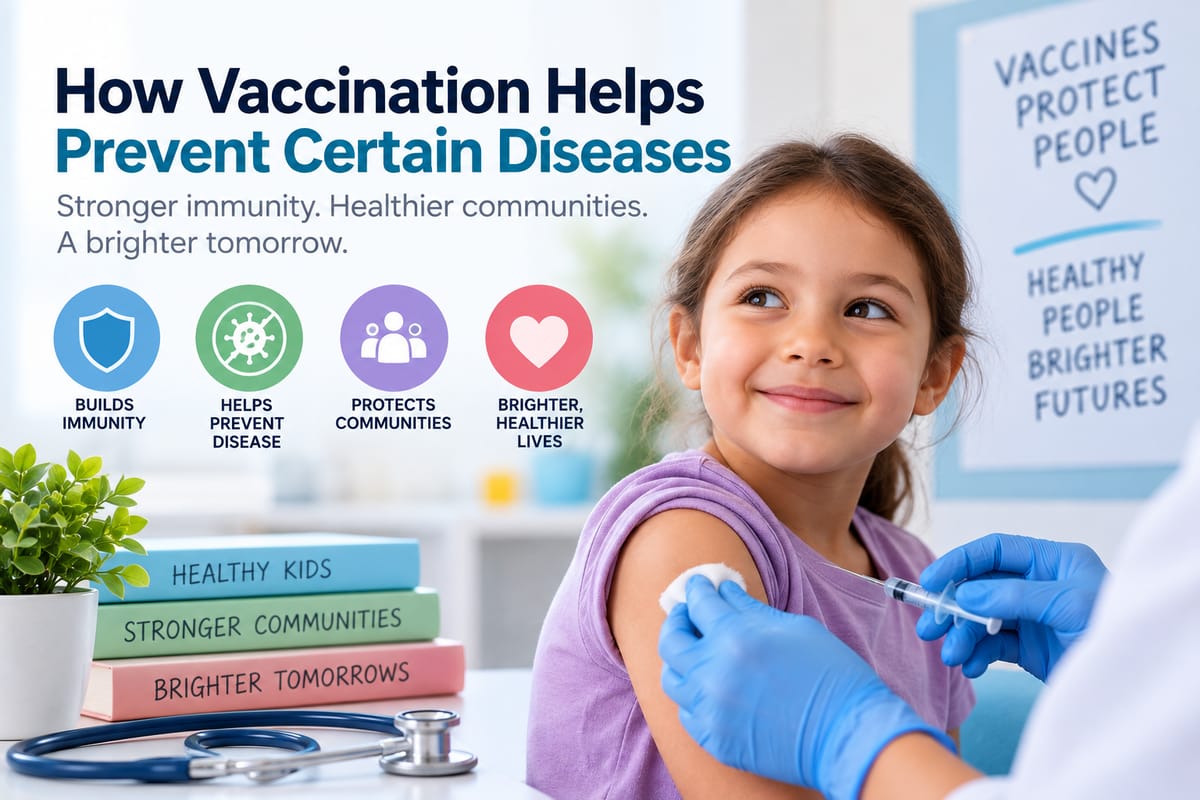
**How Vaccination Helps Prevent Certain Diseases
Vaccination is one of the main tools used to prevent infectious diseases. By preparing the body’s immune system to recognize specific disease-causing organisms or components of them, vaccines can reduce the likelihood of infection, severe illness, complications, and in some cases transmission to other people.
Vaccines do not work by treating every infection after it occurs. Instead, they help the immune system prepare in advance so that it can respond more effectively when it encounters a particular pathogen.
Understanding how this process works helps explain why vaccination remains an important part of public health and individual disease prevention.
What Is Vaccination?
Vaccination involves introducing a vaccine into the body to stimulate an immune response without causing the disease in the same way as a natural infection.
Depending on the vaccine, it may contain an inactivated or weakened form of a pathogen, a specific component of it, genetic instructions that allow cells to produce a harmless antigen, or another method of presenting information to the immune system.
The immune system then responds to the material and develops defenses that can include antibodies and immune cells capable of recognizing the target.
For a broader explanation of how the body’s defenses work, see Immune System Explained.
How Vaccines Prepare the Immune System
The immune system is capable of remembering certain pathogens it has encountered.
Vaccination takes advantage of this ability. After receiving an appropriate vaccine, the immune system learns to recognize specific targets associated with a disease.
If the vaccinated person later encounters the actual pathogen, the immune response can be faster or stronger than it would have been without prior exposure.
This preparation can help prevent an infection from developing or reduce the severity of illness.
The exact immune response varies depending on the vaccine, disease, individual, and number of doses required.
Vaccines Target Specific Diseases
Vaccines are designed to protect against particular infectious diseases. There is no single vaccine that provides protection against every pathogen.
Some vaccines target viruses, while others protect against bacterial diseases.
Understanding the distinction between these two broad groups is useful because viruses and bacteria interact with the body differently. Viruses vs Bacteria explains these differences in greater detail.
Examples of vaccine-preventable diseases include measles, polio, hepatitis B, whooping cough, tetanus, influenza, and certain forms of meningitis.
The vaccines recommended for a person can depend on factors such as age, location, health circumstances, occupation, travel, and current public health guidance.
Vaccination Can Reduce the Risk of Severe Disease
One of the major purposes of vaccination is reducing the risk of serious illness.
A vaccine may not always prevent every infection. Some vaccinated people can still become infected with a disease for which they have received a vaccine, depending on the pathogen, vaccine, time since vaccination, and individual immune response.
However, vaccination can reduce the likelihood of severe outcomes for many vaccine-preventable diseases.
This distinction is important because disease prevention is not always an absolute barrier against infection. Reducing the probability or severity of illness can still have substantial health benefits.
Vaccination and Community Protection
Vaccination can also have effects beyond the individual who receives a vaccine.
When a large proportion of a population is protected against a contagious disease, opportunities for the pathogen to spread can be reduced. This can provide indirect protection to some people who cannot receive particular vaccines or who may not develop adequate protection from them.
This population-level effect is often discussed in relation to community immunity.
The degree of protection required to limit transmission varies considerably between diseases because different pathogens have different levels of contagiousness and transmission patterns.
Why Some People May Not Be Able to Receive Certain Vaccines
Vaccines are not appropriate for every person in every circumstance.
Certain medical conditions, severe allergies to specific vaccine components, age considerations, pregnancy, immune system conditions, or other circumstances can affect whether a particular vaccine should be given.
Recommendations can also differ depending on the vaccine and the individual’s situation.
For this reason, vaccination decisions involving medical contraindications or unusual circumstances should be discussed with a qualified healthcare professional.
Vaccination and Disease Outbreaks
When vaccination coverage decreases, populations can become more vulnerable to outbreaks of diseases that were previously less common.
If enough susceptible people are present, an infectious disease can spread more easily when introduced into a community.
This is particularly relevant for highly contagious diseases. Maintaining appropriate vaccination coverage can help reduce the number of people who are vulnerable to infection and limit opportunities for transmission.
Outbreaks can also occur even when vaccination programs are established, because no vaccine provides identical protection to every person and infectious diseases can cross borders and enter communities through travel.
Vaccines Are Developed Through Scientific Research
Vaccines undergo research and evaluation before they are authorized for widespread use.
Scientists study how candidate vaccines interact with the immune system and evaluate their safety and effectiveness through multiple stages of research.
After vaccines become available, their safety and performance can continue to be monitored. This ongoing process helps identify uncommon adverse events and provides information that can influence future recommendations.
The broader process of evaluating medical information is discussed in How Scientific Evidence Is Used to Develop Reliable Health Recommendations.
Vaccination Is Part of a Broader Prevention Strategy
Vaccination is important, but it is not the only way to reduce infectious disease risk.
Other preventive measures can include:
- Washing hands regularly
- Improving ventilation where appropriate
- Staying home when seriously ill
- Using appropriate protective equipment in certain settings
- Practicing safe food handling
- Following public health recommendations during outbreaks
- Seeking appropriate medical care when symptoms develop
The right combination of preventive measures depends on the disease and circumstances.
The Environment Can Influence Disease Risk
Health outcomes are also affected by the environments in which people live and work.
Crowded conditions, sanitation, air quality, access to clean water, healthcare availability, housing conditions, and other environmental factors can influence exposure to infectious diseases.
This means disease prevention cannot always be reduced to individual behavior.
For a broader discussion of how surroundings interact with health, see How Environmental Factors Affect Human Health and Wellbeing.
Vaccination Schedules Matter
Many vaccines require more than one dose to provide the intended level or duration of protection.
Some vaccines are given during childhood, while others may be recommended later in life. Certain vaccines may require booster doses because protection can change over time.
Following the recommended schedule helps ensure that people receive vaccines at the appropriate stages of life.
Schedules can change as scientific evidence, disease patterns, vaccine availability, and public health recommendations develop. People should therefore rely on current guidance from qualified healthcare professionals and relevant public health authorities.
What Happens After Vaccination?
After vaccination, the immune system begins responding to the vaccine.
Some people experience temporary effects such as soreness at the injection site, fatigue, headache, or fever. These reactions can vary according to the vaccine and individual.
More serious adverse reactions can occur but are uncommon. Vaccination programs use safety monitoring systems to identify and investigate potential problems.
Anyone experiencing concerning symptoms after vaccination should seek appropriate medical advice.
Vaccination Does Not Replace Everyday Health Habits
Preventing infectious disease is only one part of maintaining good health.
Nutrition, physical activity, sleep, hygiene, preventive medical care, and management of existing health conditions can all contribute to overall wellbeing.
Vaccination fits into this broader approach by addressing specific infectious disease risks.
It should therefore be viewed as one component of preventive healthcare rather than a substitute for other healthy behaviors.
Why Vaccination Can Protect More Than One Person
An infectious disease can affect individuals differently.
Some people may experience mild illness, while others can develop serious complications. Infants, older adults, and people with certain medical conditions may be particularly vulnerable to some infections.
When vaccination reduces transmission within a community, it can potentially reduce the number of opportunities a pathogen has to reach vulnerable individuals.
This community-level benefit is one reason vaccination programs are considered an important public health intervention.
Making Informed Vaccination Decisions
People naturally have questions about vaccines, including how they work, which diseases they prevent, how many doses are needed, and what side effects may occur.
Reliable information should come from qualified healthcare professionals and established public health and medical organizations. Claims about vaccines should be evaluated according to the quality of the underlying evidence rather than isolated anecdotes or social media posts.
It is also useful to consider the disease being prevented, the individual’s circumstances, the known benefits and risks of the vaccine, and current medical recommendations.
How Vaccination Fits Into Disease Prevention
Vaccination works by giving the immune system an opportunity to prepare before encountering a particular infectious disease. That preparation can help the body recognize a pathogen and mount a faster or more effective response.
Depending on the vaccine and disease, vaccination can reduce the likelihood of infection, lower the risk of severe illness, and contribute to reduced transmission across communities.
No preventive measure eliminates every health risk. Nevertheless, vaccination provides a targeted way to prepare the immune system against specific diseases and remains an important part of modern disease prevention alongside hygiene, appropriate healthcare, environmental protections, and other evidence-based measures.


2 Comments
Micle harison
June 7, 2019Lorem ipsum dolor sit amet, usu ut perfecto postulant deterruisset, libris causae volutpat at est, ius id modus laoreet urbanitas. Mel ei delenit dolores.
John Doe
June 7, 2019Some consultants are employed indirectly by the client via a consultancy staffing company.