
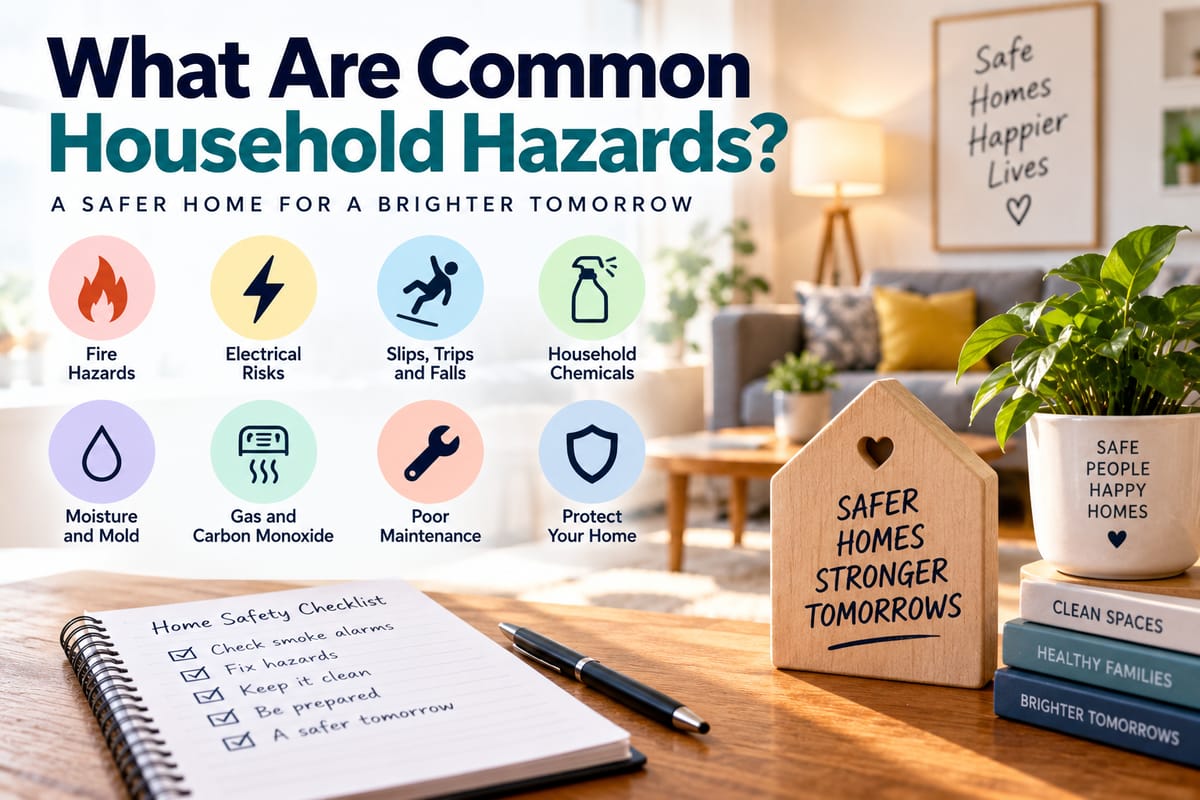
What Are Common Household Hazards?
A home should be a place where people feel safe, comfortable, and protected. Yet everyday household environments can contain hazards that are easy to overlook. Some are obvious, such as exposed electrical wiring or a slippery floor, while others develop gradually through poor maintenance, clutter, moisture, or improper storage.
Household hazards can cause injuries, property damage, poor indoor air quality, fires, and other problems. Recognizing these risks is an important part of maintaining a safer living environment.
From kitchens and bathrooms to garages, bedrooms, and outdoor areas, understanding where hazards commonly occur can make it easier to prevent accidents before they happen.
What Is a Household Hazard?
A household hazard is any condition, substance, object, or situation inside or around a home that could cause harm.
Hazards can affect people in different ways. Some create an immediate risk of injury, while others can contribute to health or structural problems over time.
Common examples include:
- Wet or slippery floors
- Faulty electrical equipment
- Unsecured furniture
- Household chemicals
- Gas leaks
- Fire hazards
- Poor ventilation
- Excessive clutter
- Mold and persistent moisture
- Damaged roofs and gutters
- Broken stairs, railings, or walkways
- Unsafe heating or cooking equipment
A safer home begins with recognizing that hazards are not always dramatic or obvious. Small maintenance problems can become more serious when they are ignored.
Common Household Hazards to Watch For
Different areas of the home present different risks. Some hazards are associated with particular rooms, while others can occur throughout the property.
Slips, Trips, and Falls
Falls are among the most common household accidents.
Wet bathroom floors, loose rugs, cluttered walkways, uneven flooring, poorly lit staircases, and objects left on the floor can all create opportunities for trips and falls.
Stairs deserve particular attention. Loose handrails, damaged steps, inadequate lighting, and slippery surfaces can make them especially dangerous.
Simple measures such as keeping walkways clear, securing rugs, cleaning spills promptly, and improving lighting can reduce these risks.
Electrical Hazards
Electricity is essential in modern homes, but electrical systems and appliances can become dangerous when they are damaged, overloaded, or improperly used.
Potential warning signs include:
- Frayed or damaged power cords
- Loose electrical outlets
- Flickering lights
- Burning smells
- Sparks from outlets or appliances
- Frequently tripped circuit breakers
- Extension cords used as permanent wiring
- Too many devices connected to one outlet
Water and electricity can be particularly dangerous when they come into close contact. Electrical appliances should therefore be kept away from sinks, bathtubs, and other wet areas unless they are specifically designed for those environments.
Electrical problems that involve wiring, outlets, circuit breakers, or other fixed components should be assessed by a qualified professional.
Fire and Cooking Hazards
Kitchens are one of the busiest areas in many homes and contain several potential fire hazards.
Unattended cooking, overheated appliances, grease buildup, combustible materials near stovetops, and damaged electrical equipment can all increase fire risk.
Other household fire hazards can include:
- Candles left burning unattended
- Space heaters placed too close to furniture
- Smoking materials
- Overloaded electrical circuits
- Flammable liquids stored incorrectly
- Blocked heating equipment
- Damaged batteries or charging equipment
Smoke alarms and appropriate fire extinguishers can provide important protection, but preventing fires in the first place remains essential.
Gas and Carbon Monoxide Risks
Homes that use natural gas, propane, or other combustible fuels require careful attention to ventilation and equipment maintenance.
A gas leak can create a serious fire or explosion risk. Signs of a possible gas problem can include an unusual odor, damaged connections, or appliances that do not operate normally.
Carbon monoxide presents a different danger because it is colorless and odorless. It can be produced when fuel-burning appliances do not operate or vent properly.
Carbon monoxide detectors can provide an additional layer of protection, particularly in homes that use fuel-burning heating or cooking equipment.
If a gas leak is suspected, occupants should move away from the potential source and follow local emergency and utility guidance rather than attempting to repair the problem themselves.
Household Chemicals and Cleaning Products
Cleaning supplies, pesticides, solvents, fuels, and other household chemicals can become hazardous when they are improperly stored or mixed.
Products should generally remain in their original labeled containers and be stored according to the manufacturer’s instructions.
Important precautions include:
- Keep chemicals away from children and pets.
- Avoid mixing cleaning products unless the instructions specifically permit it.
- Store flammable substances away from ignition sources.
- Follow ventilation requirements.
- Do not transfer chemicals into food or beverage containers.
- Dispose of products according to local requirements.
A bottle that looks harmless can still contain a substance capable of causing serious injury if swallowed, inhaled, or exposed to skin or eyes.
Clutter and Blocked Walkways
Clutter can gradually turn into a safety hazard.
Boxes, cables, clothing, toys, tools, and other objects can obstruct pathways and increase the likelihood of falls. Excessive clutter can also make it harder to reach exits quickly during an emergency.
Keeping frequently used pathways clear is therefore more than an organizational preference. It is part of household safety.
Storage areas should also be organized so that heavy objects are kept securely and frequently needed items can be reached without unsafe climbing or stretching.
Furniture That Is Not Properly Secured
Large furniture can present a tipping hazard, particularly in households with young children.
Tall bookshelves, cabinets, televisions, and other heavy objects can tip if they are unstable or pulled forward.
Furniture should be assembled according to manufacturer instructions and secured when recommended. Heavy items are generally better placed in lower sections of storage units rather than high shelves.
It is also important to avoid placing objects where they could encourage children to climb onto unstable furniture.
Moisture, Mold, and Water Damage
Moisture can create both household health concerns and structural problems.
Leaks from plumbing, roofs, windows, appliances, and gutters can allow water to enter areas where it should not be. Persistent dampness can encourage mold growth and contribute to deterioration of building materials.
Homeowners can reduce these risks by addressing leaks promptly and keeping vulnerable areas dry.
A broader approach to this issue is covered in how to prevent moisture damage at home, including the importance of identifying sources of moisture before they lead to more extensive damage.
Roof and Gutter Problems
The exterior of a home can also create hazards when maintenance is neglected.
Damaged roofing materials can allow water to enter the building, while blocked or damaged gutters can cause water to accumulate around walls, foundations, and other vulnerable areas.
Loose roofing materials can also become dangerous during strong winds.
Regular inspections and maintenance can help identify problems before they become more expensive or hazardous. Homeowners can learn more about this process through a guide on how to maintain roofs and gutters properly.
Roof work itself can involve significant fall risks, so tasks that require climbing onto a roof should be approached with appropriate equipment and professional assistance when necessary.
Poor Indoor Air Quality
The air inside a home can be affected by dust, smoke, chemicals, combustion products, excessive humidity, mold, and inadequate ventilation.
Poor indoor air quality may be associated with discomfort and irritation, while certain pollutants can present more significant health concerns.
Improving ventilation, controlling moisture, avoiding indoor smoking, maintaining fuel-burning appliances, and following manufacturer instructions for cleaning and air-treatment equipment can help create a healthier indoor environment.
These practices form part of a broader approach to household well-being described in The Complete Guide to Healthy Home Living.
Bathroom Hazards
Bathrooms combine several potential hazards in one small space.
Water makes floors slippery, while electrical devices can become dangerous when used near sinks, showers, or bathtubs.
Common bathroom risks include:
- Wet floors
- Loose bath mats
- Poor lighting
- Unsecured cabinets
- Scalding water
- Improperly stored cleaning products
- Electrical appliances used near water
- Mold caused by persistent humidity
Non-slip surfaces, adequate ventilation, and careful storage can help reduce many of these risks.
Kitchen Hazards
Beyond fire, kitchens contain several other potential hazards.
Sharp knives, hot surfaces, boiling liquids, heavy cookware, glass objects, and electrical appliances all require careful handling.
Food safety is another consideration. Poor refrigeration, inadequate cooking, cross-contamination, and improper food storage can create risks that are not immediately visible.
Keeping knives appropriately stored, cleaning spills quickly, maintaining appliances, and following safe food-handling practices can make the kitchen considerably safer.
Outdoor and Garage Hazards
Garages, sheds, yards, driveways, and other outdoor areas can introduce additional risks.
Tools, ladders, fuels, chemicals, power equipment, and heavy materials should be stored securely. Walkways should be kept clear of debris, while outdoor lighting can help reduce trips and falls after dark.
Driveways and garage floors can also become slippery because of oil, water, or other substances.
Ladders deserve particular caution. They should be placed on stable surfaces and used according to their safety instructions rather than as makeshift platforms.
Household Hazards Affect Children Differently
Children may encounter hazards that adults can easily recognize and avoid.
Electrical outlets, cleaning products, medicines, hot liquids, sharp objects, windows, stairs, and unstable furniture can all present particular risks to young children.
Childproofing can include securing cabinets, installing appropriate outlet protection, keeping dangerous substances out of reach, using safety gates where appropriate, and securing furniture.
As children grow, household safety measures may need to change because their mobility and ability to reach objects also change.
Older Adults May Face Different Household Risks
Older adults can be more vulnerable to certain household hazards, particularly falls and obstacles that interfere with mobility.
Poor lighting, loose rugs, uneven flooring, cluttered pathways, and difficult-to-reach storage can make everyday activities more challenging.
Improving lighting, installing appropriate handrails, keeping walkways clear, and organizing frequently used items within easy reach can improve household accessibility and safety.
Emergency Preparedness Matters
Even with good prevention, some household emergencies cannot be completely avoided.
Fires, severe weather, power failures, plumbing emergencies, and other unexpected events can require residents to act quickly.
A household emergency plan can identify emergency contacts, evacuation routes, meeting points, essential supplies, and important information about utilities.
For practical preparation strategies, how to prepare for home emergencies offers a useful framework for thinking about what a household may need before an emergency occurs.
How to Identify Hazards Around the Home
A simple room-by-room safety inspection can reveal problems that might otherwise go unnoticed.
Start with the main living areas and look for blocked walkways, unstable furniture, loose rugs, damaged cords, and poor lighting.
In the kitchen, inspect appliances, electrical connections, cooking areas, and chemical storage.
In bathrooms, check for leaks, slippery surfaces, inadequate ventilation, and electrical risks.
Outside, examine stairs, walkways, roofing, gutters, drainage, and storage areas.
It can also help to inspect the home after major weather events or whenever a new appliance, piece of furniture, or household chemical is introduced.
Prevention Is Often Easier Than Repair
Many household hazards develop gradually rather than appearing suddenly. A small roof leak can become extensive water damage. A loose handrail can eventually contribute to a fall. An overloaded outlet can become an electrical problem. A cluttered hallway can become a trip hazard.
Regular maintenance provides an opportunity to identify these problems early.
A useful household safety routine can include:
- Testing smoke and carbon monoxide alarms.
- Checking electrical cords and outlets.
- Inspecting plumbing for leaks.
- Cleaning and maintaining gutters.
- Looking for signs of moisture or mold.
- Keeping emergency exits accessible.
- Storing chemicals securely.
- Securing unstable furniture.
- Keeping floors and walkways clear.
- Reviewing emergency plans periodically.
The goal is not to eliminate every possible risk. Instead, it is to identify preventable hazards and address them before they cause harm.
Building a Safer Home Environment
Household safety is closely connected to maintenance, organization, preparedness, and awareness. Many hazards can be reduced through relatively simple actions, while more complicated electrical, structural, gas, roofing, or plumbing problems may require qualified professionals.
A safer home is therefore not created by a single safety device or one major renovation. It develops through consistent attention to the condition of the property and the way people use it.
Regular inspections, sensible storage, prompt repairs, good ventilation, clear walkways, and emergency preparation can all contribute to a home environment that is more comfortable and resilient for the people who live there.





2 Comments
Micle harison
June 7, 2019Lorem ipsum dolor sit amet, usu ut perfecto postulant deterruisset, libris causae volutpat at est, ius id modus laoreet urbanitas. Mel ei delenit dolores.
John Doe
June 7, 2019Some consultants are employed indirectly by the client via a consultancy staffing company.